Skip to Main Content

Featured Faculty

Learning From The Enemy

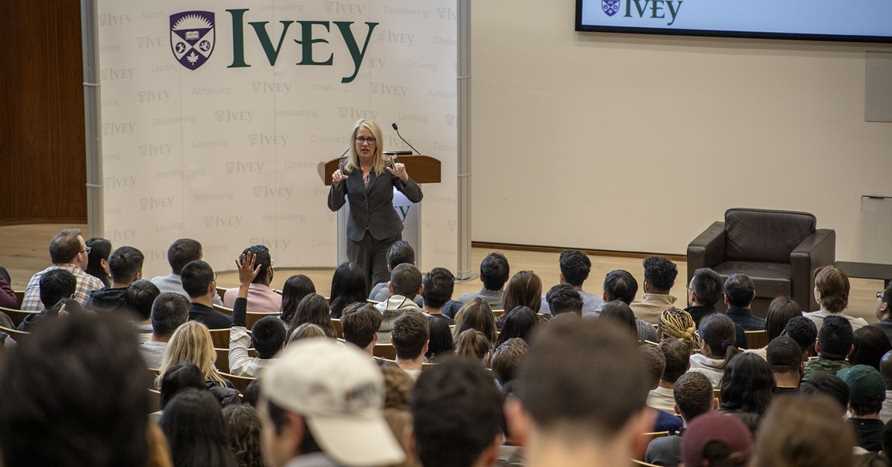
Pat MacDonald photo Pat MacDonald discusses how organizations can learn from their enemies.

Watch the video

The saying, “the enemy of my enemy is my friend,” certainly rings true according to new research from Assistant Professor Pat MacDonald, which reveals organizations that undertake collaborative activity with their enemies to solve a mutual problem often end up stronger for it.

MacDonald has been studying how organizations learn from their enemies and found their differences are, in fact, valuable resources for learning because they highlight knowledge gaps or draw attention to other views around issues that help with problem-solving.

“The differences between organizations provide opportunities for learning and for innovation,” said MacDonald.

However, those same differences are usually a source of conflict.

“It’s not about resolving their differences as often as it is about finding a way to connect across the conflict to integrate new ideas despite the differences they may have,” she said.

She points to the example of the British Columbia salmon farming industry, where there has been conflict between the salmon companies and environmentalists for decades.  However, despite their differences, individuals from both sides of the conflict were able to find common ground in generally accepted scientific methods. Experimental protocols allowed them to bridge across the conflict and engage in collaborative action.  They were able to gradually distance themselves from their differences and to work together to advance marine biology research and find ways to protect marine habitat.

MacDonald said business leaders can encourage such learning by engaging with a range of organizations, connecting individuals that share common practices, and resolving shared knowledge gaps collaboratively through those shared practices. 

“Organizations can create mutual strategic advantage out of apparently intractable conflicts,” she said.  “Organizations that confront the diversity amongst economic, social, and environmental views may be better able to integrate new ideas. This in turn may prompt more innovative responses. While the conflict may never be resolved – indeed it may be ‘unresolvable’ – much can be learned through carefully delimited cooperation on specific tasks.”