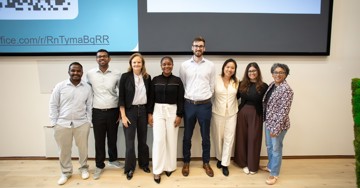
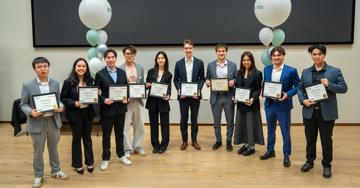
Most competitions ask participants to outperform one another. Innovation North's System Innovation Challenge asked them to be neighbours.
At the Challenge’s Showcase event, held April 24-26 at Ivey’s newly opened Donald K. Johnson Centre, nine finalist teams – 35 students from eight universities – presented their work on the future of housing. They were also asked to offer that thinking as a gift to another team and receive one in return: a provocation, a piece of research, or an insight that might reshape their approach.
“The whole idea was that we're a neighbourhood. Each team is going to visit another team, receive gifts, and share gifts," said Mazi Raz, MBA ’05, PhD ’14, assistant professor of strategy at Ivey and academic lead of the Challenge. “We were desperate for this not to be a competition.”
Now in its third year, the 2026 Challenge, presented in partnership with ATCO Ventures, brought together 245 students from 25 universities, with representation from all 10 Canadian provinces for the first time. The group included undergraduates, master’s and PhD students, and postgraduate diploma students from disciplines ranging from nursing and engineering to economics and business. That mix of backgrounds helped deepen the discussion, bringing different perspectives to a complex issue.
“It's a topic where the public matters, the environment matters, our social fabric matters, and corporations and businesses matter as well,” said Raz. “Everyone has a stake in this story.”
Different backgrounds, different ways of seeing
One example that stood out to Raz was a finalist team made up of three Nigerian students studying at the University of Prince Edward Island. In a private debrief, he said the students talked about how their experiences had shaped the way they viewed housing – including a tendency to question the assumption that a home must always be permanent, fixed, and rooted in one place.
“That gave me so much awakening into how different perspectives matter,” said Raz. “I kept reinforcing how much what they had to offer was tremendously valuable for every single one of us.”
That kind of exchange was part of what made the Challenge unique. Students came in with different lived experiences, different academic backgrounds, and different ways of looking at the same complex problem.
A new way of learning
This year marked a major shift in the Challenge’s format. Instead of real-time virtual instruction, Innovation North introduced a five-part podcast series on systems thinking, followed by virtual “watch parties” where participants discussed what they had heard, tested ideas, and challenged assumptions. Raz also anonymized submissions from previous years and asked participants to review them in real time: what worked, what was missing, and where the thinking could go further.
“It became a hands-on analytic process. It pulled away from AI use – just feeding a case into a system and getting a summary. They had to actually work with the challenge in real time,” said Raz. “It's a true case study method: you study individually, then come to class and discuss the problem and opportunities.”
After the first phase, called Nurture, teams submitted a visual deliverable showing how their understanding of the housing system had evolved. The nine finalists then moved into a phase called Navigate, which led into the Toronto Showcase weekend.
Mentors, panellists, and judges
Raz said the Showcase programming was intentionally designed to push teams to learn from others, and rethink how they framed the problem.
That process was supported by mentors Abdul-Aziz Sardar, MSc ’22, Sheikh Muhammad Hasaan, MSc ’24, Rasha Silin, MSc ’24, Jackson Edwards, MSc ’26, and Brittany Blair.
An additional panel discussion brought together perspectives from industry, regulation, and government. Panellists included Jade Getz, director of commercial development at ATCO; Rick Weste, vice-president of residential modular solutions at ATCO; Dwayne Torrey, director of construction and infrastructure standards at CSA Group; and Daniel Fusca, manager of public consultation, Parks, Forestry and Recreation, City of Toronto.
Raz said one takeaway from the panel was that innovation in housing is less about novelty than about scale and resilience.
“Modular homes, prefabs – these have been around for decades,” he said. “What we're learning now is how to do them at scale, and how to make something highly effective and scalable more quickly.”
On the final day, teams presented before judges Christine Moroz, vice-president of merchandising, International Americas, at Sysco; Philippe Bernier, executive vice-president, strategy and growth, JLL Canada; James Stauch, complex systems strategist at ATCO Ventures; and George Constantinescu, retired chief transformation officer at ATCO.
Congratulations to the winners
Four teams across various categories received $5,000 prizes:
Holding Complexity – Awarded to an Ivey team (Stella Tian, Sally Yan, Jolene Xu, Shaamini Gopala Krishnan, and Bridget Yucheng Huang) for surfacing unresolved tensions within the housing system rather than oversimplifying them.
The Overlooked Perspective – Awarded to a University of British Columbia team (Rozina Khoja, Perry Lawrence, Brett Caswell, Noah Abajian, and Ishita Sharma) for highlighting voices and ways of seeing that are often absent from mainstream housing discourse.
The Inquiry That Changed Us – All of Us – Awarded to Jonathan Mendez-Young, Sahiba Chaudhry and Ben Reamico of the University of Calgary, Ankitha Raj Puthenpurakkal Ranjakumar of the University of Prince Edward Island, and Yessica Kurock of Université de Sherbrooke, for showing how deeply the work had changed their thinking.
Best Story Told – Awarded to the University of Waterloo team (Simran Singh, Mohamed Lateef, Katie Langille and Ananya Maheshwari) for mapping out a compelling story.
Across the winning teams, Raz saw a common thread: careful, systems-level thinking, and a willingness to resist easy answers.
“I have been consistently telling them that the path is not towards arriving at a solution. Complex problems don't have solutions. We can simply improve the system as we go forward,” he said. “The moment we drop that solutionist mindset and start thinking about where improvement can come from, we start finding the real issues.”
View photos of the winning teams below
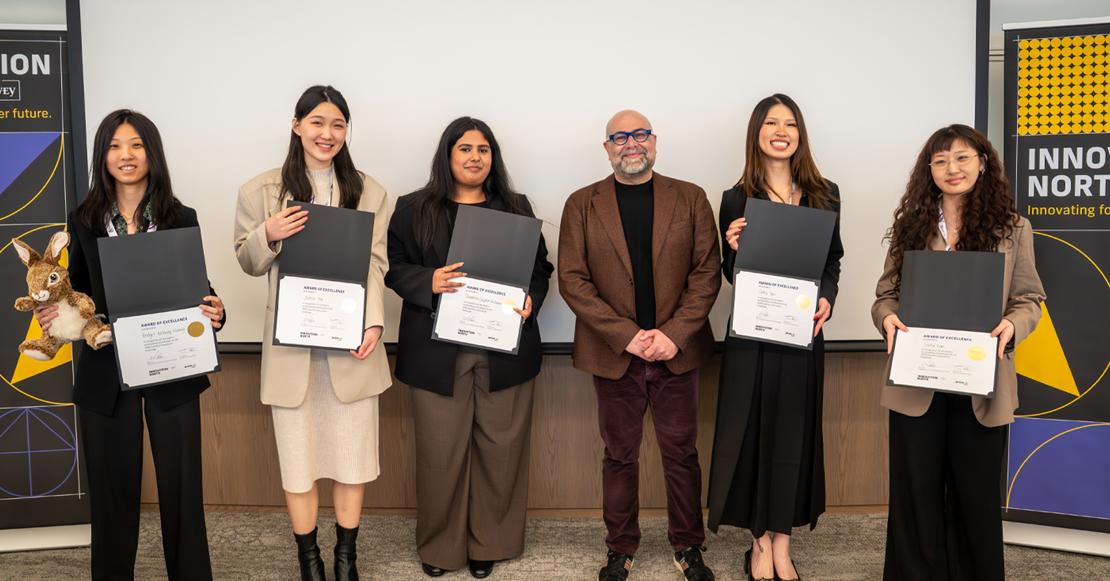
The Holding Complexity Team (Ivey) L-r: Bridget Yucheng Huang, Jolene Xu, Shaamini Gopala Krishnan, Mazi Raz, Sally Yan, and Stella Tian
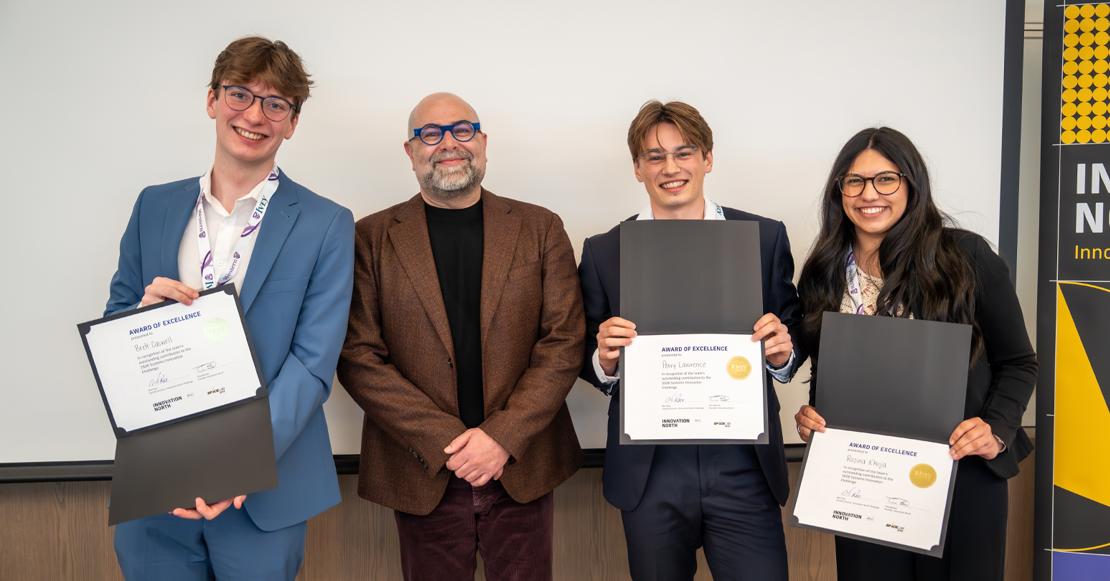
The Overlooked Perspective Team (University of British Columbia) L-r: Brett Caswell, Mazi Raz, Perry Lawrence, and Rozina Khoja (missing from photo: Noah Abajian and Ishita Sharma)
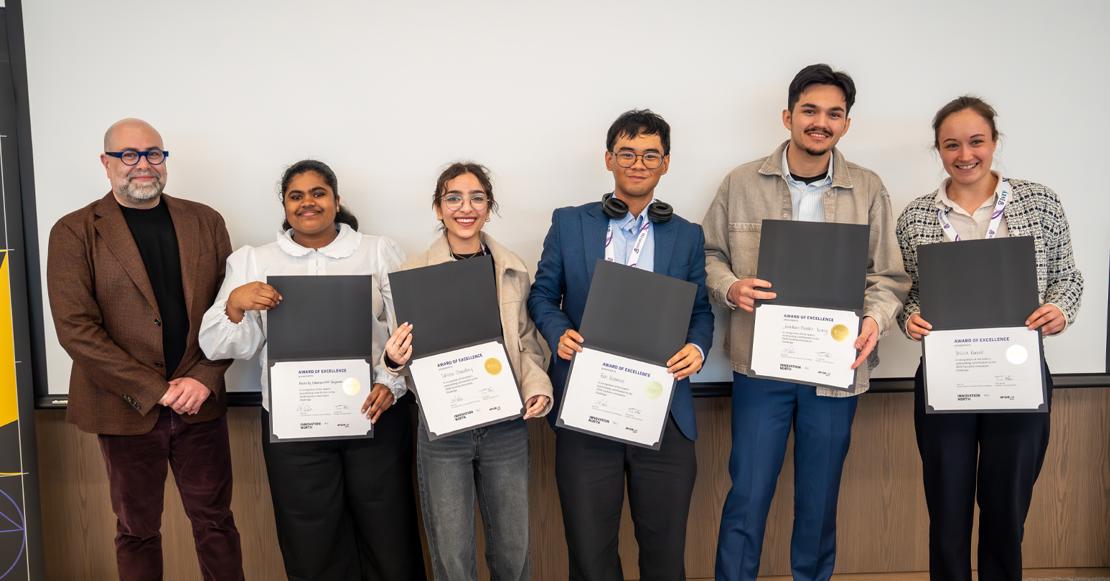
The Inquiry That Changed Us – All Of Us (mixed) L-r: Mazi Raz, Ankitha Raj Puthenpurakkal Ranjakumar (University of Prince Edward Island), Sahiba Chaudhry (University of Calgary), Ben Reamico (University of Calgary), Jonathan Mendez-Young (University of Calgary), and Yessica Kurock (Université de Sherbrooke)
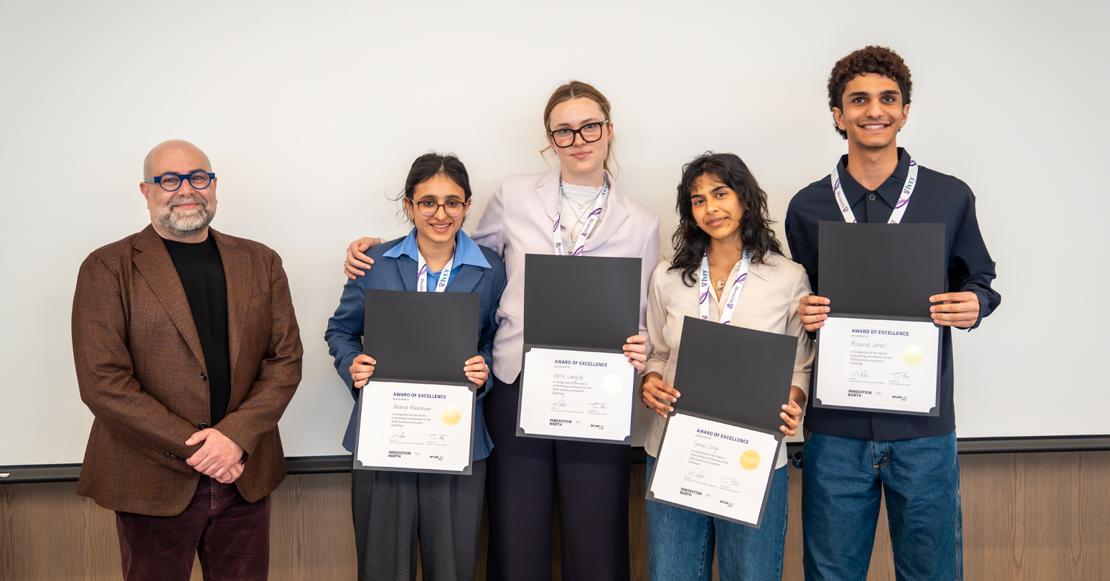
The Best Story Told Team (University of Waterloo) L-r: Mazi Raz, Ananya Maheshwari, Katie Langille, Simran Singh, and Mohamed Lateef
Related Articles