Inside Ivey
Step into the world of Ivey Business School through the eyes of its students. Whether navigating the program, embracing leadership opportunities, or forging lifelong connections across the globe, these firsthand stories showcase the ambition and impact of Ivey students. Real voices, real experiences, and real insights into life at one of the world’s leading business schools.
For MSc students at Ivey, there’s a moment when networking clicks – when conversations move beyond introductions and start shaping what comes next.
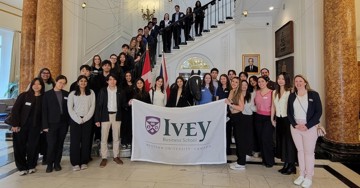
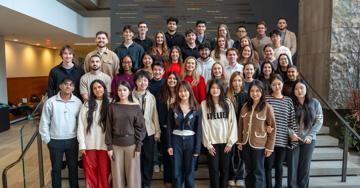
That moment came into focus at Ivey's Get Connected event in Toronto on March 27. Hosted by Ivey Career Management, the annual event brings together MSc students and alumni for panels, conversations, and small-group coffee chats.
For Helen Yudo, MSc ’27 candidate (International Business), and Fares Fadl and Levin Vogt, MSc ’26 candidates (Business Analytics), it marked a shift from meeting people to gaining direction. In this Q&A, they reflect on how those interactions clarified their interests, challenged assumptions, and helped move their career thinking forward.
Q&A with Fares Fadl, Levin Vogt, and Helen Yudo
What were your expectations going into Get Connected, and how did the experience compare?
(Fares) Going into Get Connected, I expected it to be more of a traditional networking event, with lots of quick conversations and a focus on meeting as many people as possible. In reality, it felt much more genuine and relaxed than I had expected. Many of the conversations went beyond surface-level networking, and I got to hear honest perspectives on different career paths, industries, and recruiting experiences. It ended up being more valuable than I anticipated – not only because of the connections I made, but because it helped me better understand what I’m genuinely interested in.
At what point during the event did it start to feel “real” for you in terms of your career path?
(Helen) It started to feel “real” when I reconnected in person with an alum I had spoken to before the semester began. At the time, I was still unsure about my career direction, but four months later, I was able to clearly articulate my strengths and the kind of work I’m drawn to. Through that conversation, I connected my interests to the Consumer Packaged Goods (CPG) industry and felt a strong pull toward the beauty and personal care space. Being able to express that clarity out loud made my career path feel much more tangible.
How did you decide which panels or employers to engage with, and what drew you to those choices?
(Fares) I decided based on a mix of genuine interest and curiosity. I naturally gravitated toward panels and employers that aligned with the kind of work I could see myself enjoying, but I also wanted to explore areas I knew less about. What drew me in most was hearing about the day-to-day aspects of different roles, the culture of each organization, and the variety of paths people had taken to get there.
Was there a session or conversation that aligned especially closely with your career goals? What made it stand out?
(Levin) When planning my coffee chats for the event, I was excited to see that a sustainability consultant at KPMG I had connected with on LinkedIn would be there. Speaking with her about my internship experiences in sustainability consulting and having her validate my perspectives was especially valuable. She also gave me great advice on making the most of my final semester at Ivey, including recommending courses that align closely with my future career goals.
Networking can feel intimidating – what was your approach going in, and did it change over the course of the event?
(Fares) Going in, my approach was to be open, prepared, and genuinely curious. I tried not to overthink every conversation and instead focused on asking thoughtful questions and getting to know people beyond their job titles. Leading with curiosity made conversations flow more naturally, because it took the pressure off trying to say the “right” thing and made it easier to stay present and engaged. As the event went on, I became more comfortable and confident, and networking started to feel much more natural. By the end, it felt less intimidating and more like having real conversations with people who were willing to share their experiences.
Can you describe a meaningful conversation you had with a recruiter or industry professional? What stuck with you?
(Helen) A particularly meaningful conversation I had was with that same alum, Joshua Kabu-Asante, MSc ’19. It felt less like networking and more like speaking with a mentor who was genuinely invested in my growth. He encouraged me to get involved in clubs, speak to more people in the industry, and take the time to pinpoint the specific area of work I want to pursue rather than staying broad. He also emphasized preparing early for recruiting and being intentional about building my capabilities. What stuck with me most was how practical and actionable his advice was.
What’s one insight about your target industry or role that you didn’t have before attending Get Connected?
(Levin) I realized how broad and diverse the consulting industry really is. I knew it spanned virtually every industry, but I hadn’t realized the breadth of roles available. This had a mixed impact on me. On one hand, it was reassuring to hear there are many opportunities to break into consulting. On the other, it made me realize I had only scratched the surface in my job search and that there were many options I had yet to explore.
Did anything challenge or reshape your assumptions about your career path?
(Levin) Hearing about the travel expectations associated with consulting roles in Canada made me reconsider aspects of my career path. While I knew consulting would involve travel, there is a significant difference between Europe and North America. In Europe, it’s often possible to return home each week, whereas in North America, I heard it’s not unusual to spend multiple weeks at a client site due to longer distances and higher travel costs.
How has Get Connected influenced your next steps, whether that’s recruiting, skill-building, or refining your goals?
(Helen) Get Connected made me much more comfortable approaching people and starting conversations. I spoke with individuals in industries and roles I wasn’t necessarily interested in, but it reminded me that you never know where those connections can lead. It reinforced the importance of staying open-minded while remaining focused on the direction I want my career to go. My interest in CPG has definitely been piqued, but I’m still open to exploring other opportunities that come up.
Looking back, what advice would you give to future MSc students to make the most of Get Connected?
(Helen) Challenge yourself to go up to at least three strangers and introduce yourself. The alumni are there to talk to you and help you, but you have to allow them to do that. It also helps to remember that this isn’t a job fair, so you can relax and focus on getting to know the people you’re speaking with and building real relationships – although getting a job out of it isn’t impossible. It’s also a great opportunity to connect with students from other streams. Those are the kinds of connections that really make for a great MSc experience.
(Levin) Do your own thing. Some of my friends focused on coffee chats, while others attended almost every panel, and both approaches worked. The most important thing is to be prepared – not by scripting conversations, but by being intentional about which panels to attend and who to speak with. I found MSc alumni very easy to talk to, and during the happy hour, I’d encourage students to approach groups of alumni. It may feel daunting, but those casual conversations with multiple people at once were some of the most insightful.
(Fares) Have a rough plan going in, but don’t stress if it changes. Know a few people or sessions you want to prioritize, but leave room for spontaneous conversations, because those can end up being the most valuable. Push yourself to start talking to others early on – it gets much easier after that first conversation. At the end of the day, the more open and curious you are, the more you’ll get out of it.
Related Articles