Ivey’s PhD Program in Business Administration is a full-time research-based program designed to develop scholars and place graduates at high-quality research universities worldwide. Our PhD candidates are showcased at conferences around the world and regularly featured in top-tier academic and industry publications.
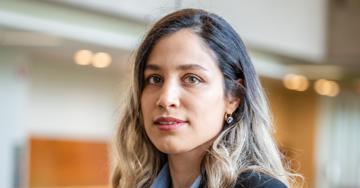
Q&A with Roza Azizi, Ivey PhD candidate
What is your background?
I was born in Sari, a green northern city by the Caspian Sea in Iran, and I grew up in Karaj, a city near the capital of Iran (Tehran), situated at the foothills of the Alborz Mountains. Academically, my background is in applied mathematics with a specialization in operations research. From early on, I was drawn to analytical modeling, optimization, and decision-making, and these interests have guided my path toward research in management science.
What attracted you to Ivey’s program?
Ivey’s PhD program offers a rare combination of analytical rigour, interdisciplinary breadth, and a strong culture of impact. I was particularly drawn to the School’s distinguished faculty and collaborative research environment, where rigorous quantitative modeling is consistently linked to real managerial and policy insight, and where diverse perspectives are genuinely valued. The program’s high standards in methodological training, along with close mentorship and openness to cross-disciplinary inquiry, convinced me that Ivey would be the ideal place to develop as a scholar.
What is your research focus?
Broadly speaking, my research focuses on quantitative approaches to sustainability and responsible development. I am interested in how mathematical and analytical methods can help measure, evaluate, and improve sustainability performance across sectors and regions. This field appeals to me because it connects mathematical reasoning with some of the most urgent global challenges of our time, such as climate change, social responsibility, and equitable resource use. My goal is to use quantitative research as a tool to inform better decision-making and encourage organizations and policy-makers to move toward more balanced, sustainable systems.
Why is that area appealing to you? What big problems or issues need to be addressed?
Sustainability appeals to me because it addresses some of the most fundamental questions about how societies can grow responsibly while safeguarding the well-being of future generations. It is an area where economic priorities, environmental constraints, and social needs intersect, often in ways that are difficult to balance. The big challenge is that organizations and countries must navigate these competing pressures while still demonstrating real progress. What motivates me is the opportunity to bring clarity to this complexity by helping identify where efforts are effective, where gaps remain, and how decisions can better support long-term, equitable development. I am drawn to work that encourages thoughtful, informed choices rather than short-term fixes, and that contributes to a more responsible and resilient future.
How do you see your research making an impact?
I see the impact of my research in its ability to bring structure and clarity to discussions around sustainability. By offering a more integrated view of environmental, social, and economic considerations, my work can help decision-makers recognize where progress is meaningful and where it is only superficial. I hope it supports more thoughtful planning, more informed policies, and a stronger connection between long-term goals and everyday decisions. Ultimately, if my research encourages organizations and governments to approach sustainability with greater responsibility, consistency, and foresight, that would be the impact I value most.
How do you see research as an aid to business improvement?
Research strengthens businesses by grounding decisions in evidence rather than intuition. It helps organizations understand complex environments, anticipate challenges, and design strategies that are both effective and responsible. I believe research and business practice should inform one another. Research provides new ways of thinking, and real-world problems ensure that research remains relevant. When this connection works well, businesses can innovate more confidently, operate more efficiently, and contribute more meaningfully to society.
What previous experience prepared you for this?
My preparation comes from both research work and many years of teaching. Before coming to Ivey, I spent around 13 years teaching at the university level in Iran, and I also taught at the high school level for some time. Teaching helped me become more organized in how I approach problems and taught me to explain quantitative ideas clearly and patiently. Working on research projects alongside teaching also showed me how to think carefully through a problem and stay committed over time. Altogether, these experiences gave me a solid foundation for starting doctoral research.
Where did you grow up, and what was it like there?
I grew up in Karaj, a large city at the foothills of the Alborz mountain range, with green landscapes and a distinctive mix of nature and urban life. Because of its proximity to the capital and broader opportunities, Karaj has long attracted families from different parts of Iran, including mine, creating a diverse and dynamic social fabric. It is a place that combines natural calm with the momentum of a growing metropolitan area. Life there is shaped by hardworking, education-oriented communities and a strong sense of resilience.
Who have been your strongest influences in life?
My parents have been the strongest influences in my life. They shaped my values, encouraged my curiosity, and supported me through every stage of my academic path. I am especially inspired by my mother, who pursued both higher education and a professional career at a time when those opportunities were far less accessible for women. Her determination, resilience, and commitment to her goals have always been a guiding example for me.
What might someone be surprised to know about you?
People are often surprised to learn how deeply I enjoy reading about ancient history. Outside my research, I regularly read historical novels and biographies, which reveal how societies rise, adapt, and sometimes fail. I find that engaging with the past sharpens how I think about systems, leadership, and long-term responsibility today.
What is the most-played song on your playlist right now?
I often listen to Persian traditional and contemporary music. Its poetry, modal richness, and emotional depth keep me connected to my cultural roots and offer calm after intense research days. For me, this music is both reflective and energizing, and it reminds me that precision and beauty can coexist.
What is your best podcast recommendation?
I am not a regular podcast listener, as I usually prefer reading books or watching documentaries.
What book would you recommend to others? Why?
One book I strongly recommend is King of the World: The Life of Cyrus the Great by Matt Waters, published by Oxford University Press. For readers unfamiliar with him, Cyrus was the founder of the Achaemenid Persian Empire and is often remembered for his pragmatic statecraft and an early ethos of tolerance, a view often associated with the Cyrus Cylinder, a historical inscription from his reign. Waters weaves historical sources into a highly readable biography that shows why Cyrus still matters today. He represents leadership that combines strategic vision with fairness, a balance that continues to resonate with contemporary conversations about governance, ethics, and corporate responsibility.