On any given day in the non-profit sector, leaders balance competing priorities, shifting funding requirements, and complex human needs – often without a clear roadmap.
“It’s like a great big puzzle,” said Andrea Topham, CEO of Youth Opportunities Unlimited. “We put the pieces together as we go.”
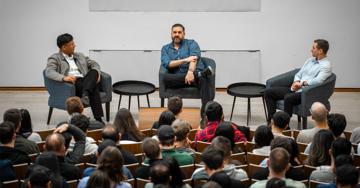
That idea surfaced throughout Impact Day 2.0 on March 18, where Ivey MBA students heard from a panel of non-profit leaders about what it takes to create meaningful impact.
Organized by the Ivey MBA Association (MBAA), the event brought together the MBA 2026 and MBA 2027 cohorts. Building on the program’s Social Impact Day, where students work directly with community organizations, the event focused on how the sector operates and where some of the biggest challenges lie.
“This was about going beyond the experience in the community and really understanding how the ecosystem works,” said Jack Peifer-Dawson, an MBA ’26 candidate and VP External of the MBAA.
The panel included David Corke, CEO, London Training Centre; Cathy Taylor, president and CEO, The Lawson Foundation; Andrea Topham, CEO, Youth Opportunities Unlimited; and Kelly Ziegner, chief operating officer, YMCA of Southwestern Ontario.
Looking beyond the numbers
One of the first ideas the panellists challenged was how impact is measured. While it’s easy to focus on numbers – how many people were served or programs delivered – those figures don’t always reflect what’s really changing.
Topham pointed to the complexity of the work, noting that even helping a small number of youth move into stable housing can represent meaningful progress.
Taylor stressed that impact is not always immediate or easy to quantify. From a funder’s perspective, it means looking beyond short-term results to understand how organizations are building capacity and creating lasting change.
Working within the constraints
As the conversation shifted to how organizations operate, the challenges became more apparent.
The panellists described a sector shaped by fragmented funding systems. Each funder comes with its own requirements, timelines, and expectations, making long-term planning difficult and often shifting attention away from the work.
Ziegner said organizations can sometimes limit themselves in how they approach these challenges.
“We’re very guilty… of thinking about our organization and our industry from inside the box,” she said. “Right now is a real tough time to be fundraising… but we can be very guilty of thinking about those constraints and not about the opportunities.”
The panellists said these constraints can limit collaboration, even when organizations share the same goals. With funding often tied to specific programs, leaders are constantly balancing priorities and filling gaps.
Taylor also pointed to the limitations of short-term funding models.
“We’re actually setting organizations up to not be sustainable,” she said, noting the importance of longer-term, flexible funding approaches.
She added there is a growing shift toward trust-based philanthropy, where funders provide more flexibility and rely on organizations to determine how best to use resources.
The human side of the work
Even with the focus on systems and funding, the panel emphasized that the work is deeply human.
“We’re in the business of humans,” said Corke, noting that meaningful impact depends on relationships, trust, and time.
That perspective shaped the discussion around artificial intelligence (AI).
Taylor said AI has the potential to help level the playing field, particularly for smaller organizations with fewer resources for tasks like grant-writing.
The panellists also raised concerns about how quickly technology is advancing. Topham cited changes in sectors like food service, where automation is reducing entry-level job opportunities for the youth her organization serves.
Corke added that while there is increasing pressure to improve efficiency, the work itself does not always move at that pace.
Why MBA graduates belong in the sector
The panellists encouraged MBA students to consider careers in the sector, highlighting the need for new ideas and perspectives.
Ziegner said more innovative and entrepreneurial thinking is needed, particularly from those entering the field.
The panel also spoke about the realities of working in the sector, including challenges in attracting and retaining talent. Compensation often does not match roles in the private or public sectors, contributing to turnover and burnout.
Topham noted the growing strain on staff across the sector.
“We’re seeing higher burnout, compassion fatigue, vicarious trauma – a lot of turnover happening,” she said.
The panellists emphasized the importance of a strong organizational culture in supporting staff and sustaining impact.
What it takes to succeed
When asked what skills matter most, they identified flexibility, problem-solving, and the ability to navigate complexity, as well as building relationships and working across different groups.
More than anything, they highlighted the rewards of the work – the opportunity to make a meaningful difference in people’s lives.
“Expect to be challenged more than you anticipate,” said Corke. “This is complex work.”
For Topham, the work is rooted in thinking about the future and the kind of communities the next generation will inherit.
“I wanted my time away from my family to be about making a better community for them to grow up in,” she said.
Related Articles