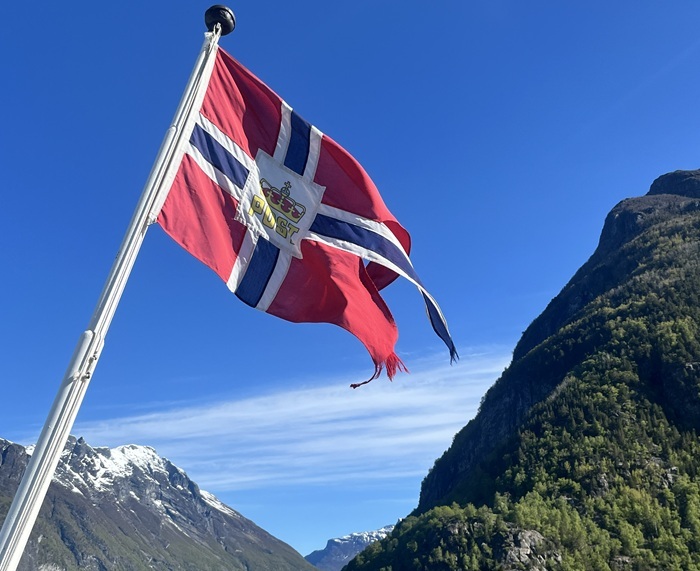
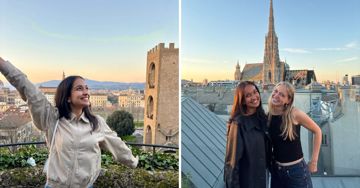
Sherry Shu, HBA ’26, recently spent a semester on exchange at the Norwegian School of Economics (NHH) in Bergen, Norway, through the HBA Exchange Program. In her blog below, Shu reflects on how her time in Norway changed her perspective on work-life balance, time in nature, and what makes Canada feel like home.
The power of leaving space for joy
When I first met my Norwegian housemate, her routine fascinated me. She was a full-time student, balancing a teaching course load and field placement with training on her school’s rugby team. But she didn’t look as busy as I did: staying up late booking flights, darting in and out of the apartment between social events, or holed up in my room stressing about my future. She would come home from school, then spend hours trying a new recipe, reading a novel, or crocheting a new clothing item, before heading to bed around 9 p.m.
She wasn’t getting any less done. Half the time I was “trying to be productive,” I would be multitasking, distracted, and spiralling over a big decision. She finished everything she needed to do that day, then built in time for small joyful activities.
You may have heard about Norway’s generous labour policies geared towards work-life balance: a strict 8 a.m. to 4 p.m. workday, four weeks of vacation annually, and a year of fully paid parental leave. There’s an emphasis on building relaxation and joy into the pursuit of achievement, codified into law, and firmly embedded into the ethos of its people.
A welcome break from North American workaholism, Norway reminded me how important it is to stop measuring success by my hours in front of a screen, and to continue making time for fun and rest when doing important work.
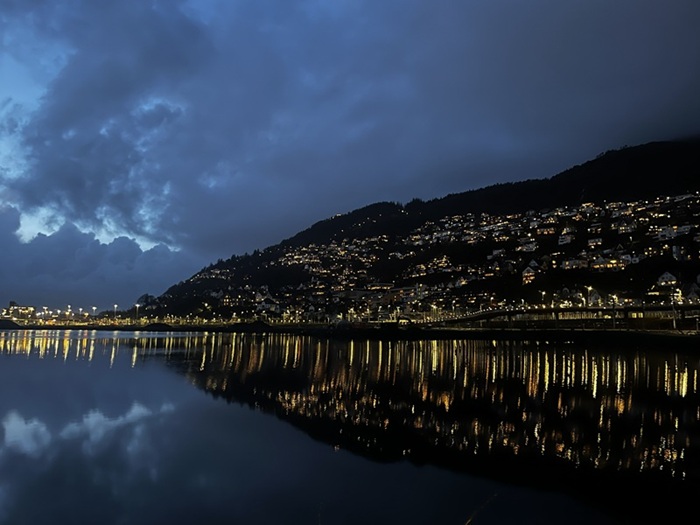
(Photo above) The nighttime view outside Sherry Shu’s residence
The power of time in nature
One of my favourite memories on exchange was a gruelling hike in the Lofoten Islands, far into the Arctic Circle. Four of us decided to spend five hours trudging up Ryten Mountain. The weather was windy and overcast, the path was completely covered by a thick layer of snow, and our boots and socks were increasingly soaking through.
But right as we reached the summit, the sun emerged from behind the clouds, and we were treated to this absolutely stunning view of Kvalvika Beach.
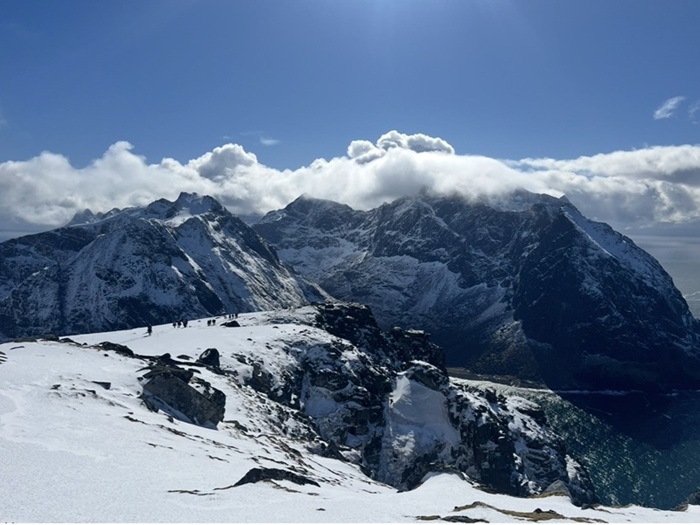
We sat on a rock, unwrapped our lunches, and took in the stretch of shimmering ocean and jutting cliffs glistening in the light. My racing thoughts slowed to a hum, allowing me to sit in the awe and stillness.
The Norwegian concept of friluftsliv, or “open-air living,” emphasizes spending time in nature for greater physical and mental well-being. This philosophy is woven into other parts of Norwegian society: through quips like, “There’s no such thing as bad weather, only bad clothing;” laws like the right to roam, which grant freedom to hike and camp on uncultivated land; and non-profits like BUA, which allow youth to borrow outdoor equipment for free.
When I came to Norway, I was mainly excited to see the flashy destinations everyone featured on Instagram: the view from Preikestolen or the cruise across the massive Geirangerfjord. And indeed, those were amazing and once-in-a-lifetime experiences. Slowly, though, I came to embrace the day-to-day of friluftsliv: joining locals to jog around the lake outside my residence, or studying for finals outside by a forest stream.
I still haven’t fully shed my “achievement-oriented” nature. But now that I’m back in Canada, I want to spend more time taking familiar walks, watching the wind rustle through trees, and reclaiming the calm I found in Norway’s wilderness with no goal in mind.
The power of home
Throughout my time in Norway, I never found myself truly homesick. Sure, I missed the easy access to Asian food (and being able to eat out without breaking the bank). But I got to share my Chinese-Canadian culture while also experiencing other tastes and traditions. I introduced European exchange friends to 番茄炒蛋 (tomato-and-egg stir-fry) while trying Mustikkapiirakka (Finnish blueberry pie) and Bacalhau à Brás (Portuguese salt cod), cold-plunged into the Arctic Ocean for a Nordic sauna, and learned to sing Happy Birthday in German.
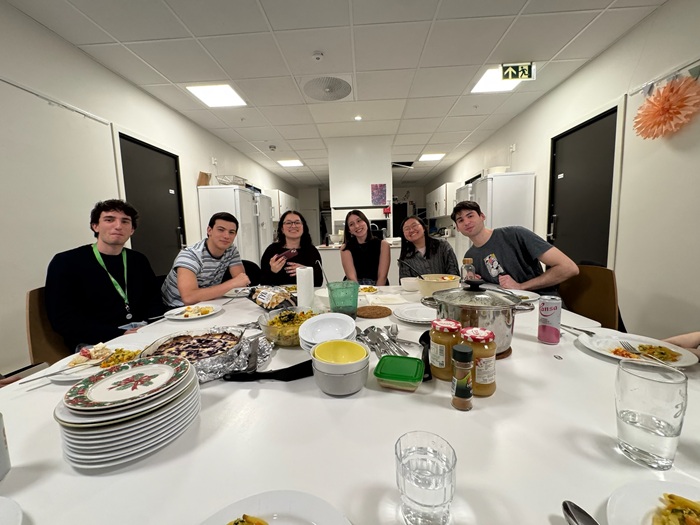
(Photo above) Sherry Shu, second from right, with her European friends
For many of my European friends, exchange/the Erasmus program was one of their few opportunities to be exposed to such a wide array of cultures. This was honestly a privilege I had taken for granted. I’d gotten used to hearing three different languages spoken, or having three different cuisines served, at a downtown Toronto corner. I had forgotten that this wasn’t the norm everywhere else.
Canada has been scrutinized in recent years for challenges including health care, inflated housing, and economic stagnation. But as a fellow sparsely populated, oil-rich nation, Norway faces these problems too. Rather than accept complacency, we should learn from Norway’s innovative solutions.
More significantly, our clichéd “diversity is our strength” mantra rings true, and it took going to Norway for me to remember just how unique Canada is in the world. As Canadians, we’re used to growing up around a plurality of languages and ethnicities, taught to celebrate the differences that make up our cultural mosaic. As a result, we’re quicker to break out of our bubbles and develop warm friendships with people who are different. This is what I found myself missing when I was in Norway, and what I often found myself drawn to when meeting Canadians abroad.
I will always be Canadian. But a piece of my heart remains captured by this country, its people, its otherworldly nature, and its adorable cultural quirks (brown cheese waffles and Taco Friday, I’m looking at you!). I will miss you, Norway, and I promise I’ll be back soon.