Overview
Liberia
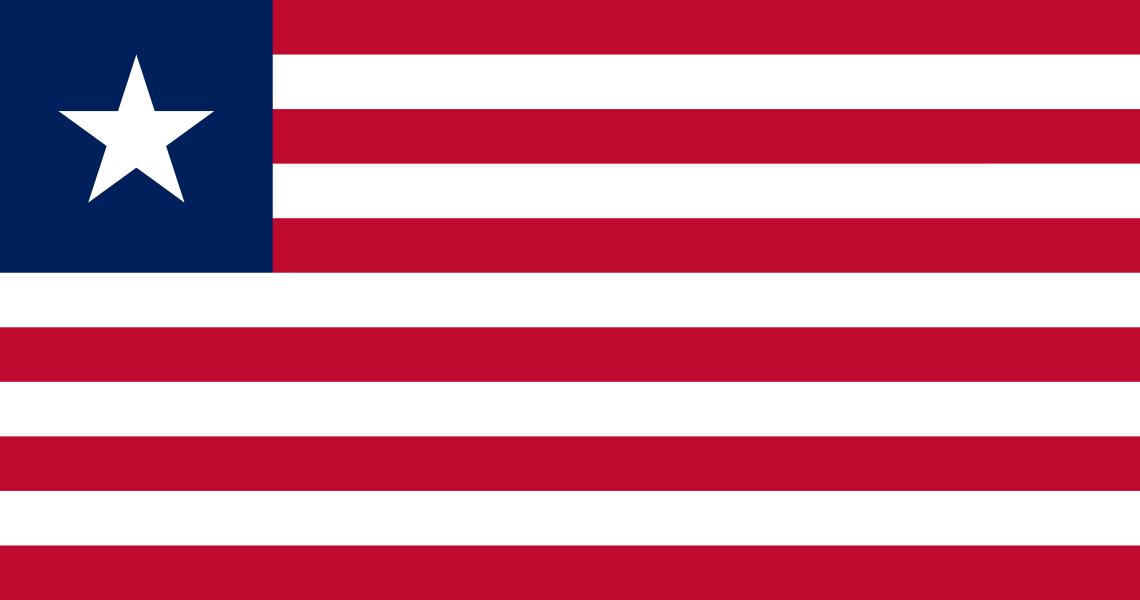 Liberia, on the Atlantic coast of West Africa, is the continent’s oldest republic. It has about 5.7 million people and covers roughly 111,400 km², bordering Sierra Leone, Guinea, and Côte d’Ivoire. Monrovia is the capital. Coastal plains with mangroves and swamps rise to a forested plateau and low mountains in the northeast. The American Colonization Society began settling freed and free-born African Americans there in 1822, and Liberia declared independence in 1847. A military coup in 1980 ended rule by the settlers’ descendants, and two civil wars between 1989 and 2003 killed about 250,000 people. Liberia is a presidential republic. Joseph Boakai has been president since January 2024, and the next presidential and legislative elections are due in 2029. English is the official language, and Christianity is the predominant religion, alongside Islam.
Liberia is a low-income country whose exports are led by gold and iron ore, alongside rubber. It also has the world’s second-largest ship registry. Agriculture employs about 41% of the workforce. In 2025, Liberia’s GDP per capita was approximately US$915, and real GDP grew by 5.0%.
Source: World Bank. (2026). World Development Indicators, from https://data.worldbank.org/country/liberia
Institutions
Institutions with at least one Faculty Member Registered with Ivey Publishing
- Cuttington University
- University of Liberia
- William V.S. Tubman University
Source: Ivey Publishing. 39C Accounts by Country. Provided by Adrianna Gleam-Fossaceca, Ivey Publishing, August 11, 2026.
Workshops
Workshops Provided to Institutions in Liberia
No case-teaching workshops have been held in Liberia to date. Opportunities remain to extend the 39 Country Initiative’s outreach to institutions in Liberia through its online case-teaching activities.