Overview
Mauritania*
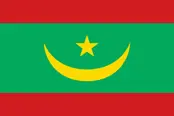 Mauritania spans the western edge of the Sahara, facing the Atlantic Ocean between Western Sahara, Algeria, Mali, and Senegal. It covers about 1.03 million km² and has about 5.3 million people. Nouakchott is the capital. About 90% of the territory lies in the Sahara, and farming is concentrated in the Senegal River valley along the southern border. In the eleventh century, Berber confederations in the region formed the Almoravid movement, which built an empire stretching from the Sahara to the Iberian Peninsula. France organized the territory as part of French West Africa in 1904, and Mauritania gained independence in 1960. The country experienced military coups in 1978, 2005, and 2008. In 2019, Mohamed Ould Ghazouani's election marked the country's first peaceful transfer of power since independence. Mauritania is an Islamic republic with a presidential system. Arabic is the official language, and Pulaar, Soninke, and Wolof are national languages. Nearly the entire population is Muslim.
Mauritania is a lower-middle-income country. Iron ore is its leading export, followed by gold, copper, and fish. Exports of liquefied natural gas began in 2025 from the Greater Tortue Ahmeyim field, which Mauritania shares with Senegal. Agriculture employs about 32% of the workforce. In 2025, Mauritania’s GDP per capita was approximately US$2,198, and real GDP grew by 4.0%.
Source: World Bank. (2026). World Development Indicators, from https://data.worldbank.org/country/mauritania
Institutions
Institutions with at least one Faculty Member Registered with Ivey Publishing
There are no institutions in Mauritania registered with Ivey Publishing at this time.
Source: Ivey Publishing. 39C Accounts by Country. Provided by Adrianna Gleam-Fossaceca, Ivey Publishing, August 11, 2026.
Cases
Ivey-Copyrighted Cases in or involving Mauritania*
Ivey Publishing and the 39 Country Initiative welcome additional case submissions that deepen understanding of Mauritania’s businesses, institutions, industries, and broader economic and social context.
| Case | Authors | Published / Revised | Product Number | Pages |
|---|---|---|---|---|
| City Water Tanzania (A): Water Partnerships for Dar es Salaam | Oana Branzei, Kevin McKague | Jun 15, 2007 | 9B07M025 | 17 |
| City Water Tanzania (B): Privatizing Dar es Salaam’s Water Utility | Oana Branzei, Kevin McKague | Jun 15, 2007 | 9B07M026 | 6 |
| City Water Tanzania (C): The Private Sector Experiment | Oana Branzei, Kevin McKague | Jun 15, 2007 | 9B07M027A | 3 |
| City Water Tanzania (C): Striking a Deal | Oana Branzei, Kevin McKague | Jun 15, 2007 | 9B07M027B | 4 |
| City Water Tanzania (D): Things Fall Apart | Oana Branzei, Kevin McKague | Jun 15, 2007 | 9B07M028 | 6 |
| Where Have You Been? An Exercise to Assess Your Exposure to the Rest of the World’s Peoples | Paul W. Beamish | Nov 27, 2025 | W48085 | 11 |
Source: Ivey Publishing. Retrieved October 23, 2026, from https://www.iveypublishing.ca/s/
Workshops
Workshops Provided to Institutions in Mauritania*
No case-teaching workshops have been held in Mauritania to date. Opportunities remain to extend the 39 Country Initiative’s outreach to institutions in Mauritania through its online case-teaching activities.