

Our mission with this conference, in partnership with Journal of Business Venturing, is to provide an outlet for Canadian-based Entrepreneurship researchers, providing academics and PhD students a high quality yet affordable research conference — without international travel.
Further, we want to increase the dialogue between Canadian entrepreneurship researchers to support:
- Increased collegiality
- Networking
- Job markets
- New Canada-centric research projects
Our goal is to be inclusive.
- We are asking each attendee to submit (at registration) and be prepared to present (either as a poster or interactive presentation) an original piece of research, at any stage (from planning to under review).
- If you are currently researching entrepreneurship and are willing to present something, you are welcome to attend. Your research submission will not be rejected/accepted, but instead used to develop a program of themes and conversations relevant to attendees.

Tentative Schedule
Thursday, May 28
| Time | Event |
|---|---|
| 12 - 5 p.m. | Doctoral Consortium |
| 6 - 9 p.m. | Doctoral Consortium Social |
Friday, May 29
| Time | Event |
|---|---|
| 8 - 9 a.m. | Registration (pickup welcome packages) |
| 9 - 10 a.m. | Welcome Plenary |
| 10 a.m. - 12 p.m. | Journal of Business Venturing: Meet the editors |
| 12 - 1 p.m. | Lunch |
| 1 - 5 p.m. | Research Presentations (chaired by JBV editors) |
| 6 - 9 p.m. | Conference Dinner (with Keynote Address) |
Saturday, May 30
| Time | Event |
|---|---|
| 9 a.m. - 12 p.m. | Research Presentations (poster & interactive) |
| 12 - 1 p.m. | Lunch |
| 1 - 5 p.m. | Research Presentations (poster & interactive) |
Featured attendees
Keynote speaker

Denis A. GRÉGOIRE
HEC Montréal
Denis A. Grégoire is a Full Professor in the Department of Entrepreneurship and Innovation at HEC Montréal, where he also holds the Rogers J.A.-Bombardier Chair of entrepreneurship. His research centers on the cognitive processes influencing the identification of innovative ideas for new entrepreneurial ventures, entrepreneurs’ decision to expand their firm’s activities abroad, the choice of co-founders with whom to launch a new start-up, and the decisions and contribution of early-stage equity investors to the growth of high-potential ventures. He also likes to write and teach about research methods.
Editor attendees

Sophie Bacq
IMB Business School

Nicola Breugst
Technical University of Munich

Daniel Clark
Ivey Business School
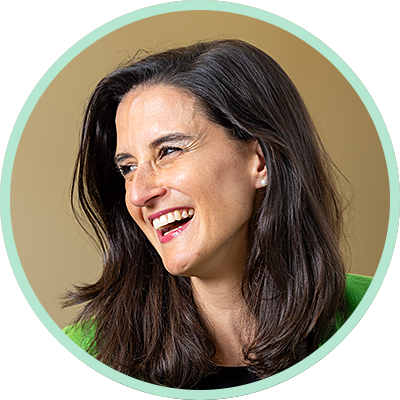
Eliana Crosina
Babson College

Stephanie Fernhaber
Butler University

William Forster
Oregon State University

Frank Fossen
University of Nevada at Reno

Alex Kier
Washington State University
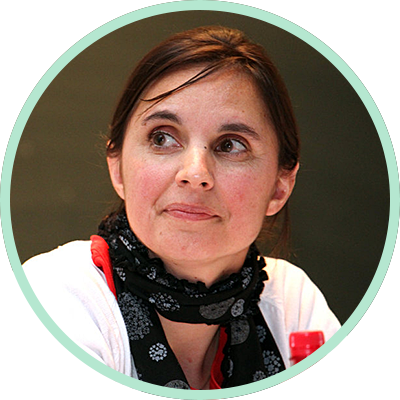
Mirjam Knockaert
Ghent University

Todd Moss
University of Oklahoma
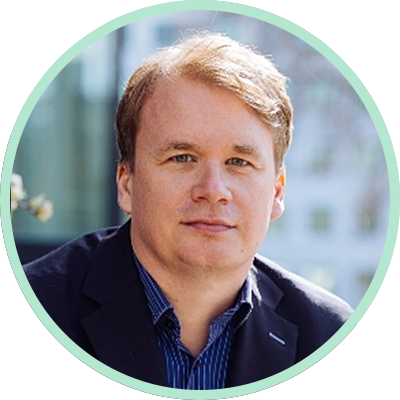
Martin Obschonka
University of Amsterdam

Haemin Park
University of Texas at Dallas

Simon Parker
Ivey Business School

Christian Schwens
University of Cologne
Your Research Submission
We are looking for a 1-2 page abstract, to help us understand what you are researching, who it is of interest to, and how we can help you achieve your goals for the project. We welcome any form of research paper: conceptual, empirical (qualitative or quantitative), practical, etc.
The structure of the abstract should be as follows:
Title: (Max 100 characters – this will go into the program)
Current Research Team: name & current affiliation of all authors (please highlight the name of the presenting author)
Current Stage of Development: (Select one)
- Idea Stage
- Planning Stage
- Literature Review Stage
- Data Collection Stage
- Writing Stage
- Under Review
- In Press (discouraged, but allowed)
What kind of feedback are you (primarily) hoping for: (Select one)
- None, socialization only
- Hoping to attract coauthors
- Sensemaking (i.e., I don’t know what I have)
- Conceptual feedback
- Methodological feedback
- Critical feedback (in preparation for submission)
Rationale: 250-500 words about your research question – why are you studying and why?
Form: 100-200 words. The intended/planned executional form of the project: if conceptual, will it have propositions and what are they?; empirical, what are the hypotheses (if applicable), data, and methodology?; etc. Paint a picture of what the project will do.
Intended Contribution: 100-200 words. What is this project intending to accomplish, what new knowledge will it create, and why is that important?
How to submit: After you have completed registration, you will be prompted to send your research submission to cerc@ivey.ca. The deadline for submitting your research is March 31.
Potentially Asked Questions
Ivey Business School, Western University, in London, Ontario. We are about two hours from both Toronto, Ontario and Detroit, Michigan.
Yes. While our focus is scholars living or working in Canada, we encourage anyone interested in working with, talking to, or learning from these scholars to attend.
Regular fee: $200
PhD student fee: $50
*15% processing fee & 13% HST will be added to all registrations.
Research active entrepreneurship students are welcome. Our focus is current PhD students, but Masters students in a thesis-based entrepreneurship program are welcome.
Coffee breaks, lunches, welcome social, and conference dinner.
To foster a research community here in Canada, we are asking each attendee to present a piece of research. This will ensure that all attendees get to see what research is being done and learn about you as a research scholar. However, that research can be at ANY stage from an idea to a completed project. We do prefer unpublished research, but will leave that to your judgment. Research submissions are due by March 31.
We plan to have two types of presentation: a poster presentation and an interactive presentation. Attendees will be informed about which presentation they have been assigned about one month prior to the conference.
The production of posters are your responsibility (not to exceed 60x90cm (24x36 inches)). Specific times for attendees to view and converse about posters will be established in the schedule.
Interactive presentations will be in a classroom, using PowerPoints, with time allocated for question and answer. The length of the interactive presentations will be between 15 and 30 minutes (to be determined when registration closes).
You can choose the form of accommodation that makes the most sense for you. London has vacation rentals (Airbnb/VRBO), student residence housing (https://stayatwestern.uwo.ca/), and various hotels to choose from.
The preferred hotel for this event is Spencer Hotel & Conference Centre which is just 3 km from the Ivey Business School (the location of the conference). They offer a discounted rate for guests of the University. Click here for the booking link.
Other recommended hotels include:
Please Note, the Special Olympics Ontario Provincial School Championships will be held in London at Western University from May 26-28. We anticipate they will be leaving while our attendees are arriving; however, accommodations could be challenging on May 28th. If you can arrive on the morning of May 29th, it is advisable.
Car – London is 200km west of Toronto and 200km east of Detroit on Ontario highways 401 and 402.
Train – ViaRail has numerous trains each day on the Quebec City-Windsor Corridor.
Bus – There are buses from both Toronto and Detroit that arrive in London.
Fly – London does have a small airport with daily flights from Calgary and Toronto. Other nearby airports are Toronto, Hamilton, Waterloo Regional, and Detroit.
The registration (and hence the catering) is being subsidized for doctoral students. We are investigating travel supports and will advise in the spring.
We are envisioning this as an ongoing event (not necessarily always hosted by Ivey), likely annual. However, it will depend on the interest in, and attendance at, this conference.
If you have unlimited time and money, we recommend going to all of these conferences. We are running this as a leaner conference (less expensive) than both, and more focused than AoM. Our conference is the best place to meet entrepreneurship researchers working within the Canadian grant and academic systems. If that is your context or a context that interests you than this conference provides something no other conference does.
Finally, in 2026 both AoM and BCERC are located within the United States, travel to which is not available or desirable for everyone.
We will organize presentations based on the presentations we receive. We will attempt to group presentations based on topics, methodologies, theories, contexts, etc. that make the most sense and that presentations will occur with like presentations. Ideally, we would like to minimize room jumping. But all organisational decisions will be based on registrations and submissions.
If you have any remaining questions about this event, please email cerc@ivey.ca.