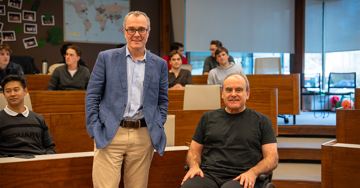
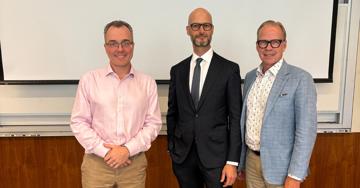
When Ivey launched its new elective, Navigating Change, this fall, the premise was simple but powerful: bring alumni CEOs directly into the classroom to explore strategic decisions, leadership pressures, and the realities of transformation – through their own stories.
The course pairs case discussions with candid conversations about strategy, culture, and personal leadership, giving students a rare opportunity to see how CEOs think and act in moments of change. It reflects Ivey’s focus on preparing students for a world where change is constant, and decisions rarely come with a clear playbook.
Ivey Dean Julian Birkinshaw, who created the course with Lecturer Doug Murphy, HBA ’85, former CEO of Corus Entertainment, said the experience opened up a new level of insight.
“The students can really understand, for the first time, what type of thinking/acting to expect from a successful CEO,” he said.
Murphy said bringing alumni into the classroom brought a different level of meaning to the discussions.
“The ‘experiential’ element of having the real-life Ivey grad CEO in the room to share their experience crystallizes the learning experience in a unique and powerful way,” he said.
Insights that shifted student thinking
Across the term, 10 visiting CEOs – all Ivey or Western alumni – brought different challenges to the class: Brett Barakett, HBA ’88; Ammar Al-Joundi, MBA ’91; Linda Hasenfratz, EMBA ’97; Sukhinder Singh Cassidy, HBA ’92; George Cope, HBA ’84; Darryl White, HBA ’94; Ian Rosen, HBA ’11; Christine Magee, HBA ’82; Bill Morneau, BA ’86 (Western); and Murphy himself. Their stories gave students a wide-angle view of leadership across industries.
Each class followed a two-part structure: a case discussion led by faculty, followed by a session where the visiting CEO walked students through how the decision played out.
In a session with Ian Rosen, President & Chief Operating Officer of Harry Rosen, students explored an omnichannel transformation that had stalled for years because sales advisors were invested in traditional selling practices. The pandemic ultimately forced the change, showing how quickly conditions can shift when external pressures remove the option to stay the course.
Another session examined Brett Barakett’s career path, which saw him move into several new industries before becoming founder and CEO of Tremblant Capital. His willingness to start fresh encouraged the students to rethink how they approach ambition, reinvention, and long-term career growth.
Murphy said these stories helped students see the leaders’ early careers as not unlike their own.
“Everyone’s story is unique unto itself. This will mirror those seated in the classroom … Ivey provided them the confidence and the key to unlock opportunities as their career unfolded,” he said.
Identity as strategy
Another theme that surfaced across the course was the role of organizational identity in guiding strategy.
In a discussion with Ammar Al-Joundi, President and CEO of Agnico Eagle Mines Limited, students saw how Agnico Eagle’s deep relationships with local governments, junior miners, and regional partners form a key competitive strength. Those ties shape how the company grows and where it chooses to invest.
Birkinshaw said many of the leaders shared that same sense of identity.
“The CEOs had a very deep understanding of the ‘identity’ of their companies – what it was that made them unique, and how they could build on that distinctiveness for further growth,” he said.
Balancing alignment and action
Although the CEOs led different organizations, many described working to gather input and build alignment before making major decisions. But they also spoke about moments when leaders need to act quickly, even without full consensus.
Birkinshaw and Murphy said a pattern emerged across the discussions: the CEOs worked to solicit input, build alignment, and communicate openly, while also recognizing when timely action was essential.
The students also saw how culture and execution reinforce one another. Linda Hasenfratz, Executive Chair of Linamar Corporation, for example, is known for spending time on the operations floor and leading “cost attack” teams – structured groups focused on improving productivity. Her approach illustrated how hands-on leadership can build discipline, alignment, and accountability.
Strategic agility in practice
Several sessions highlighted how organizations adapt when disruption hits.
When online competitors challenged Sleep Country Canada’s long-successful business model, Christine Magee, Founder & Executive Chair, moved quickly to acquire digital-first companies and guide the organization toward an omnichannel future. Her example showed how even strong business models must evolve.
The students also examined how Linamar, under Hasenfratz’s leadership, diversified beyond automotive and built flexibility into its operations by producing close to customers and investing in technologies suited to multiple future scenarios.
Murphy said this kind of adaptability is essential for today’s leaders.
“The answer resides in whether the leaders understand and execute ‘strategic agility.’ Test and Learn. Incremental bets. Investing in both the core and the explore – realizing that the core pays the bills today for the explore of tomorrow,” he said.
Birkinshaw said the speakers were confident yet reflective.
“They were very self-aware, conscious of their own weaknesses as well as their strengths,” he said. “They aren’t ‘humble’ people, but neither are they arrogant or disinterested. I think they came across as highly authentic and reflective.”
Leadership up close
After a successful first year, Birkinshaw and Murphy plan to expand Navigating Change with new cases and alumni leaders next year, building on the value of learning directly from people who have lived the decisions students study. They hope to broaden the range of industries, leadership styles, and challenges explored.
Murphy said seeing alumni leaders in person made the experience far more tangible than a written case alone.
“Seeing is believing. It’s one thing to read about a case protagonist. It’s at a whole other level to see and feel that person right in front of you,” he said.
View photos of the guest speakers below.
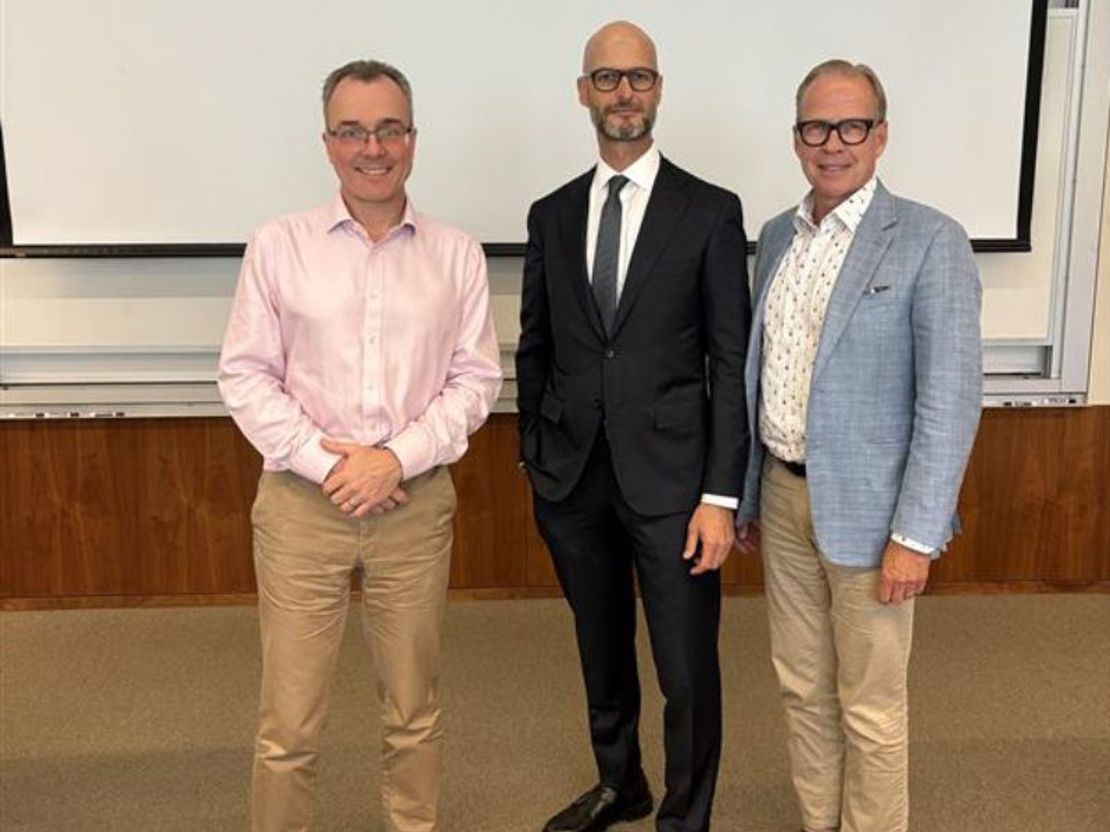
Julian Birkinshaw, Brett Barakett, and Doug Murphy
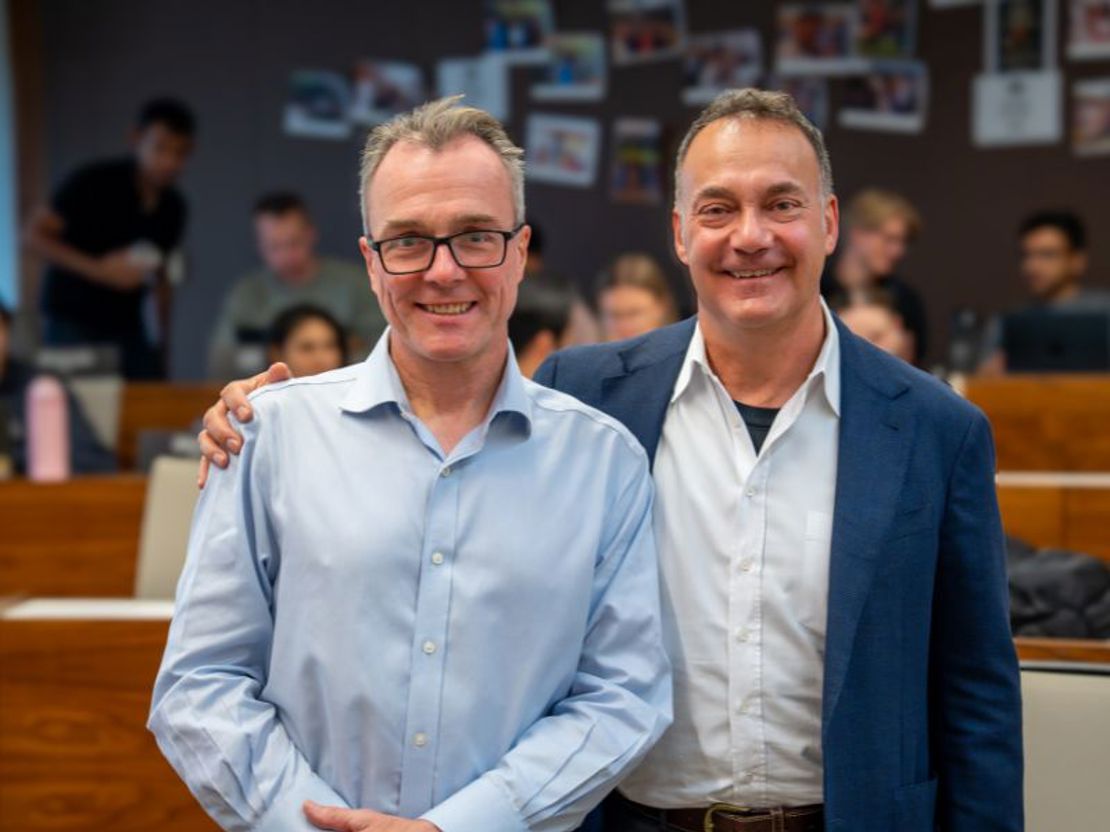
Julian Birkinshaw and Ammar Al-Joundi
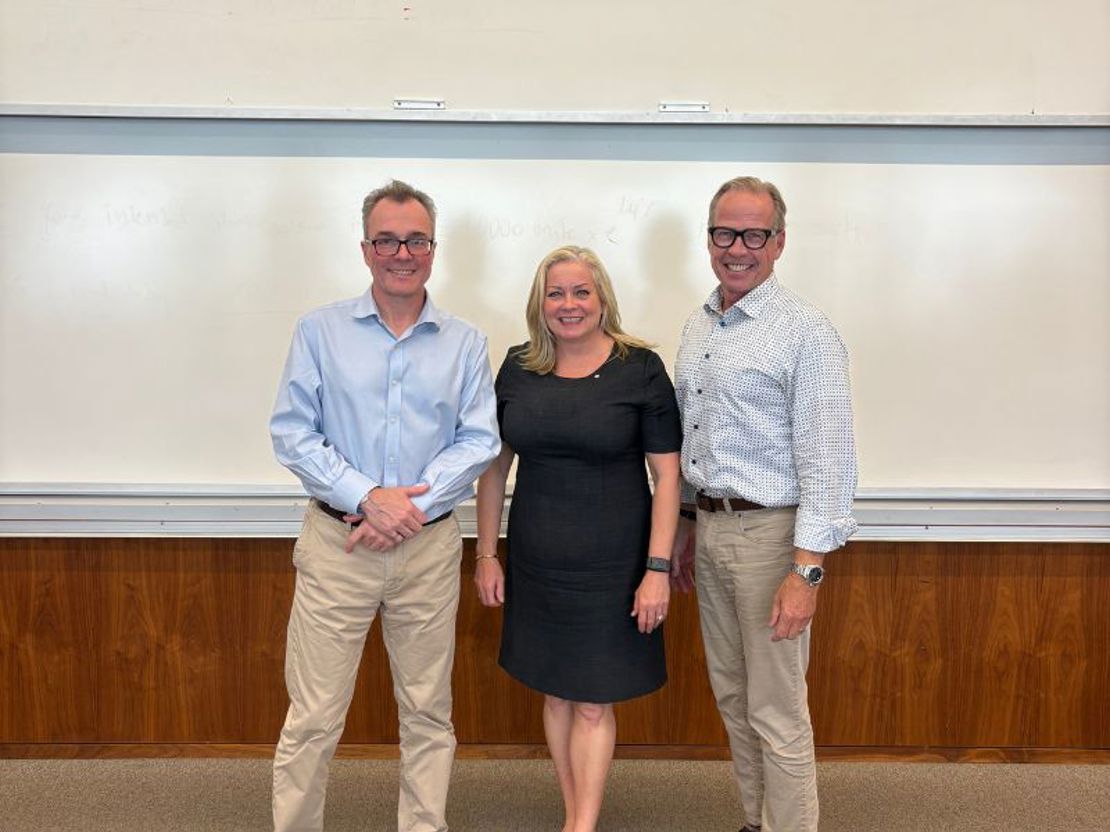
Julian Birkinshaw, Linda Hasenfratz, and Doug Murphy
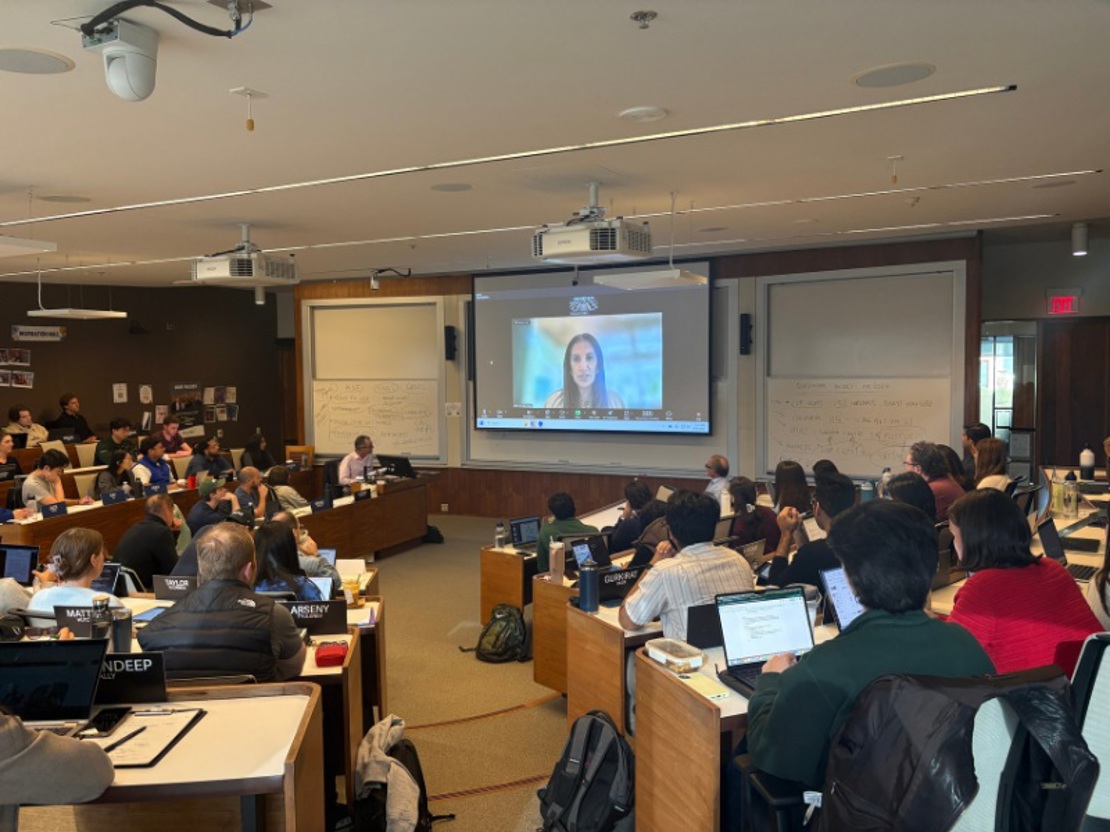
Sukhinder Singh Cassidy via Zoom

Julian Birkinshaw, George Cope, and Doug Murphy

Darryl White and Doug Murphy

Doug Murphy, Ian Rosen, and Julian Birkinshaw
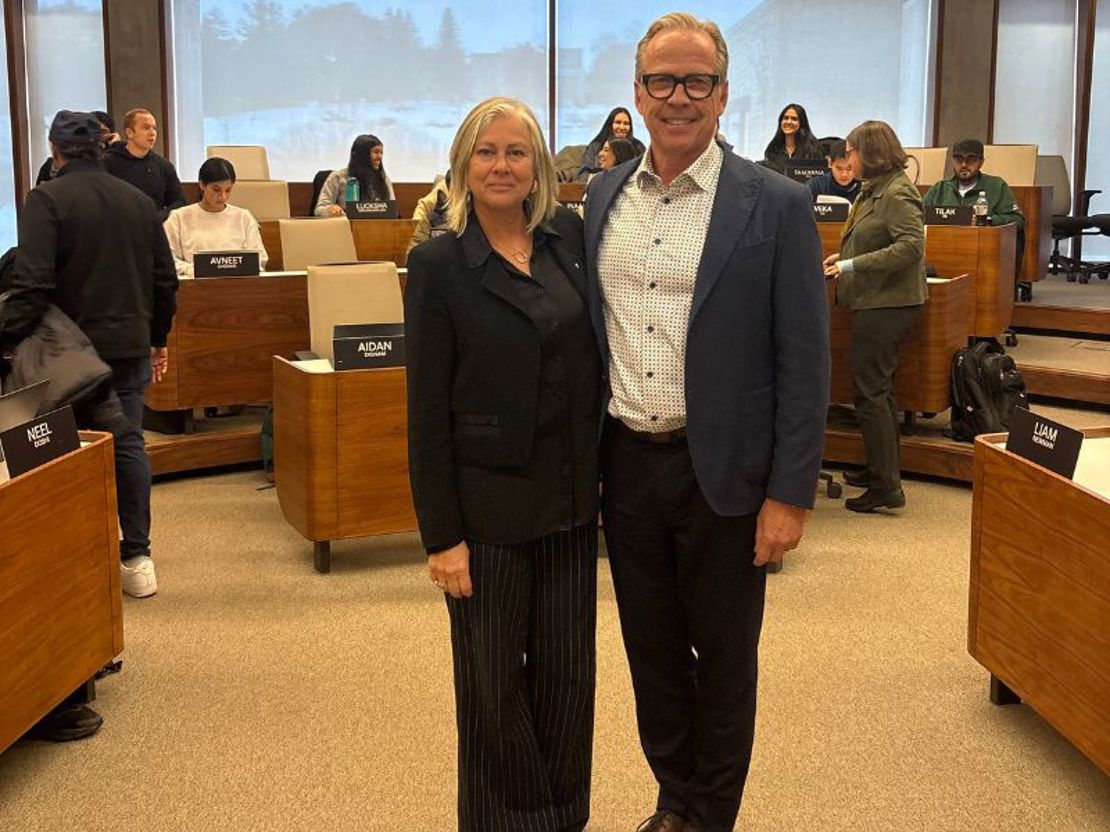
Christine Magee and Doug Murphy
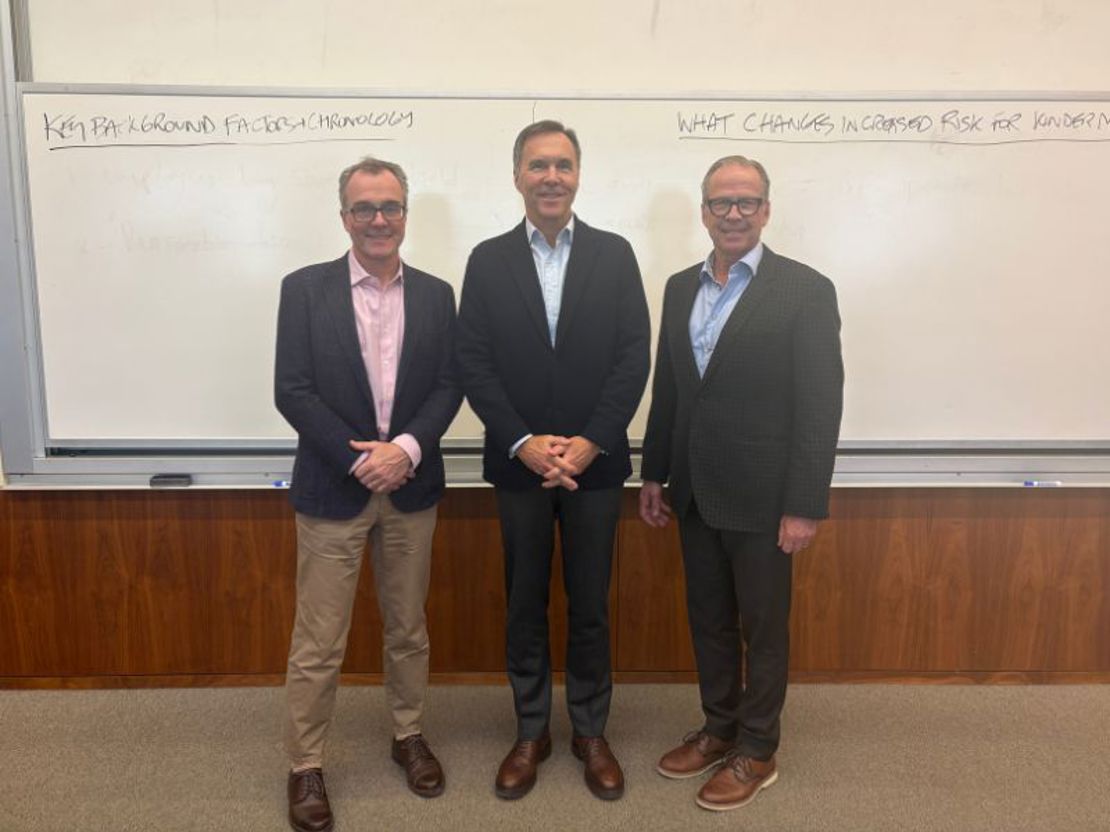
Julian Birkinshaw, Bill Morneau, and Doug Murphy
Related Articles