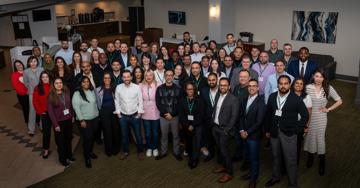
An unexpected career interruption became the catalyst for a transformational journey of learning, connection, and personal growth for Elizabeth Gough, EMBA '26, Chief Strategy Officer and co-founder of Veterans and Everyday Heroes. A strategy, governance, and community leader with two decades of public-sector experience, Gough reflects below on the relationships and experiences that shaped her Ivey Executive MBA, and shares lessons about growth, belonging, and leadership. Alongside Dunishi Kotelawala, Rovita Nawbatt, and Valerie Renn, all EMBA '26, she now serves as an Alumni Class Liaison, helping keep her cohort connected to one another and to Ivey.
A purposeful interruption
Two years ago, I was facing a restructuring and layoff from what I considered my dream job in public policy, a role I had spent two decades working toward.
I was devastated.
After the initial anger and disappointment, I knew I had a choice. I could let the experience define me, or I could adjust my attitude and take control of what came next.
I chose the latter.
Looking back now, I see that moment as a purposeful interruption. It forced me to pause long enough to consider not only what I wanted to do next, but who I wanted to become. At the time, I could not have known that this disruption would help lead me to one of the most rewarding and transformational experiences of my life.
Finding my way to Ivey
I had always wanted to return to school to pursue a master’s degree. I completed my undergraduate business degree at Western University in 2003, where I also took several Ivey courses. The challenge, energy, and sense of accomplishment I experienced in an Ivey classroom left an imprint on me.
I built my career in the not-for-profit and public sectors, focusing on human services, public policy, community development, and education. Along the way, I expanded my leadership experience through volunteer governance and social entrepreneurship. I developed and scaled several not-for-profit organizations, including co-founding Veterans and Everyday Heroes, which supports veterans, first responders, and their families.
Yet, I did not see myself as someone who belonged in a traditional business setting. I was intrigued by the idea of pursuing an MBA, but I questioned whether it would apply to my career and whether my background would fit within the program.
I considered other graduate degrees in leadership, but ultimately chose Ivey’s Executive MBA (EMBA) because of its immersive classroom experience, the case method, its reputation, and, if I am honest, a little nostalgia. It felt like a full-circle decision.
What I could not have anticipated was how profoundly the experience would reshape my understanding of leadership and of myself.
Trust that you have earned your seat
When I walked into the Ivey Spencer Leadership Centre for my first residency week, I tried to appear confident.
Inside, I felt like an imposter.
I was surrounded by remarkable co-learners with fascinating careers and accomplishments. I wondered what I could possibly contribute. What I did not realize until much later was that many of my classmates were quietly asking themselves the same question.
Residency week was overwhelming. The workload was high, the pace was unfamiliar, and our professors repeatedly told us, “Trust the process.” We were learning and working within new teams while trying to prove, mostly to ourselves, that we belonged.
During that first week, my husband said something I carried throughout the program: “You will never again get to be on this exact learning journey with these exact people. Take it all in. Lean into everything it offers.”
That became my intention.
I began the program wondering whether I deserved a seat at the table. I finished knowing I had earned it and brought perspectives that could create value for others.
The evolution was gradual: from “I think I can,” to “I believe I can,” and ultimately, “I know I can.”
The power of one
Some of the most meaningful parts of the EMBA were not the academic milestones, but the micro-moments that could easily have disappeared had I not been paying attention.
One glance. One smile. One conversation. One story. One meal. One act of kindness. One moment.
After the first residency week, I deliberately sought opportunities to connect through dinners, social events, classroom conversations, and the spaces in between.
Before long, I was no longer focused on whether I was good enough or whether I belonged. I noticed the threads connecting us: our careers differed, but many of our hopes, fears, and struggles were remarkably similar.
My work in early-years education taught me about four conditions that support learning: well-being, engagement, expression, and belonging. Adults are not all that different. We learn best when we feel safe enough to express ourselves, supported enough to take risks, and connected enough to know that we matter.
Belonging is not simply being included in a room. It is knowing that your presence and contribution have value.
I began thinking less about what I needed from the experience and more about what I could help create for others. I naturally stepped into the role of connector, finding joy in creating moments where classmates and their partners felt included, celebrated, and part of something meaningful.
Those moments reinforced something I have long believed: leadership is service. It is about creating the conditions in which others can contribute, connect, and thrive.
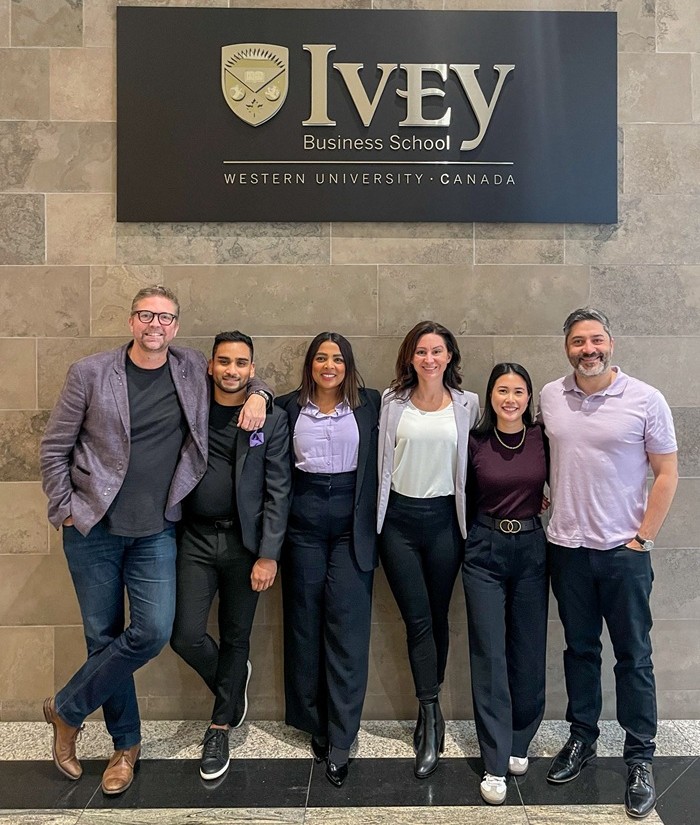
(Photo above) Elizabeth Gough, fourth from left, with her Discover Emerging Markets team at Ivey's Donald K. Johnson Centre.
Learning to unlearn
The case method taught me to examine complex problems from multiple perspectives, make decisions with incomplete information, and confidently defend a position.
But some of my most important learnings came through unlearning.
I had to let go of the belief that there is always one correct answer. In a case discussion, as in leadership and life, there is rarely a perfect decision. There are competing priorities, incomplete information, consequences, and trade-offs. The goal is not to eliminate uncertainty, but to develop the courage and judgment to move forward despite it.
I also had to unlearn the belief that expertise means having all the answers. The strongest classroom moments often came when someone challenged an assumption or offered a perspective no one else had considered.
Our diversity made us better. When we trusted what we carried – and what others carried – that was where the magic happened.
More than a degree
I entered the program hoping to build my business knowledge, strengthen my leadership capabilities, and expand what might be possible next. I achieved all of that, but the experience gave me so much more.
It reminded me that growth requires discomfort, confidence is built through action rather than certainty, and my non-traditional business path is a source of strength.
Most importantly, it gave me relationships I will carry long beyond graduation and greater clarity about the leader I want to be.
My advice to future EMBA students
You have earned your seat at the table, even when you do not yet feel like you belong there.
Be willing to take risks. Put your hand up. Ask the question. Speak before your thoughts feel perfectly formed. Offer your perspective. As Professor Emerita Mary Gillett, HBA ’82, MBA ’02, would say, “Say it like you mean it.” Attend the dinner. Have the conversation. Lift your classmates and allow them to lift you.
Remember that you can do hard things, even when the path feels uncertain or beyond what you once believed possible.
Trust the process. But also trust yourself.
Sometimes, you are just one decision away from meeting a stronger, braver, and more purposeful version of yourself.
View more photos below

Elizabeth Gough, second from left, with son Aiden, husband Andrew, daughter Ava, and two pups, Rae and Riggs
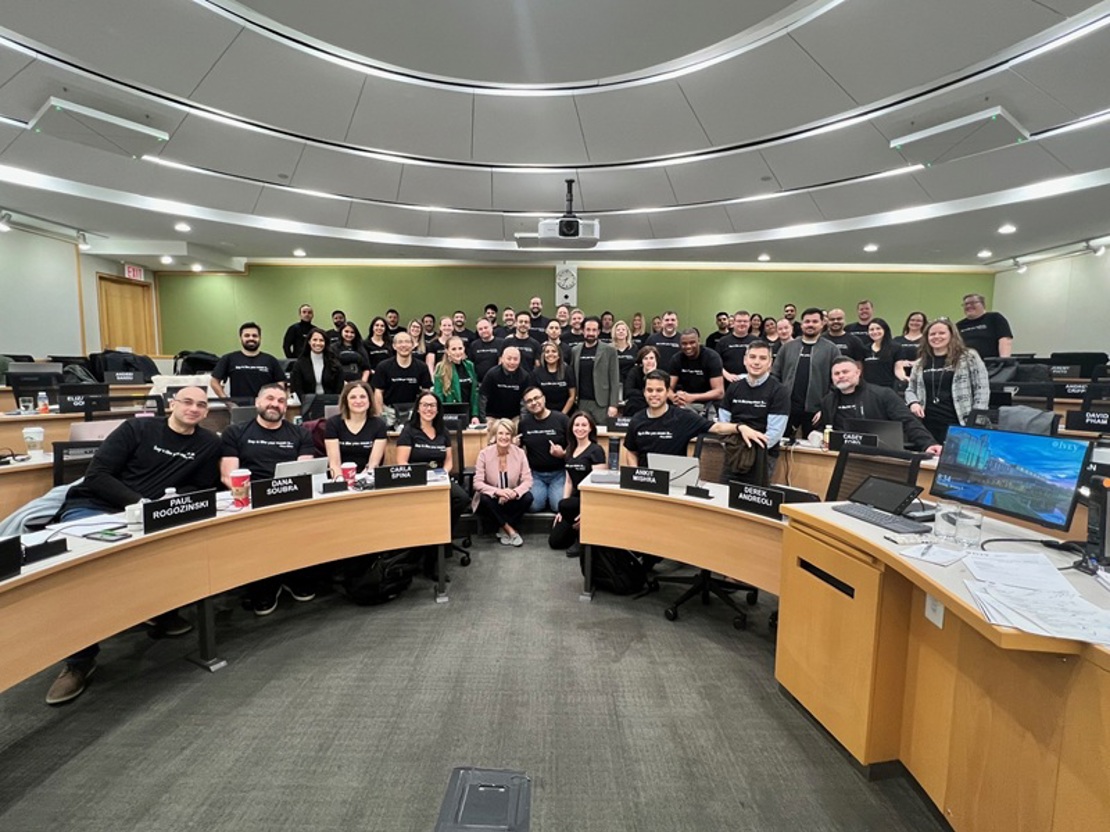
The EMBA Class of 2026 wearing class t-shirts in celebration of Mary Gillett's iconic classroom prompt to "Say it like you mean it"
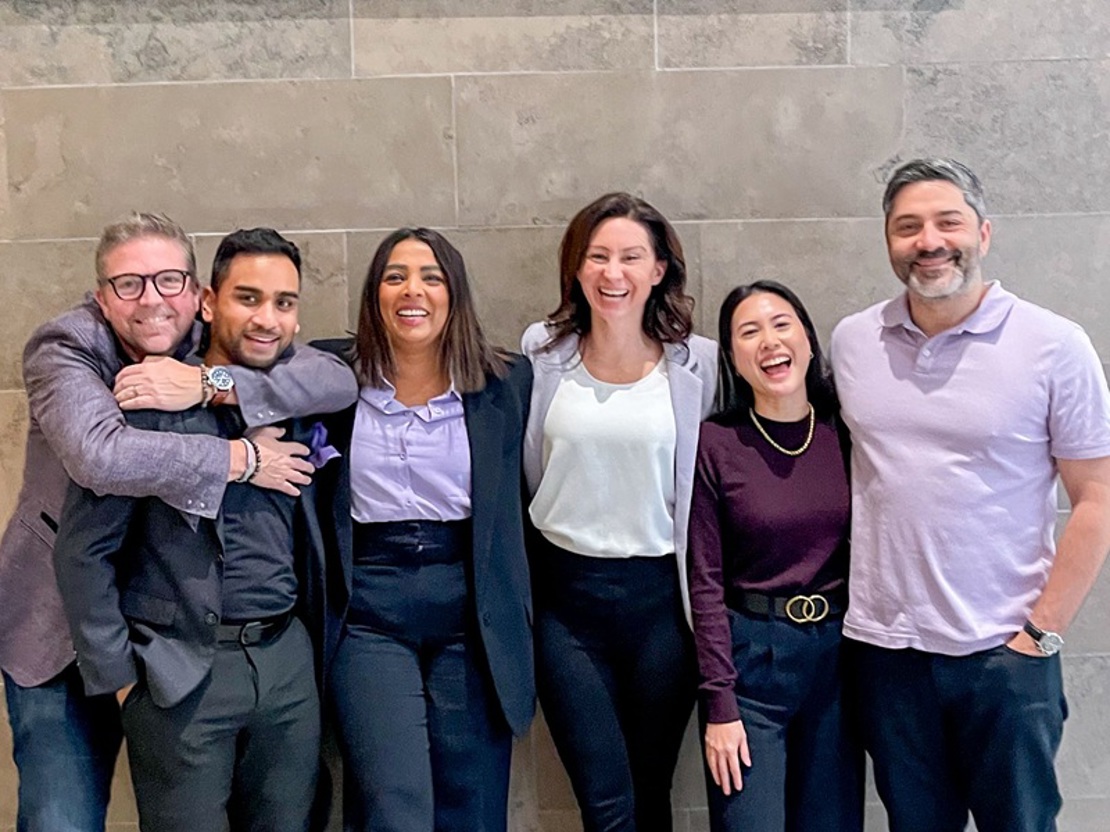
Elizabeth Gough with her Discover Emerging Markets team
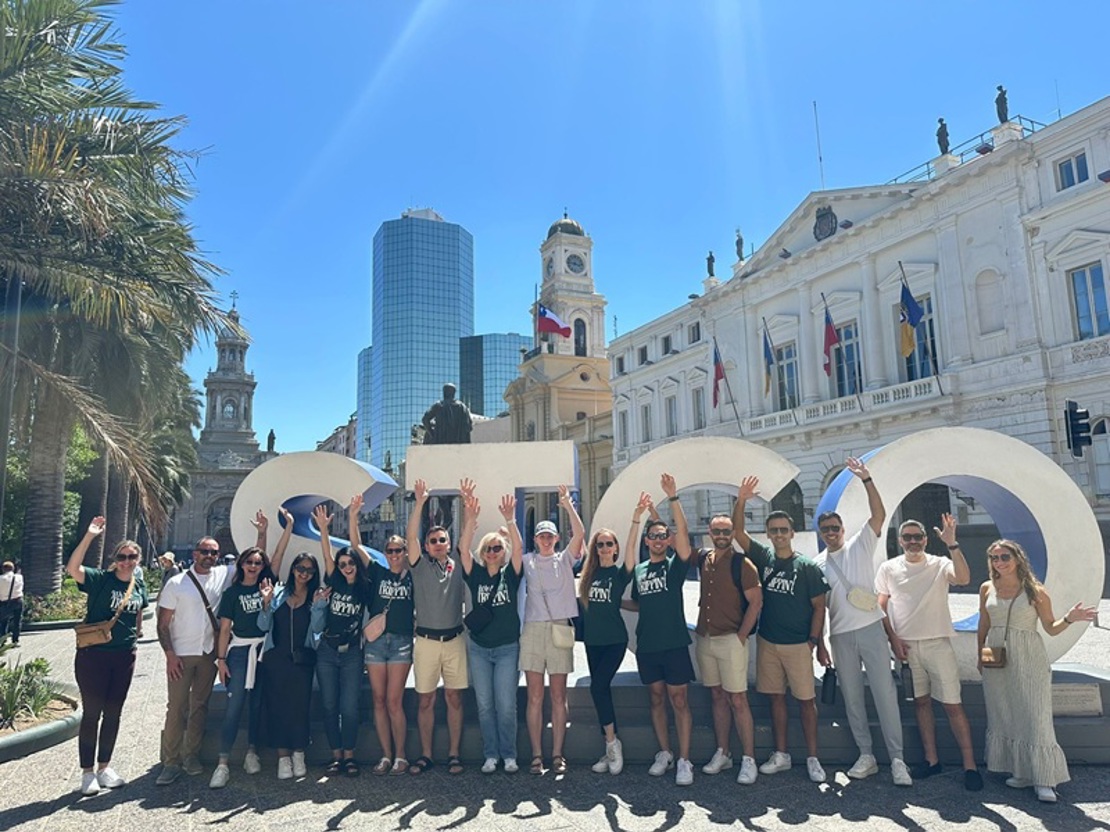
Group picture of some classmates and their partners while on the EMBA Discovery Expedition to Santiago, Chile
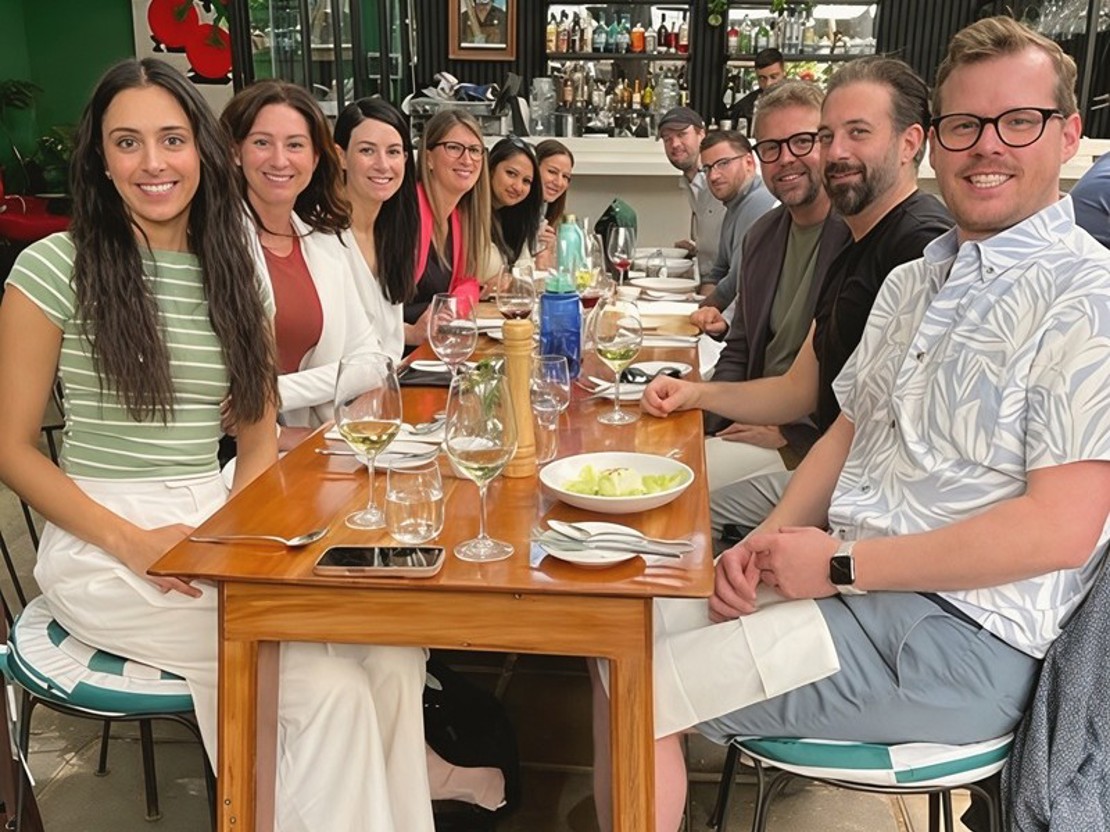
Having dinner in Santiago, Chile with some classmates
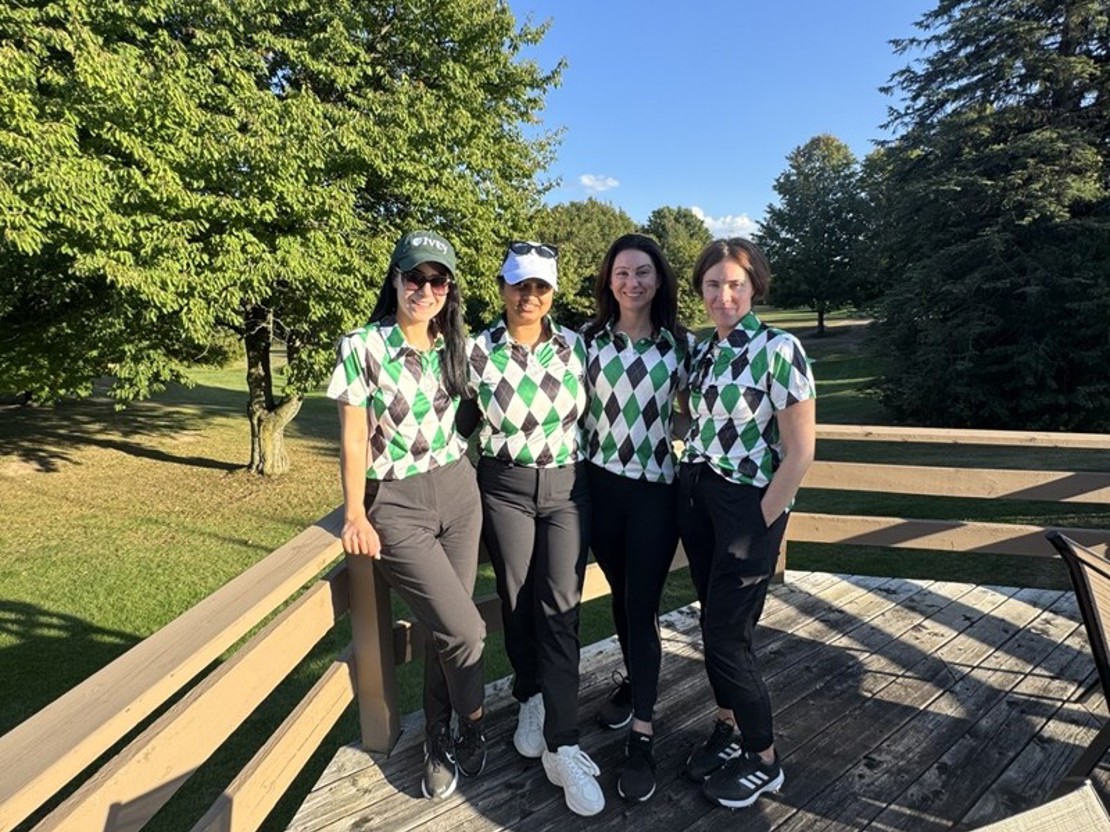
Elizabeth Gough with her EMBA golf tournament team
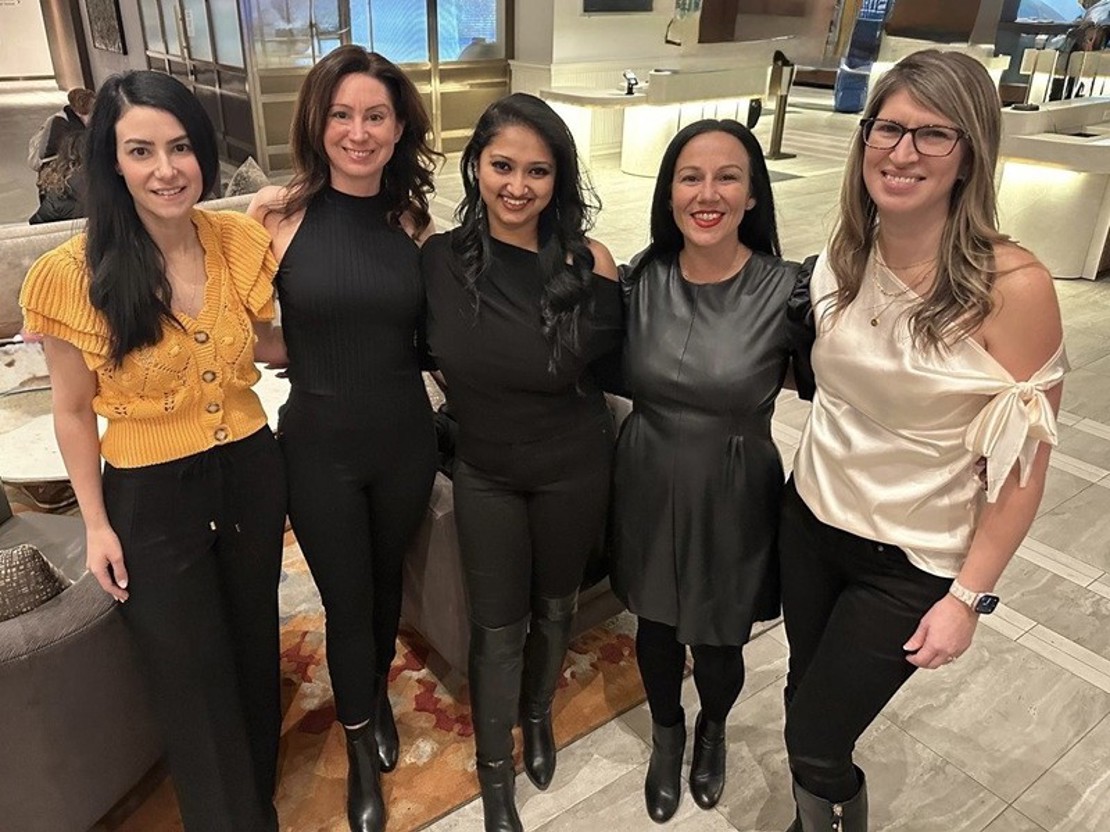
With classmates at the last day of classes celebration