With a 24-hour report underway and internship decisions looming, it was a stressful time to be an HBA student.
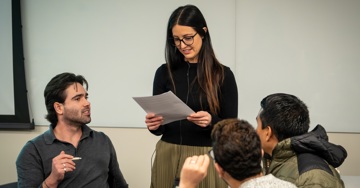
Yet, on a recent morning at Ivey, a group of students was decorating cookies, making bracelets, and playing games in class.
It wasn’t a break from the work – it was the work.
In their final Career Management Essentials class of the year, HBA students were asked to step back from resumés and recruiting timelines to consider a different question: How does work fit into a good life?
A broader definition of success
The session, Using Positive Psychology in Careers and Daily Life, came at a key point in the HBA journey, as academic pressure ramps up and students look ahead to summer roles and full-time recruiting.
“We always like to create time for students to recalibrate – not just in how they’re showing up in their job search, but more broadly in life,” said Brent Boles, Associate Director of Career Management Curriculum.
That shift reflects broader trends. Boles pointed to research showing young workers are placing greater emphasis on work-life balance, meaning, and well-being – and are willing to leave jobs if those priorities aren’t met.
“The definition of success is broadening,” Boles said. “We’re seeing people who are driven to pursue their career goals and also thinking more deeply about what meaningful work looks like over time.”
What does that look like in practice? Watch the video below.
A framework for thriving
At the centre of the session is PERMA, a model of well-being developed by psychologist Martin Seligman. It identifies five elements that contribute to a fulfilling life: positive emotion, engagement, relationships, meaning, and accomplishment.
The students assessed how each element showed up in their own lives and where something might be missing, while also considering what makes work sustainable over time – what energizes them, how their values align, and what helps maintain balance.
Some saw meaning at work as a luxury, while others said they couldn’t do without it. But there was overall agreement that it plays a role in overall satisfaction.
“What we do know is that meaning and purpose are fundamentally important as a human being,” said Boles. “And regardless of where that comes from, it supports your ability to thrive.”
From reflection to action
After mapping their PERMA elements, the students were asked to choose one area to focus on and take action immediately.
“I invite you to give yourselves the permission to do this – to block your own time and say it’s really important that I get these moments for myself,” said Kate Barnes, Career Coach, Manager.
For the next 20 minutes, the atmosphere shifted. Some students called friends. Others coloured, played games, or decorated cookies.
The activity itself wasn’t the point, Barnes said – the permission was.
“Well-being isn’t something that just happens, or comes with money, as we sometimes think it might,” Barnes said. “This is something they have control over. Taking time to reflect on it and take meaningful steps tends to mean better work, more retention, and being happier in your role.”
HBA ’27 candidate Evangella Schloo said the exercise offered a rare opportunity to slow down.
“It’s been a while since I’ve had the time or made the space to do something just for myself,” she said. “It was really nice to kind of have that break.”
Fellow HBA ’27 candidate Aaryan Sethi used the time to reconnect with friends.
“It made me feel good again,” he said. “It’s important to always make time for those relationships, even when things feel busy.”
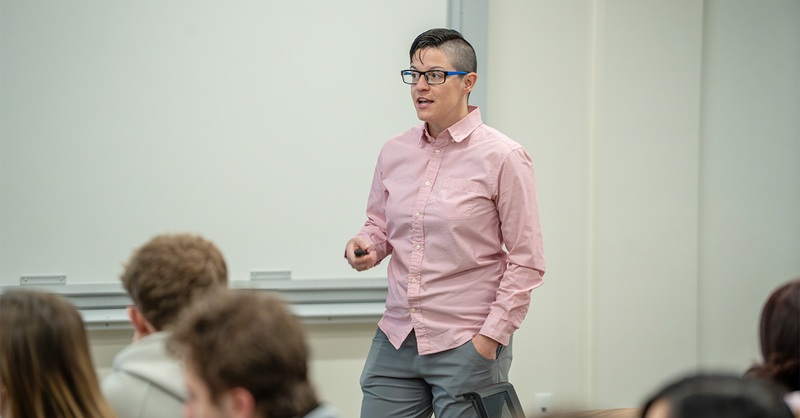
(Photo above) Kate Barnes speaking to HBA1 students at the Career Essentials session
Small changes, bigger impact
The session concluded with another simple challenge: commit to one change. The students were asked to identify one area of well-being to improve and how to build it into their routines – whether that meant approaching their job search more sustainably, being more intentional with their time, or rethinking what they value in a workplace.
“Our hope is that the learning leaves this room,” said Boles. “If it stays in these four walls, that means we have failed you.”
Barnes framed the exercise as an extension of the case method that the students experience every day.
“Just like in their cases, it’s one thing to talk about a concept – it’s another to actually live it,” Barnes said. “We want them to engage with it, build it in, and feel that it matters.”
Ultimately, the goal is to help students build careers – and lives – that actually work for them.
“You can have the best internship in the world, but if it’s not sustainable – if it’s not giving you what you need beyond a salary – it’s not going to keep you going,” Barnes told the students. “We want you to feel that you have what you need, not just to keep going, but to live a fulfilling and meaningful life doing work that matters to you.”
For Sethi, that message reframed how he thinks about success.
“There’s a lot of pressure to do well, and that can come at the expense of your well-being,” he said. “If your well-being is low, you’re not going to perform at your best – it becomes a cycle.”
Related Articles