Jury Gualandris opened Ivey’s inaugural lecture on regenerative agriculture with a provocative argument: many of the food system’s deepest failures are not accidents, but the result of business principles designed to maximize efficiency, scale, and profit.
Those principles, he says, have reshaped agriculture in ways that contribute to climate change, biodiversity loss, and growing inequity.
“We cannot solve our problems with the same thinking we used when we created them,” said Gualandris, who is the Abell-Hodgson Chair in Regenerative Agriculture at Ivey.
Hosted by Ivey’s Centre for Building Sustainable Value, the lecture brought together farmers, investors, government officials, First Nations representatives, community organizations, and researchers to examine how regenerative agriculture could help build more resilient food systems. Gualandris also acknowledged Sarah Abell, HBA ’81, who was in the audience and whose support helped establish the Abell-Hodgson Chair in Regenerative Agriculture.
A key focus of the discussion was the Collective Action Program (CAP) for Regenerative Agriculture, a multi-region research initiative led through the Centre and currently piloting in Middlesex County. Through the program, Gualandris and collaborators are working with local farmers to explore how regional farming communities can support both ecological sustainability and economic viability.
A food system under pressure
Before turning to agriculture specifically, Gualandris outlined what he described as a “polycrisis”– the interconnected challenges of climate change, biodiversity loss, and social inequity. Drawing on scientific studies, he described how accelerating global warming, shrinking species populations, and the degradation of ecosystems that provide essential services such as clean water, pollination, and healthy soil are affecting agricultural production.
He added that modern food systems prioritize highly processed foods engineered for convenience and repeat consumption, increasing those pressures while contributing to rising rates of obesity and diabetes.
“Maximizing profit by feeding customers responsively is not the same as feeding customers responsibly,” he said.
He also highlighted the risks of agricultural specialization, noting that roughly 80 per cent of the world’s almonds are grown in a single region of California, and the area relies on large-scale transportation of bees for pollination. That kind of concentration, he said, can create hidden ecological costs and vulnerabilities.
The same logic has shaped livestock production. Gualandris described how process intensification – squeezing more output from each animal – encourages selective breeding, crowded feedlots, and manure volumes that can exceed what local land can absorb, creating risks for animal health, ecosystems, and nearby communities.
The impacts extend beyond environmental systems, he said, affecting farming communities themselves.
In Canada, Gualandris noted, 4,000 of the country’s 189,000 farms generate 52 per cent of total farm income. That concentration contributes to a system in which many farmers feel more competitive than collaborative, with studies showing high rates of anxiety, stress, and depression.

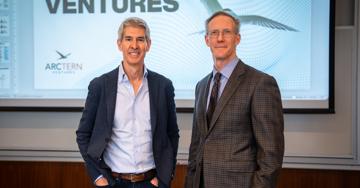
(Photo above) Jury Gualandris delivering the Collective Action Program for Regenerative Agriculture Lecture
A regional approach to regeneration
While much of the lecture focused on the failures of existing systems, Gualandris also highlighted emerging alternatives built around collective action and regional collaboration.
He pointed to examples from the U.K., Japan, South Africa, and the U.S. where farmers, food businesses, local organizations, and consumers have worked together to strengthen regional food systems, support ecological restoration, and build local supply chains.
For Gualandris, those partnerships matter because he said regenerative agriculture is not simply about changing farming techniques. It also requires rethinking the goals of the food system itself.
“We shouldn't aim for efficiency and responsiveness. We should aim for holistic functionality,” he said.
Testing a new model in Middlesex County
Closer to home, he described how the CAP initiative is exploring how a similar model could take shape in southwestern Ontario. The project currently involves 11 farms across Middlesex County representing a diverse mix of operations, including vegetables, flowers, livestock, and other products. Through a series of facilitated meetings, Gualandris said the farmers have identified common challenges, including how to manage diversified operations, access markets that value ecological benefits, and build processing and distribution systems for smaller-scale production.
They have also identified opportunities for collaboration, including peer-to-peer learning, shared data collection, value-added food processing, and stronger relationships with consumers and community organizations. More recently, the group has begun building connections beyond the farming sector itself, including with organizations such as Growing Chefs! Ontario and local Indigenous communities.
He cautioned that such communities should not be romanticized. They require trust, shared governance, and ongoing facilitation to manage different interests, different types of farms, and different ideas about change.
For Gualandris, that work also has implications for business education. If business principles helped shape today’s food system, he argued, business schools have a responsibility to help design better ones by teaching leaders to think beyond efficiency and profit alone and to consider ecological health, resilience, and collective well-being.
A call to rebuild food systems together
Gualandris closed the lecture by turning the challenge back to the people in the room – farmers, processors, financiers, educators, community organizations, and local food advocates – and urged them to see themselves as part of the effort to build more resilient regional food systems.
“Look at yourself in the mirror. You are that community,” he said. “Are you willing to take on the risks and the benefits of developing the connections to care?”
Related Articles