Inside Ivey
Step into the world of Ivey Business School through the eyes of its students. Whether navigating the program, embracing leadership opportunities, or forging lifelong connections across the globe, these firsthand stories showcase the ambition and impact of Ivey students. Real voices, real experiences, and real insights into life at one of the world’s leading business schools.
A customer’s journey can span websites, apps, and in-person conversations. At the 2026 Ivey Digital Innovation Conference (IDIC), Ivey MSc students worked in teams to explore how organizations can connect those moments and respond to customer needs. IDIC is a student-led case competition where teams tackle real business challenges with industry partners.
The two-week competition ran from October 23 to November 6, with eight finalist teams presenting their solutions in Toronto. Adobe, the conference’s official partner, contributed the case and led hands-on workshops. The finals also featured fireside chats with industry leaders.
Below, MSc student organizers Shuqi Chen, Naisha Chopra, Sarah Filipowitsch, Isabel Pogue, Rayan Temraz, Bo Wu, and Sally Yan reflect on what went into creating the conference, what they learned about digital innovation, and what they hope participants carry forward.
Q&A with Shuqi Chen, Naisha Chopra, Sarah Filipowitsch, Isabel Pogue, Rayan Temraz, Bo Wu, and Sally Yan
Can you tell us about the challenge at the centre of this year's conference and why businesses need to consider it?
(Bo) A customer can spend weeks researching a product online, only to start from scratch the moment they speak to someone in person. A 2023 study commissioned by Google found that 60 per cent of consumers take six or more actions before buying from a brand for the first time. Each website visit, app interaction, or in-person conversation can offer a clue about what the customer needs next. Together with Adobe, we challenged teams to pick a real company and show how it could connect those signals and act on them responsibly. Teams tackled one of two cases. In financial services and insurance, they looked at how companies could recognize important moments in a customer’s life and respond in ways that earn trust. In automotive, they explored how a dealership could pick up where a buyer’s online research left off. The stakes are clear. Miss the signals and you can lose a sale that was already taking shape. Use them well and you give customers a reason to buy and a reason to come back.
What do you think makes IDIC different from other student-led events at Ivey?
(Sally) I think what makes IDIC different is that we take what we learned as competitors and use it to make the next year better. Last year, I was a finalist, and I still remember how nervous I felt about presenting. This year, when I joined the executive team that was organizing the event, as VP Design, one of the questions we asked was, “What would we have wanted going into our first case competition?” To me, that’s design thinking. We started with the students and what they might be feeling, and we built from there.
That’s how we ended up adding a business communications workshop with Associate Professor Mohamed Satti. We wanted students to leave with practical tips they could use right away, such as using their voice and body language to communicate confidently. Watching the presentations this year, I honestly felt like the teams raised the bar from last year, particularly because so many students were competing for the first time.
I also think a lot of it comes down to the people running IDIC. Our executive team is really down-to-earth, and we spent time talking one-on-one with students who were figuring out their first competition. I remember what it felt like to be in their shoes, so it meant a lot to be someone they could come to with questions.
How is artificial intelligence (AI) shaping the challenge you're exploring, and what do you think businesses need to be thinking about as AI continues to evolve?
(Rayan) AI is changing how businesses understand their customers and respond to their needs. Looking at both of our case challenges, I think one of the biggest opportunities is using AI to recognize customer behaviours and patterns that businesses might otherwise miss. Whether it is a bank identifying when someone may need financial support or a car dealership understanding when a customer is ready to make a purchase, AI can help businesses create a more personalized and connected experience.
As AI continues to evolve, I think businesses need to focus on more than just adopting the newest technology. They need to think about how they are actually using it to solve real problems and improve the customer experience. Trust and data privacy are also really important, especially when dealing with personal information. One thing that stood out to me from these challenges is that AI should not replace the human side of business but rather augment it by helping people make better decisions, understand customer needs, and build stronger relationships.
What drew you to getting involved in organizing this year's conference?
(Naisha) Last year, I had the opportunity to participate in IDIC as part of a team that made it to the finals and presented in Toronto. It was one of my first case competitions and remains a highlight of my MSc experience. I really valued the opportunity to collaborate with my teammates and apply what we had been learning in the classroom to a real business problem.
After such a positive experience, I was excited to help organize this year’s conference. I wanted to help create a similarly meaningful and memorable experience for the next cohort, especially for students participating in their first case competition, just as I was last year.
What has been the most interesting or unexpected part of putting the conference together?
(Bo) What surprised me most about running IDIC was how much of the work went into building the brand. IDIC started in 2023, and most students had never heard of it. Before we could ask them to register, we had to show them what it was and why it was worth their time. That shaped this year’s communications plan around three stages: acquisition, engagement, and retention. For acquisition, we tried a few things for the first time. We went to orientation to reach incoming students in person. We vibe-coded our first landing page. Together with social media, those channels introduced students to IDIC. Only then did we open the registration campaign. Engagement is about keeping students involved once they sign up, through workshops, drop-in sessions, and other activities. Retention is the part I find most interesting. We asked how to follow up with sponsors, and how we stay connected with people after the event. One example: we invited IDIC alumni back this year to share their experiences and network with students. The goal is bigger than IDIC 2026. We want to build an MSc community where each cohort has a reason to come back and something to share with the next, in 2027, 2028, and beyond.
Was there a particular speaker, topic, or conversation during the conference that made you think differently about digital innovation?
(Bo) Shravan Thampi’s opening remarks. As Director of Product, Platform and Proposition at Tangerine, he could easily have talked about technology. Instead, he reminded us that finding the right answer is only half the job, because an idea creates value only when people understand it and can act on it. He described problem-solving as “advanced common sense,” and that changed how I see digital innovation: it is less about the smartest tool and more about asking whose problem we are actually solving.
Has organizing the conference changed the way you think about the relationship between technology and business? If so, how?
(Shuqi) Yes, organizing IDIC has deepened my understanding of how technology and business complement each other, particularly through the lenses of customer journey design and data analytics.
As an organizer, I learned to approach the conference as an end-to-end customer journey, considering how each touchpoint, from registration to workshops and networking, could be improved through technology and data-driven insights.
From a learning perspective, the competition, workshops, and fireside chats reinforced that successful digital innovation is more than adopting the latest technologies. It means identifying real business problems, understanding customer needs, and using analytics to inform decisions and measure impact.
Overall, the experience strengthened my belief that technology is an enabler, while customer-centric thinking and business strategy are what ultimately drive meaningful innovation.
What skills or experiences have you gained through organizing the conference that you think will stay with you beyond Ivey?
(Isabel) One of the most important skills I gained was learning to be proactive with each milestone our team set, right up to the final presentation day in Toronto. Over the course of six months, I realized that conference planning requires a great deal of thoughtful preparation, and sometimes ideas or proposals won’t work out as planned. By having alternative solutions, our team was able to pivot successfully and remain forward-thinking in every decision we made throughout the process. This mindset allowed us to turn months of planning into an experience that left a real mark on the students who participated. Building this skill through IDIC has taught me how I want to approach every opportunity and setback that comes my way, whether in my career or my personal life.
I also believe clear communication was at the heart of every decision we made and is what kept our team aligned and motivated while organizing IDIC. Whether we were talking to our sponsors about our vision or delegating tasks among our team, planning became a much smoother process when everyone was on the same page. By learning to communicate clearly during planning, I built trust in my team’s ability to get tasks done, and I felt I could give everyone the opportunity to own their work in organizing the conference. Even in my Business Communications class with Professor Satti, he always emphasized that effective communication matters more than we think, even outside of business environments. IDIC reinforced this and turned a lesson from the classroom into a skill I will carry beyond Ivey.
How do you see the ideas explored at the conference connecting to the future careers of Ivey students?
(Isabel) During the fireside chats, one of the keynote speakers discussed how much personalization is necessary in customer journeys and when it becomes a problem. In the age of AI, it will matter more than ever to keep humans involved in building customer-centric solutions instead of letting technology dictate every decision about personalization. The judging panel also raised this theme repeatedly when students responded to their questions, and it's a conversation that will follow us throughout our careers. For Ivey students, this matters because many of us will move into leadership positions where we determine how much authority to give these tools. In those moments, we must ground every decision in ethics, asking not only what AI can do, but what it should do.
What do you hope students take away from this year's conference?
(Sarah) One of the biggest takeaways I'd like students to have is the importance of looking at the bigger picture when approaching complex business problems. With customer journeys, for example, it's easy to focus on individual interactions and overlook how they all connect. Coming up with a good idea is only the first step. You also need to consider whether it's realistic to implement and whether it would actually make a difference to the customer. Personalization is a great example of this, because making interactions more relevant doesn't necessarily mean making them better, especially if customers start to feel that their privacy is being invaded.
Beyond applying what they've learned in class, I also hope students walk away with more confidence in their own ideas. Having the opportunity to work with Adobe and hear directly from industry professionals gave them a chance to see how these challenges are approached in practice, and I hope the connections they made will continue beyond the conference.
Congratulations to the IDIC winners: First place: Team C What I C? (Alexander Frino-Fernandez, Luke Peters, Adnan Rohani, Dev Nayak, Aamir Dhanani), Second place: Team S.W.A.N.S (Will Semeniuk, Noah Davidson, Gabriel Laschai, Aria Noronha, Sonia Mathews), Third place: Team Guardians of the Value Chain (Vanson Nguyen, Sahand Shahbaz Mehr, Kaden Norcross, Mackenzie Baker, Caden Beange)
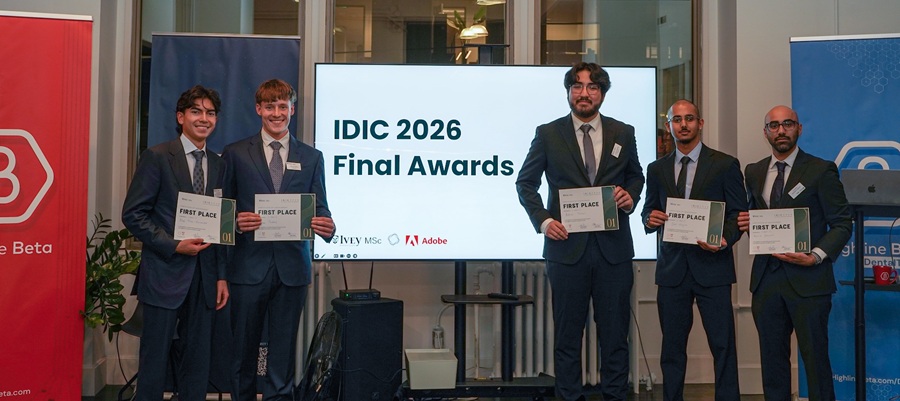
(Photo above) The winning team: Alexander Frino-Fernandez, Luke Peters, Adnan Rohani, Dev Nayak, Aamir Dhanani
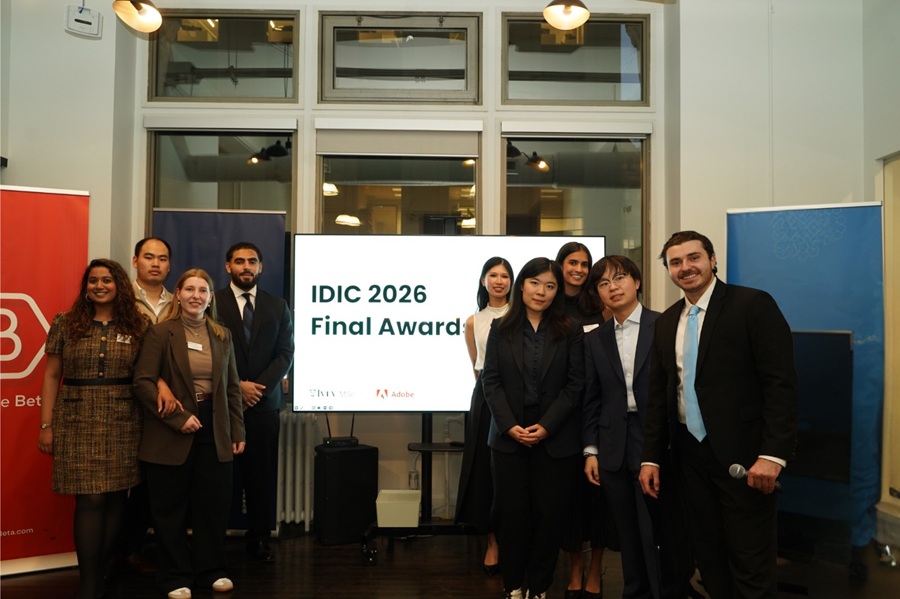
(Photo above) The Executive Team at IDIC 2026 (Front row, l-r) Naisha Chopra, Sarah Filipowitsch, Shuqi Chen, Bo Wu, Faisal Abdel Wahid; (Back row, l-r) Eason Wu, Rayan Temraz, Sally Yan, Isabel Pogue