When Coby Harvey, HBA ’26, arrived in Tanzania in the summer of 2024 to teach case studies to local university students, he had no idea the trip would lead to a charity created by his cohort.
Two years later, that trip has grown into the Twende Education Fund, a student-run charity that has awarded its first four full university scholarships to Tanzanian students and expanded to support students with disabilities in Kenya.
A trip that started with teaching
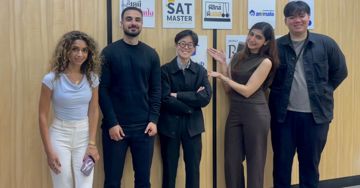
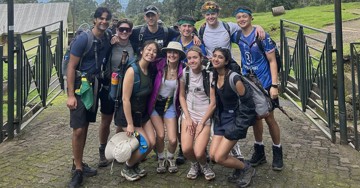
Harvey travelled to Tanzania through Ivey’s Service Learning in Africa course, which gives students the opportunity to teach case-based courses at partner universities. He and six classmates, including Elizabeth Shewchuk, HBA ’25, spent three weeks teaching at St. Augustine University of Tanzania (SAUT).
Early in the trip, they learned that the Tanzanian students they came to teach were already finding ways to support their community.
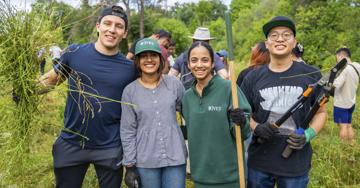
At a local all-girls elementary school, they watched older SAUT students deliver donated underwear, feminine hygiene products, and hand soap to girls who needed them and learned that without access to these supplies, some girls were missing roughly a week of school each month.
“Something so simple, and considered a basic human right to us, is the very thing creating barriers between women and their education,” said Shewchuk.
A teacher at the elementary school also told the group that while students in the community had the potential to become doctors, lawyers, and engineers, only about five per cent would achieve those goals.
The Ivey students then asked SAUT where their support could make a difference. They wanted to build on work already happening in the community rather than arrive with their own idea of what was needed.
“We didn't want to come across as ‘white saviours,’” said Shewchuk.
They worked with SAUT’s public relations team and followed the model of the university’s community engagement club, which had organized the school visit.
“We wanted it to be clear to our donors back home that there was no middleman,” said Shewchuk. “Every dollar raised went directly to supporting students in need.”
Building on the first effort
Once they returned to Canada, the Ivey students posted on social media and reached out to friends and family. Within 48 hours, they had raised more than $5,000.
Working with SAUT, they used the money to support another local elementary school. The school received a printer, several computers, sports equipment, and a year of Wi-Fi. The printer made a practical difference. Before it arrived, Harvey said the teachers and administrators had to drive about 45 minutes into town whenever they needed to print materials.
The Ivey group then began talking with SAUT about how to continue to use the remaining funds to provide scholarships for Tanzanian students. Those conversations eventually led to the idea of a scholarship program.
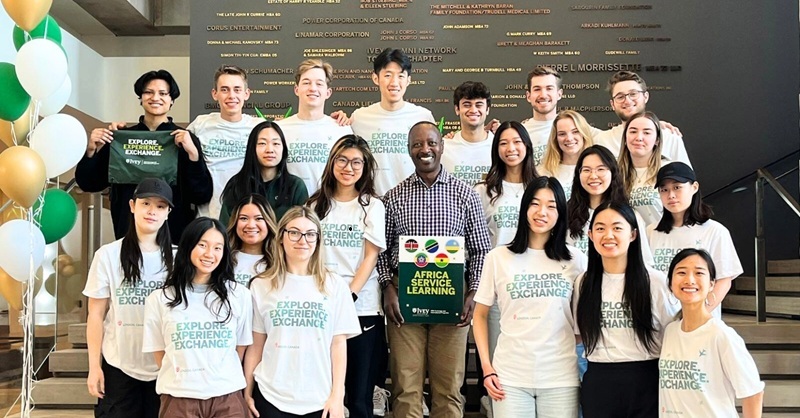
(Photo above) The 2024 Service Learning in Africa cohort with faculty member Lameck Osinde (center)
Passing the torch
The next Service Learning in Africa cohort picked up where the first group left off and nearly doubled the amount raised, bringing in about $12,000. The money was used to support local schools, and the group also worked with an orphanage, providing requested supplies and spending a day volunteering there. The remaining funds helped them to formally register Twende as a charity.
By the time the third cohort arrived this summer, the pieces were in place to launch the scholarship program.
Harvey, who had remained involved after his own Africa trip, worked with students from the second and third cohorts to review applications with SAUT. Applicants were assessed based on factors including references from village elders, academic transcripts, and demonstrated financial need.
This summer, four students were selected to receive full, three-year university scholarships. Each scholarship costs about $800 per year.
“Money can go a long way there,” said Harvey. “We also kept some of the money so we can continue to roll this out next year.”
The scholarship program gave Shewchuk a chance to see the work continue beyond her own cohort.
“It means so much to see that the same passion that once drove my friends and me has been carried forward by the cohorts that followed over the past two years,” she said. “It’s their commitment that has allowed the scholarship to come to life and reach the students who need it most, moving that five per cent statistic in the right direction and bringing more young people one step closer to their academic dreams.”
Read a Q&A with the recent cohort in Tanzania who helped with the scholarships
Expanding to Kenya
Twende has also grown beyond Tanzania.
This year, the Kenya Service Learning in Africa cohort reached out to the Twende founders about supporting a social impact project of its own. Twende provided assistive technology for university students with disabilities, including an audio calculator for a student with a visual impairment.
“I think the thing that I'm most proud of is just how Ivey students have seen something cool and said, ‘I want to join, and let's make it bigger and better.’ It’s been really cool to see how it's grown over the last few years,” said Harvey.
A personal motivation
Harvey’s decision to participate in Service Learning in Africa was shaped in part by the support he received through scholarships as an Ivey student.
“I paid my tuition all by myself, through work and scholarships, and I wouldn't have been able to do this had I not gotten support from people who've graduated before me. So that was motivation to say, ‘OK, if I’m going to be here (in Tanzania), let's make the most of it. Let's do something totally crazy,’” he said.
Shewchuk said her Tanzania experience changed how she thinks about the value of education and what she wants to do with her own opportunities.
“More than anything, it left me with a drive to do more with what I've been given, and to give back,” she said. “I plan to carry this forward into my future, with the goal of travelling globally to give what I believe is the greatest gift of all: education.”
She said she hopes to return to Tanzania on the fifth anniversary of her trip to reconnect with the students she met and still speaks with regularly.
“What makes this even more meaningful is knowing that this aspect of the Service Learning in Africa course was never required or even suggested. It was an entirely additional step taken by Ivey students out of the goodness of their hearts. To me, that speaks volumes about the kind of leaders Ivey is developing.”
Related Articles