The Art of Storytelling in a Changing World
By Shelley White
Photography by Ike Edeani (New York) and Shlomi Amiga (Toronto)

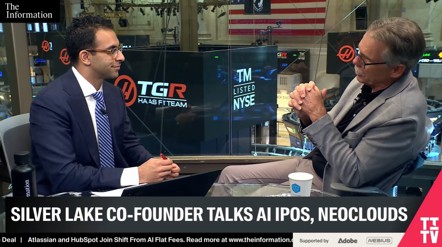
In April, Akash Pasricha, HBA ’19, was at the New York Stock Exchange shooting an episode of The Information TV (TITV). As anchor of the daily tech news show, which runs on YouTube, he regularly interviews prominent tech executives and investors. But doing it overlooking the NYSE trading floor was a first.
 Just a few weeks earlier, Pasricha had another pivotal moment at the NYSE. He was invited to host a roundtable discussion with a couple dozen content creators and ‘finfluencers’ – YouTubers, TikTokers and Instagram personalities in finance and technology with hundreds of thousands of followers. Afterwards, the creators headed to the trading floor to create content and ring the closing bell. For Pasricha, the moment was a powerful symbol of how media is changing.
“It was such an eye-opening glimpse into what this new era of media looks like, seeing these creators on the floor of the New York Stock Exchange with their selfie sticks recording each other,” Pasricha says. “Here is this old-school financial institution trying to go viral on Instagram [through these] influencers. This is the new group of people who can move markets, and this is the media that is going to shape the future.”
In an era where the only constant is change, few industries are changing more rapidly than the world of media and entertainment. From AI and social media to branded content and the creator economy, endless content is produced in myriad ways on multiple platforms, and competition for audiences is fiercer than ever.
Ivey alumni are working at the intersection of narrative and audience engagement in a fragmented, fast-moving digital landscape. They are helping brands tell their stories, supporting content creators, keeping the public informed, and amplifying diverse perspectives. We caught up with these news, media, and entertainment leaders to find out: What does storytelling mean today?
Corporations join the content game
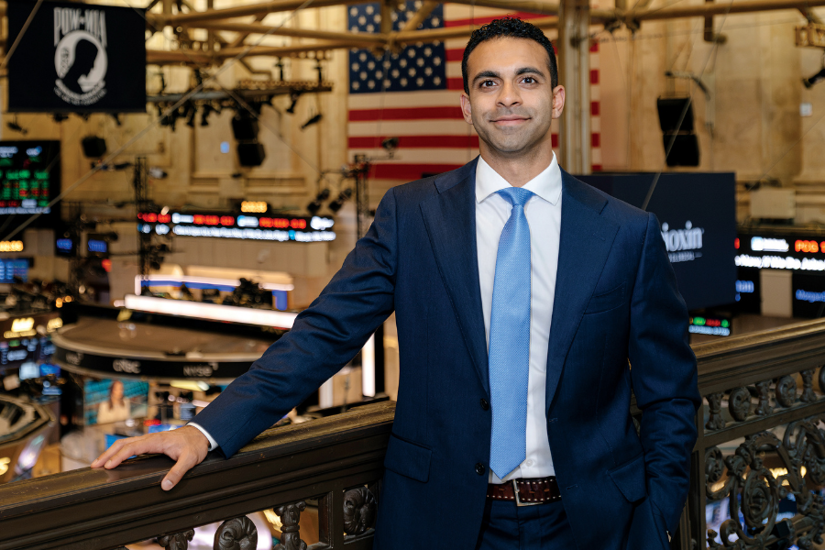 As someone who speaks with tech titans daily, Pasricha has his finger on the pulse of the intersection of media, content, and technology. He joined The Information – a tech and business news site founded by a former Wall Street Journal reporter – after spending two years consulting at Deloitte and a stint as a reporter at the Seattle Times.
Pasricha says he jumped at the opportunity to launch TITV on YouTube because he had always dreamed of being a broadcast journalist. Plus, he knew that YouTube would enable The Information to participate in a streaming ecosystem “that has been on fire lately.” Indeed, Nielsen reports that streaming regularly commands more TV viewing time than cable or broadcast TV, and YouTube is the number one streaming platform in the U.S.
One of the biggest trends in the media business is that corporations are becoming major players in the content creation game, Pasricha says. Instead of waiting for news organizations to tell their stories, corporations are going direct and creating their own content.
“Companies have entire editorial operations. They’re launching shows, they're launching podcasts,” says Pasricha, who is based in New York City. “One of the hottest roles in tech right now is ‘new media’ talent, because organizations are constantly looking for ways to stand out.”
He points to some recent examples: OpenAI recently acquired the popular tech podcast TBPN for a reported nine-figure deal. Meanwhile, global fintech company Stripe launched a publishing imprint and a podcast, Cheeky Pint, where co-founder John Collison interviews fellow founders in a pub – or at least a set that resembles one. Payments company Ramp recently presented an “activation” in Manhattan’s Flatiron District featuring Brian Baumgartner of The Office, livestreaming him as he dealt with expense reports for seven hours.
Whether you’re a journalist, an executive, or a startup investor, “you are trying to invest in the thing that will get traction on these new platforms,” Pasricha says. “And it's a bit of a puzzle because the platforms change so quickly.”
 Natalie Diezyn, HBA ’21, is well-acquainted with the challenge of helping brands stand out in today’s frantic media cycle. As head of brand at SickBird Productions, a female-led content studio with teams in Toronto, New York City, London, UK, and Santa Monica, California, she works with brands to create engaging content, primarily through video.
Diezyn says that in her view, good storytelling today is about taking an approach to an idea that hasn’t been taken before.
“It’s coming up with something that feels a little unusual to people, something that feels new,” she says. Often, that’s about speed – capturing trends and stories the moment they emerge.
“Twenty years ago, something could be relevant for a whole year, and now it's relevant for two weeks.”
Diezyn notes that the nature of the online universe has enabled storytellers to find and explore cultural changes as they happen. “If you're thinking about style, for example, years ago someone would be sent to the most stylish cities in the world to try to spot undercover trends. Now you can find that all online, which makes us able to react and move a lot faster.”
After co-founding femtech startup Marlow, Diezyn worked in marketing and publicity at major entertainment companies including Warner Bros., Disney, and The TARO Group. She says she enjoys working between the business and entertainment worlds. SickBird has created web series, podcasts, and digital content with brands including Billboard, SAG-AFTRA, Lotto Sports, Chime, and Anne Klein, as well as their own Intellectual Property (IP). One example is their series Follow Her, which documents women around the world as they challenge the traditions and norms of their cultures.
When it comes to the work they do with brands, Diezen says the team strives to create content that is “social native” and doesn’t feel like an ad. That could mean something shot quickly on a mobile phone or a production that has a director of photography and meticulously planned cinematography.
“It really depends on the client’s vision and how scrappy they want it to look, because cinematic quality can definitely be eye catching, but it doesn't always perform better,” she says. “Sometimes behind the scenes content shot on an iPhone can perform really well, especially if the trend is blowing up.”
Helping trusted sources share their insights
 In a media landscape so crowded with content, what is the role of legacy media?
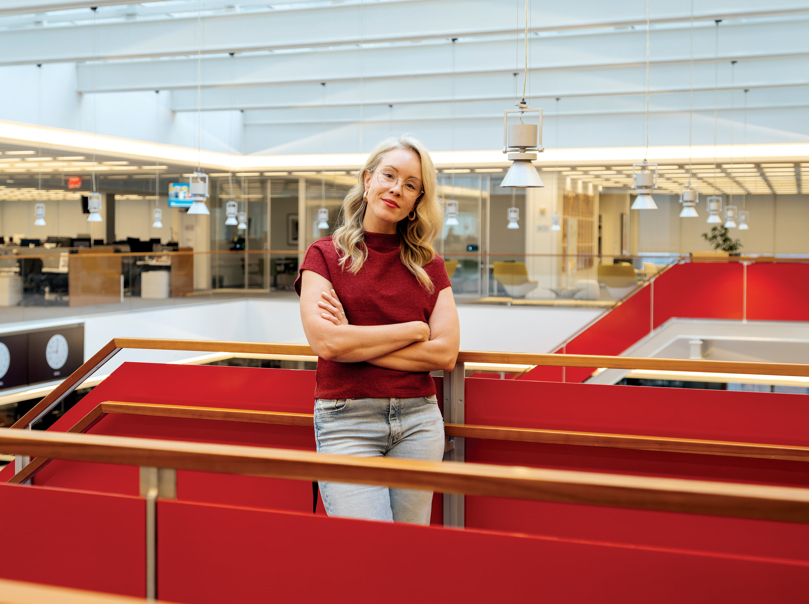
Shannon Busta Riches, EMBA ’20, is head of operations and strategy for Opinion Shows at The New York Times, leading the team that produces the Times’ opinion podcasts. She oversees a diverse portfolio of podcast content, including recurring shows with political commentators Ezra Klein and Ross Douthat as well as a rotating cast of popular columnists discussing everything from Trump to the economy to gender roles.
“We recently merged our opinion audio and our opinion video department to reflect the fact that most podcasts are video now that we're moving into this multimodal future,” says Busta Riches, who has worked remotely from Kawartha Lakes, Ont., since the COVID-19 pandemic.
She says that in an era where people are constantly being bombarded with information, providing diverse opinions across platforms is a way to fulfill the NYT’s mission: to help people understand the world. She points out that opinion content is some of the most engaged-with content on nytimes.com.
“Humans are so relational, and sometimes hearing an opinion that you disagree with or that surprises you helps you refine and form your own idea.”
Busta Riches, who worked as a video producer and audience strategist at The Globe and Mail for eight years before joining The New York Times in 2019, notes that in the past, the role of newspapers was to provide information. In the early 20th century, for example, newspapers were the way North Americans found out what was happening on the front lines of World War I. People had an endless appetite for facts, but the supply of facts was limited to whatever could fit in a newspaper.
That is not the ecosystem we're living in now, Busta Riches says. “Audiences are overwhelmed with information. Distribution is completely fragmented. And trust in the media has been declining for decades.”
According to a 2025 study by Pew Research Center, only 56 per cent of U.S. adults say they have either a lot or some trust in the information they get from national news organizations, down 20 percentage points since 2016. That number is even lower among adults under 30, who are about as likely to say they trust information from national news organizations (51 per cent) as information from social media sites (50 per cent).
In this environment, audiences are craving clarity, perspective, and trust, Busta Riches says.
“And that's where I think the opinion space is really exciting, because we're finding that our audiences are more likely to form relationships with columnists who are, because of the nature of their job, able to share their views and their perspectives and engage in those spaces in a way that our news reporters cannot.”
It’s particularly important to foster those relationships in the current moment, with the spectre of AI looming, Busta Riches says.
“We need to find a way to form relationships with as many people as possible before AI is the only way they're interfacing with the internet; before everything is just getting served to them in a ChatGPT module,” she says. To that end, The New York Times opinion content is disseminated via platforms like YouTube, Instagram, and TikTok, which helps attract interest from younger demographics.
“The hope is we get people to form relationships with our columnists on YouTube and TikTok when they're in their teens or 20s, then they develop this view that The New York Times is a worthwhile institution and they subscribe at some point in the future,” Busta Riches says. “I've been playing a version of that game my whole career.”
The question of AI in content creation
 In recent years, there is perhaps no topic as piping hot in the media and entertainment world as AI. The increasing popularity of generative AI platforms like ChatGPT, Claude, and Gemini have changed the way content is created and consumed.
For Alykhan Kaba, HBA ’12, AI has the potential to democratize the content making process, especially in regions that lack resources. “It gives people a new stepping stone, a new gateway into IP creation that otherwise might have felt inaccessible.”
Kaba, who is based in Los Angeles, is founder of Aries Media Ventures, a fund that invests in early-stage media startups in emerging markets to enable media ecosystems to evolve and mature. Right now, he’s focused on sub-Saharan Africa.
“There is no shortage of entrepreneurs outside of North America and Western Europe. But they're systemically disadvantaged because the capital, the resources, and the knowledge that supports these industries is disproportionately concentrated in two or three cities in the world,” says Kaba. “There's no reason Africa shouldn't be exporting their products, their talent, and their technology.”
His first two investments are a venue booking platform in Nairobi, Kenya, and an influencer monetization tool in Lagos, Nigeria. “It’s basically a two-sided marketplace where there are influencers who want to sell their services and brands who want to work with influencers.”
Kaba says he’s been intrigued by some of the ways technology, including AI, is enabling creators in emerging markets to make content.
“There are companies that have new applications for things like visual effects, sound effects, and post-production editing, that can be used anywhere in the world. You don't need to be in L.A.,” he says.
For example, he recently spoke with a startup that offers a “studio in a box” with large LED screens that mimic a Hollywood-style studio in any environment. “It’s something that enables you to create a more diverse and complete range of content in a cost-efficient way.”
Before he launched Aries Media Ventures, Kaba worked in a range of entertainment-related industries including television at NBCUniversal and gaming at Activision Blizzard. He says he can envision generative AI being used to create shortcuts in animation or gaming content, or filling a space in the vertical, mobile-first video on social media. But he doesn’t think AI will mean the end of people making art.
“I liken it to mass-produced bread versus artisanal bread,” Kaba says. “The artisanal bread is really good and it never went away. You’ll pay more for it, and you'll always go for it when all things are equal. But we eat a lot less because now there's mass-produced bread that you can get from Walmart.”
He points out that some entertainment companies are putting guardrails on the use of AI to protect creative jobs and actors’ likenesses, and those companies are bound to attract talent.
“I think artists and creatives have more power than people like to admit, and if all of the great artists say, ‘hey, I will only work with this company because they create content the way that I want it to be created’, that actually does move the needle,” Kaba says.
In Pasricha’s view, AI is “turbocharging experimentation” for storytellers, enabling creators to try out different formats and shift their content strategy quickly and cheaply. He adds that as someone who needs to get up to speed on many different topics for his daily news show, AI summaries can be useful for research. But he notes that the proliferation of AI-generated content can also propel misinformation, reinforcing traditional journalism’s value proposition.
“This is exactly the reason why it’s still worth paying for journalism and original reporting,” he says. “Fact checking is a slow, tedious process, but it is what creates trust and brand in news organizations.”
Busta Riches says that while staff at The New York Times can use approved, in-house AI tools for tasks like brainstorming or data analysis, the newspaper’s AI policy is that all published content must be the product of human reporting and creativity only.
“It's not a leap we're willing to make, especially when AI models still hallucinate and trust is already an issue,” Busta Riches says. “We really believe that the people behind the journalism, whether they're columnists or news reporters, are our best asset in fighting this lack of trust in the industry.”
At SickBird, Diezyn says her team leverages AI and data analysis tools to identify what’s trending. “And that changes day by day, right? We can jump on those trends immediately in brand-safe ways that engage audiences.”
She adds that SickBird remains a person-first production company, but like so many others in the media and entertainment industry, they are figuring it out as they go.
“I don't think there's a single right approach,” she says. “Sometimes AI slop performs well. The reason that you watch it is because it's ridiculous. It's weird. But I don't think that's replacing content that humans have created.”
It’s important for content creators to remember that AI-generated content has inherent limitations, Diezyn adds, because it’s entirely built on existing data.
“You can come up with a million campaigns created by AI, but taste and cultural relevance are not easily replicated,” she says. “The core idea needs to be uniquely human.”