Learning extends far beyond the classroom. This summer, Ivey faculty members are finding inspiration in books and podcasts that challenge assumptions, spark curiosity, and offer new perspectives on leadership, business, technology, and life. Here are the recommendations they think are worth adding to your summer reading and listening list.
Rob Austin’s picks
Rob Austin is a professor of Information Systems and the Evolution of Work Chair
Empire of AI: Dreams and Nightmares in Sam Altman’s OpenAI
by Karen Hao
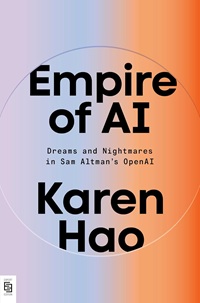 These days, everyone seems to be struggling to understand the changes that generative artificial intelligence (AI) might bring, assess the opportunities and risks, and determine what scenarios seem most realistic. If these concerns are familiar, Rob Austin recommends Empire of AI: Dreams and Nightmares in Sam Altman’s OpenAI to provide valuable context. The book traces OpenAI’s rise and growth, offering a look at the people behind the company, including their personal ambitions and apparent flaws.
Austin also appreciates the way Hao explores broader implications of the AI arms race, including environmental impacts, labour market disruption, and the rise of hyperscale data centres. Drawing on extensive research and the author's expertise as a technology journalist, the book provides valuable context for one of today's most transformative technologies.
Parable of the Sower
by Octavia E. Butler
For readers seeking fiction this summer, Austin recommends Octavia E. Butler's Parable of the Sower. Set in a dystopian future where law and order have broken down, the novel follows a young woman navigating a society in crisis while searching for safety and hope.
Almost Life: A Novel
by Kiran Millwood Hargrave
Another fiction recommendation from Austin is Almost Life by Kiran Millwood Hargrave. The novel tells the story of an unlikely romance that begins in Paris in the late 1970s and unfolds over several decades.
Steve Foerster’s pick
Steve Foerster, HBA ’81, is a professor of finance
The Story of Money (podcast)
Hosted by Gillian Tett and Robin Wigglesworth
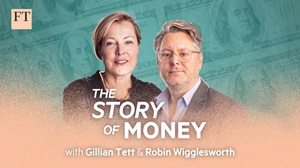 Steve Foerster recommends The Story of Money, a video podcast that explores the history of global finance through the ideas, people, and institutions that shaped it. Hosted by Financial Times columnist Gillian Tett and Financial Times Alphaville editor Robin Wigglesworth, the series examines how financial systems evolve and what those developments can teach us. For Foerster, it reinforces a famous quote about the importance of learning from history.
“As the saying goes, if you don’t study history, you may be destined to repeat it. In this case, you may also be destined to lose money,” says Foerster.
Vanessa Hasse’s pick
Vanessa Hasse, PhD '16, is an assistant professor of international business
An Astronaut's Guide To Life on Earth
by Chris Hadfield
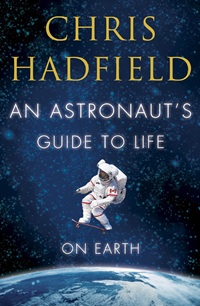 Vanessa Hasse recommends renowned astronaut Chris Hadfield's memoir, An Astronaut's Guide To Life on Earth, in which he recounts his journey from dreaming about spaceflight when Canada had no space program to becoming the first Canadian commander of the International Space Station. Along the way, he shares lessons on building resilience through meticulous preparation and pragmatic adaptability, as well as leading through crises with calmness, decisiveness, and empathy. Hasse particularly values the way Hadfield redefines success as empowering others to succeed and contributing to a greater good.
“Above all, he reminds readers to broaden their perspective and safeguard the wonder that is life on Earth,” she says.
Eric Janssen’s picks
Eric Janssen, HBA ’09, MBA ’21, is a lecturer in entrepreneurship
Sales Reframed (podcast)
Hosted by Eric Janssen and produced in partnership with Ivey Executive Education
 Eric Janssen recommends Sales Reframed, which brings practical sales lessons to a broader audience.
“At some point, everyone will need to use sales skills in their career, and most schools don’t teach it,” says Janssen. “This podcast was our effort to democratize some of the lessons from my class at Ivey and offer them to the 96 per cent of college and university students who don’t even get a single sales course.”
The Future is Analog
by David Sax
Janssen also recommends The Future is Analog by his friend, David Sax. Janssen says he appreciates the book's reminder that analog approaches can still offer unique advantages.
“In an increasingly digital world, I like the throwback to where analog still wins. Zig when everyone else zags,” he says.
Yi Luo’s pick
Yi Luo is an assistant professor of managerial accounting and control
Acquired (podcast)
Hosted by Ben Gilbert and David Rosenthal
 Yi Luo recommends Acquired, a podcast that traces the histories of some of the world's most influential companies.
“History is our best teacher. As Ivey's case-teaching method illustrates, storytelling is a powerful way to learn about others, to learn from others, and to learn to be more informed decision-makers,” she says.
Fredrik Odegaard’s picks
Fredrik Odegaard is an associate professor of management science
How to lie with Statistics
by Darrell Huff
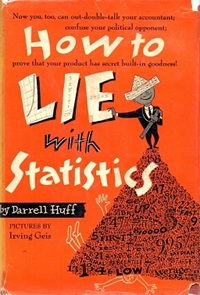 Fredrik Odegaard recommends Darrell Huff's classic How to Lie with Statistics. First published in 1954, Odegaard says it’s still remarkably relevant today. He describes it as an easy and light read on how data visualizations and basic statistical reporting can be used to amplify and exaggerate statistical results. He also notes that it was one of Bill Gates' summer reading recommendations a few years ago.
“There is a saying that has been attributed to Mark Twain and Benjamin Disraeli that there are three types of lies: lies, damned lies, and statistics. A great starting point to appreciate this saying is this classic book,” says Odegaard. “Although graphs, figures, and data visualizations in today’s news reporting and general journalism era are, of course, a lot more snazzy, the same principles that Darrell Huff raised apply.”
The Weekly Show with Jon Stewart (podcast, episode on AI & Future of Work)
Hosted by Jon Stewart
Odegaard also recommends a recent episode of The Weekly Show with late-night TV host and comedian Jon Stewart. Featuring MIT economists David Autor and Daron Acemoglu in this particular episode, Odegaard says it provides many great points on how the workforce might be disrupted by AI.
“It is both entertaining and informative,” he says.
Jana Seijts’ pick
Jana Seijts is a lecturer in management communications
The Subtle Art of Leadership
by Amy Long
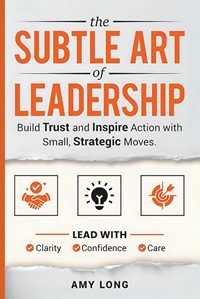 Jana Seijts recommends Amy Long's The Subtle Art of Leadership for anyone stepping into a leadership role or looking to refine their approach. Seijts says Long’s argument is simple: leadership is not about control, but about doing the small things well, from trusting people before they have fully earned it to resisting the urge to micromanage and treating conflict as an opportunity for growth.
Seijts says she appreciates the book's practical focus and accessible style.
“Long writes like an executive coach who has watched a lot of new leaders fumble over the same things, and she meets them right there,” she says. “The chapter on letting go of control without losing it stuck with me. So did the one on conflict because both are highly practical.”
Rather than presenting research and theory, Seijts says the book offers something more immediately useful: “A change in how you carry yourself as a leader.” Her advice? Read it in a sitting, then spend the rest of the season catching yourself using it.
Mustafa (Hayri) Tongarlak’s picks
Hayri Tongarlak is an associate professor in management science and faculty director of the MM-Analytics program
The Diary of a CEO (podcast)
Hosted by Steven Bartlett
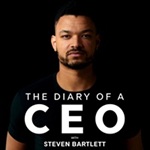 Hayri Tongarlak recommends The Diary of a CEO for its wide-ranging conversations on leadership, personal growth, and the human side of decision-making. Through interviews with entrepreneurs, business leaders, and experts from diverse fields, the podcast explores both professional success and the human experiences behind it.
Hasan Minhaj Doesn’t Know (podcast)
Hosted by Hasan Minhaj
Tongarlak also recommends Hasan Minhaj Doesn't Know for the way it brings humour and curiosity to complex topics.
Grit: The Power of Passion and Perseverance
by Angela Duckworth
Long familiar with Angela Duckworth's work through her TED Talk and interviews, Tongarlak recently read Grit and found it full of lessons for parents, educators, and business leaders alike – lessons that go beyond work ethic, passion, and perseverance. He is also looking forward to Duckworth’s forthcoming book, Situated, on the power of situation.
The Decision Factory: A Novel about Decisions Under Uncertainty
by Adam David DeJans Jr. and John Brandon Elam
Tongarlak also recommends The Decision Factory, a novel that explores how perfectly valid analytical models can fall short in real operational settings because they ignore uncertainty. For him, the book offers a useful reminder that analytics, judgment, and adaptability all matter when decisions unfold under real-world complexity.
Dusya Vera’s pick
Dusya Vera, PhD ’02, is a professor of strategy and the executive director of the Ian O. Ihnatowycz Institute for Leadership
Uniquely Human: The Podcast
Hosted by Barry Prizant and Dave Finch
 Dusya Vera recommends Uniquely Human: The Podcast for the ways it illuminates and celebrates the lives and voices of autistic and neurodivergent people. In doing so, Vera says it asks all of us a deeper question about how we see one another.
Its real gift to leaders, she says, is the principle of presuming competence: assuming capability, intelligence, and intention in every person, even when they express themselves in ways we don't immediately understand.
“Acceptance says, ‘you belong.' Presuming competence goes further: ‘You are capable, and I will treat you that way.’ This is a profound reframe not just for how we lead, but for how we live, reshaping the way we listen to a colleague, a partner, a child, or a friend, anyone whose inner world is richer than what we can see on the surface,” she says.
Vera says the title captures the podcast's central message: To be uniquely human is not to fit a single mould; it is to recognize that our differences and diagnoses are not deviations from humanity but expressions of it.
“The podcast is a reminder that honouring the dignity and potential in each person isn't a niche concern; it sits at the very heart of what it means to lead, and to be human,” says Vera.
Vera points out that Uniquely Human is currently ranked No. 1 by Goodpods in the neurodiversity category and No. 1 of all time in the category of Psychiatry, ADHD, Autism, and Disability.
Related Articles