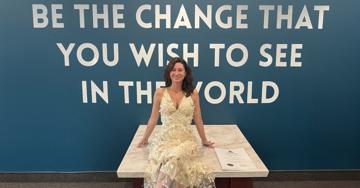
Weina Chong, EMBA ’26, is the Director of Business and Site Development at Bruce Power, a mother of three, and an advocate for women in Science, Technology, Engineering, and Mathematics (STEM). Her career spans engineering, large infrastructure projects, supply chain, new nuclear, regulatory affairs, and business development. She was elected valedictorian of the Ivey EMBA Class of 2026 and awarded the Ivey Gold Medal at the recent fall convocation. In her blog below, she reflects on pursuing an EMBA after carrying the goal for 22 years, sharing lessons in confidence, prioritization, and the power of peer learning.
The goal I carried for 22 years
Twenty-two years ago, I wrote “get MBA” on a goal list I still carry in my purse. At every stage of my career, I found a reason to wait: a new job, a growing family, not enough experience yet. By the time I had the experience, I had a role with real consequences and very little spare time.
In 2024, I stopped waiting for the right moment. I was leading regulatory work on a major new nuclear project and raising three boys six and under when I committed to 17 months of case studies, late-night learning team calls, and a Vietnam Discovery Expedition. I didn’t feel confident when I took the leap. I took it anyway, and the confidence came afterward.
That’s what I learned: confidence is built through action, not certainty. Each case, each team call, and each time I spoke up in a room of seasoned leaders added a little more, until I stopped asking whether I belonged and started asking what I could contribute.
If you’re holding a goal that has outlasted every “not right now,” the timing will never feel right. Make the leap.
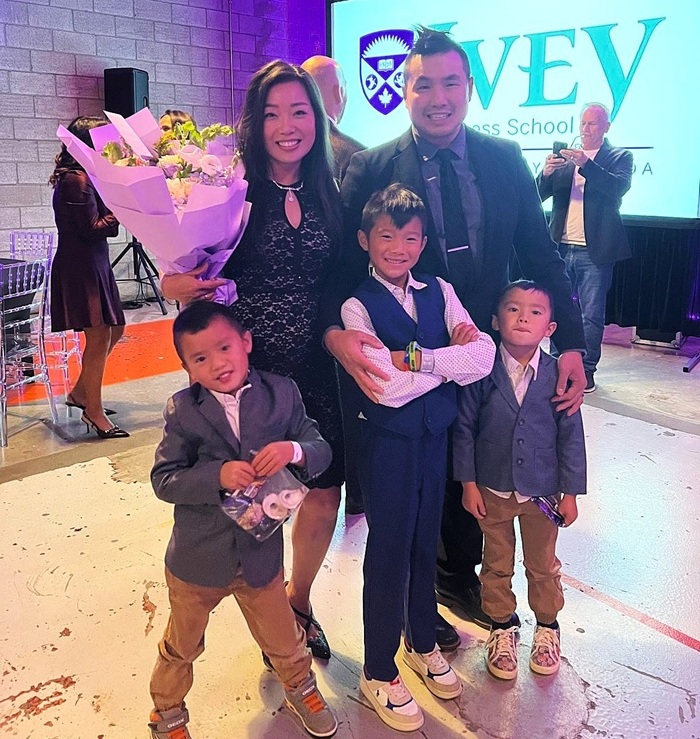
(Photo above) Weina Chong with her family at fall convocation
Constraints are a strategy, not a setback
I couldn’t do everything perfectly, and the program wouldn’t let me pretend I could. Some of my best case preparation happened at 6 a.m. with my boys beside me, because that was the only time I had. So, I learned to choose.
Prioritizing meant deciding where my effort would make the biggest difference, at work, in class, and at home, and being at peace with letting the rest go. At work, I learned to trust my team: when I stopped holding on to everything, they stepped up, and the work was often stronger for it. I learned that “good enough” is sometimes exactly what’s needed, and that knowing which tasks deserve a perfect result is a leadership skill in itself. And on the days I walked into a meeting without the preparation I would once have insisted on, I learned that adaptability and listening can carry you further than a perfect script.
The room is part of the curriculum
On the first day, 62 seasoned professionals from 31 industries and 20 birth countries sat in one room, and many of us wondered whether we belonged. Within weeks, the program’s structure had answered that question. Learning teams, a demanding caseload, and late-night deadlines meant we had to depend on each other. Some of us joke that it was “trauma bonding” by design. If so, it worked, and we grew closer than I ever expected.
What I didn’t anticipate was the quality of the peer learning. The case method puts your judgment next to people in finance, marketing, tech, health care, and government who have made decisions you’ve never faced. When EMBA Faculty Director Fernando Olivera asked us to reflect on our experience in our last module, almost no one talked about a case. We talked about feeling included, finding confidence we didn’t know we had, and showing up for each other when it counted. For me, the learning team experience and class peers were the most valuable parts of the degree.
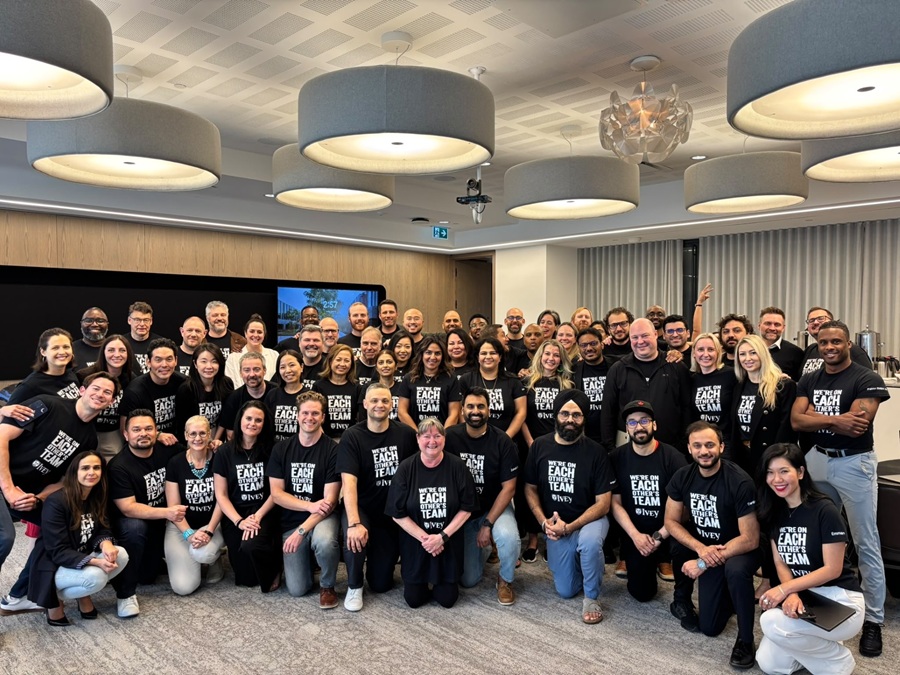
(Photo above) Weina Chong's EMBA cohort
Advice for senior professionals considering the EMBA
- Decide what the next chapter needs, not whether you have time. Ask what skill, network, or perspective your next decade requires;
- Bring your team and your family in early. Mine carried more of the load than I can say, and I’m grateful they took the leap with me; and,
- Lean on the cohort. The people beside you will challenge and support you in ways your day job rarely does.
You don’t outgrow learning. I’ve always considered myself a serial learner, and the EMBA confirmed it. If anything, the more responsibility you carry, the more it pays to step back and ask harder questions.
Related Articles