Community Changemakers
By Nicole Laidler
Photography by Carmen Cheung & Yanick Folly
The not-for-profit sector is an often-overlooked piece of the economic puzzle. As demand for services grows while resources shrink, innovative solutions are essential. Ivey alumni in Canada and beyond are leading the change, ensuring their organizations remain resilient, impactful, and mission-driven.
The global economy continues to face challenges going into 2026, and the not-for-profit sector is feeling the squeeze. Inflation is straining budgets, tariffs are disrupting plans, and technology is transforming how programs are delivered, while service demand is at an all-time high.
Canada’s non-profits provide a wide array of services and support, and are an important economic driver.
The sector includes community organizations such as food banks, shelters, youth groups, advocacy organizations and places of worship, government non-profits such as hospitals, universities and colleges, and business non-profits such as chamber of commerce and condominium associations.
Despite touching almost every aspect of daily life, many Canadian non-profits face a precarious future.
A recent report by CanadaHelps, the country’s largest online donation and fundraising platform, found that 57 per cent of Canadian non-profits are unable to meet current service demands. More than half are still struggling to rebuild their volunteer base to pre-pandemic levels, and staff burnout is a real concern.
Making connections at Big Brothers Big Sisters of Toronto
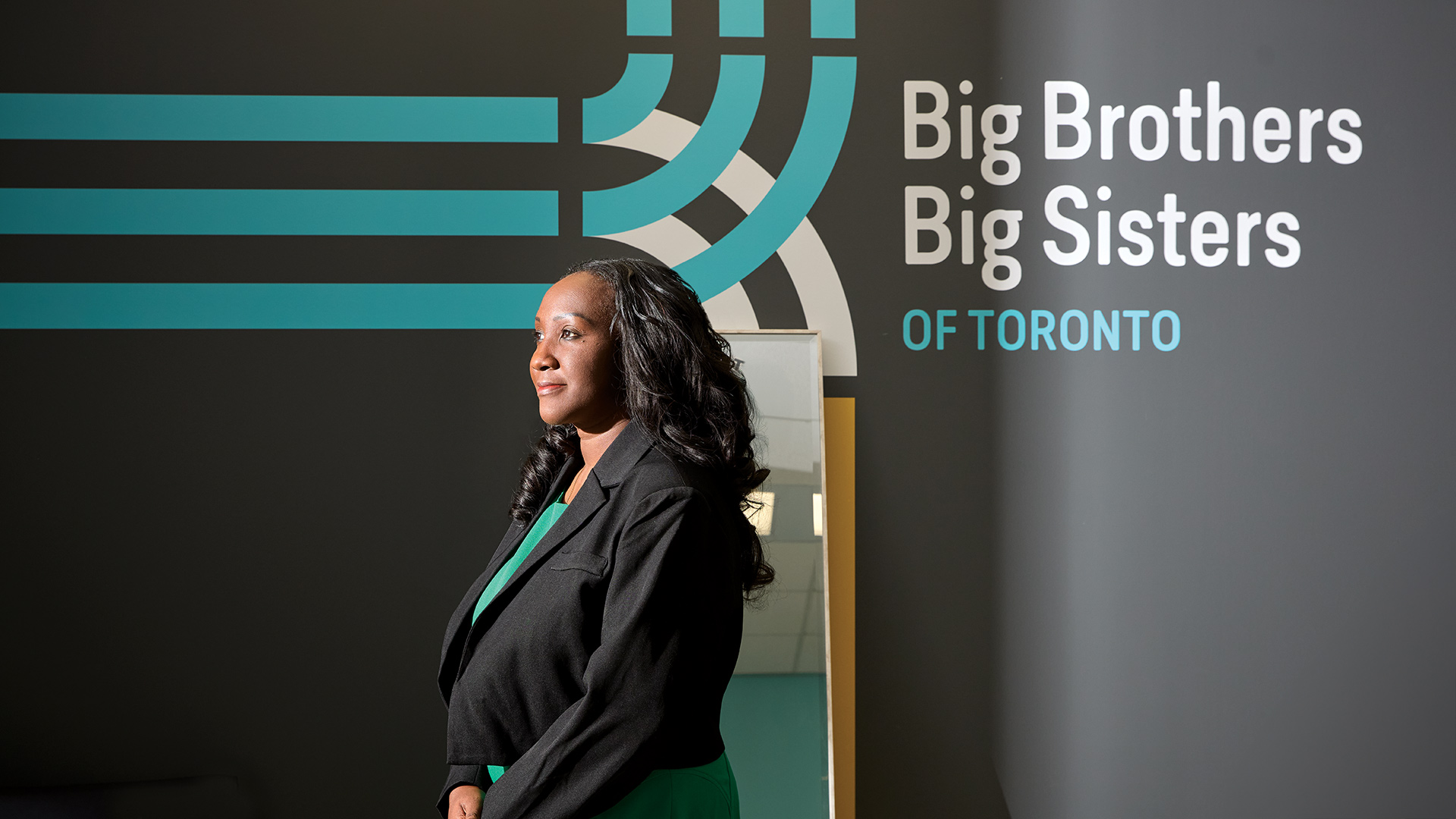
Stachen Lett-Frederick, EMBA ’21, knows just how difficult it can be to recruit volunteers and secure funding in the current economic climate.
The president and CEO of Big Brothers Big Sisters of Toronto points to a Statistics Canada report that found an eight per cent drop in volunteering rates over the past five years and an 18 per cent drop in volunteer hours. “When people are working several jobs to make ends meet, the ability to volunteer is more difficult,” says Lett-Frederick, who joined BBBST in October 2024 after spending more than eight years as the Executive Director of Frontlines, a youth charity in Toronto’s Weston neighbourhood.
It's a pressing challenge for an organization with mentorship at the core of its mission.
BBBST has been changing the lives of children and youth in Toronto for over 100 years by matching Bigs (mentors) with Littles (mentees), based on shared interests or life experiences. “Mentorship is one of the most powerful interventions you can do in a young person’s life,” Lett-Frederick says. “It creates meaningful impact that can last a lifetime.”
The organization currently supports 1,488 Littles through one-to-one community and school-based mentoring programs, as well as a variety of group mentoring programs.
Currently, 426 young people are waiting to be paired with a mentor. “Of those, around 60 per cent identify as black or mixed race, and 70 per cent are male,” she says. “We need more men to step up, and we know that representation matters.”
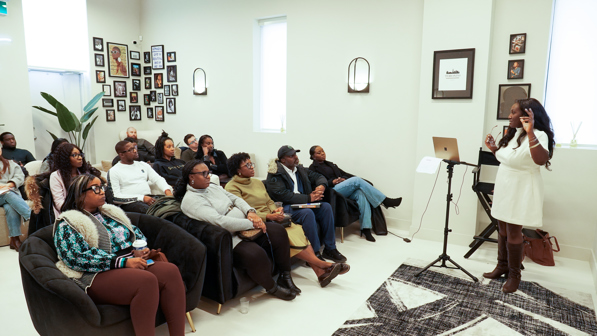 Lett-Frederick is taking a grassroots approach to finding her target candidates. “We need to go where our ideal target audience is,” she says. For example, BBBST was present at a recent employee affinity group networking event, and she is working with her team to ensure that the organization’s social media reflects the diversity they hope to attract. “People need to see themselves in those mentoring opportunities,” she notes.
Just three per cent of BBBST revenue comes from government grants, so raising enough money to cover costs is also an ever-pressing need.
Lett-Frederick says that today’s donors want more than just a tax receipt.
It’s critical to understand what corporations are interested in, she says. “Many articulate what they want in their corporate responsibility reports. We use that information to form alignment, find our value proposition, and help drive donations.”
“Similarly, we need to listen to what young people are saying about giving, as they are our future donors.” Younger donors want to have fun, feel connected, and enjoy some friendly competition, she says. So, this September, BBBST held its first Big on Bay Scavenger Hunt, a peer-to-peer fundraiser on the streets of downtown Toronto.
Under Lett-Frederick’s leadership, the organization has also launched the Sponsor a Little initiative. “People are familiar with the concept of sponsoring a child abroad, but right here in Toronto there are kids who are living below the poverty line and who need investment and support.”
Scaling youth entrepreneurship in Benin
Investing in young people is at the heart of Grégory Valadié’s, MBA ’07, role as Program Director for TechnoServe’s Project BeniBiz, a youth economic empowerment program in Benin, West Africa.
With a median age of 18, the country of 14.5 million people struggles to create employment opportunities for its high school and university graduates. Most entrepreneurship in Benin is at the subsistence level, Valadié explains. “There’s a predominant mindset of wanting to replicate what others are already doing, rather than innovating and taking risk.”
Launched in 2017, BeniBiz is helping young people change that thinking. The project offers group business training as well as one-on-one coaching, using WhatsApp and Google Meet to reach pre-entrepreneurs and existing entrepreneurs living in remote areas.
The non-profit also provides seed funding of up to two-hundred dollars for pre-entrepreneurs, while existing micro and small business owners can apply for 50 per cent of their funding needs and up to 70 per cent for female founders.
“They could be a small farmer, a welder, a tailor, a juice producer, or running a small restaurant or hotel,” Valadié says. “We believe – and have demonstrated – that if the people we support adopt the right mindset and solid business management practices they will be able to do well, no matter what sector they are working in.”
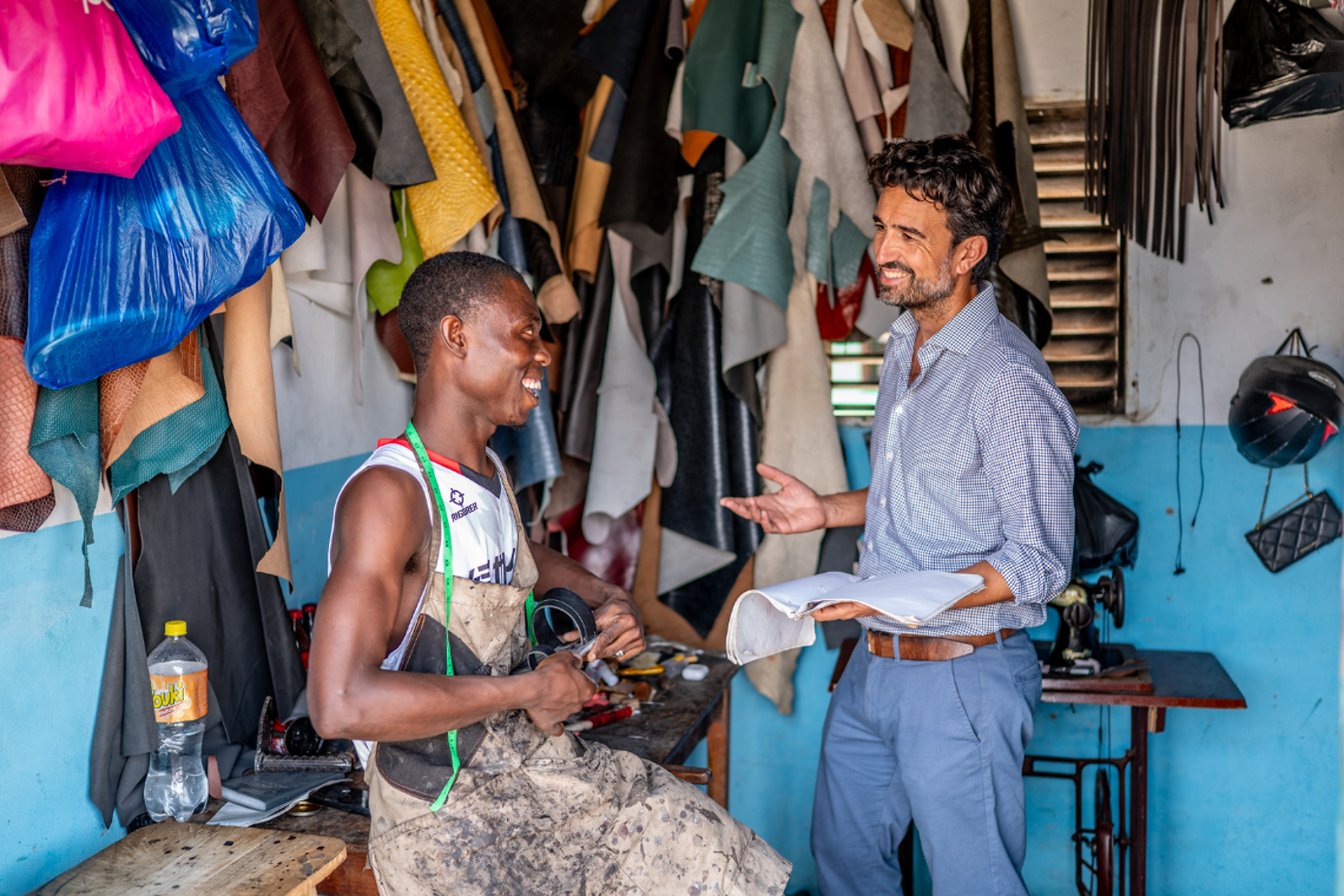 Entrepreneurs who take part in the BeniBiz program see their annual sales rise by an average of 130 per cent. The program’s positive impact was particularly notable during the COVID pandemic, when most were able to more than triple sales without additional funding supports. “They knew how to grab opportunities and they were able to perform,” says Valadié.
To date, BeniBiz has supported more than 15,000 entrepreneurs, with a female participation rate of over 50 per cent.
Valadié hopes to increase that number to 100,000 by leveraging the power of AI and digital tools to support business training, and by broadening the project’s work across the entrepreneurial ecosystem.
While BeniBiz was not significantly impacted by U.S. President Trump’s 2025 cuts to USAID, he says the move underscored the importance of creating infrastructure that lasts beyond specific project funding.
For example, BeniBiz is partnering with Benin’s Ministry of Secondary, Technical and Vocational Education to integrate entrepreneurship training into the national curriculum. The organization is also working with local banks to create lending programs designed for young women entrepreneurs. “According to the Market System Development principles, we work with a facilitation dynamic, rather than a giving dynamic,” he says.
Did You Know?
- 8.3% of Canada’s gross domestic product is contributed by Canadian non-profits
- 2.8M people — or 1 in 10 Canadian workers — are employed by Canadian non-profits
- 70% of non-profit employees in Canada are women
- 48% have a university degree
- 33% are members of a visible minority
- 27% are internationally born
- 5% are Indigenous
Nourishing hope at Daily Bread Food Bank
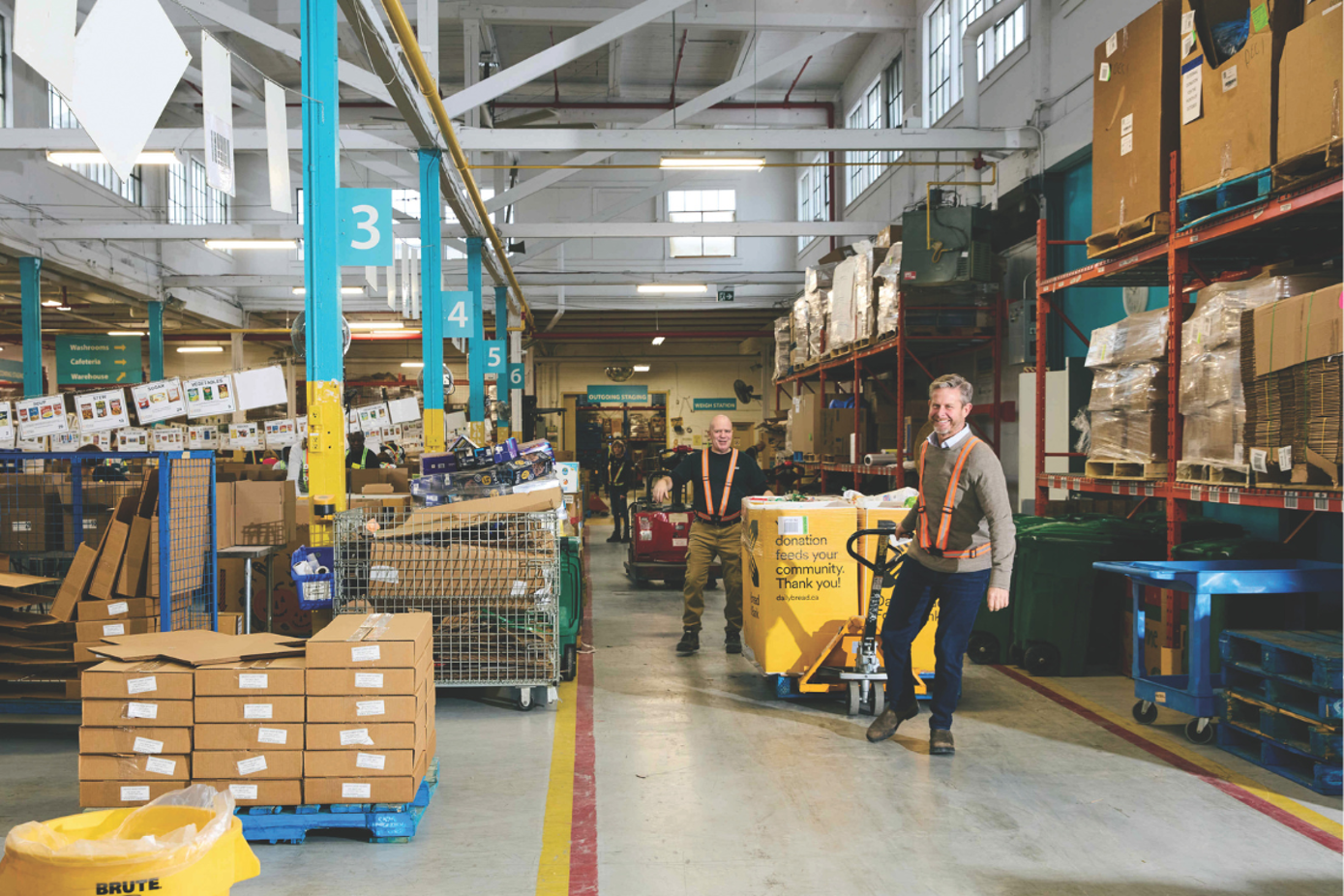
Pressing for systemic change is all in a day’s work for Neil Hetherington, EMBA ’13, and CEO of Toronto’s Daily Bread Food Bank. But the organization’s advocacy efforts to end poverty take place largely behind the scenes.
Most people know the Daily Bread for their frontline work. As Canada’s largest food bank, the organization supports around 200 food programs across Toronto, providing a million meals each week through its network.
When Hetherington joined the Daily Bread Food Bank in 2018, the organization had about 60,000 client visits per month, he says. That number is now around 330,000, with employed people between the ages of 18 and 44 making up the fastest-growing demographic.
The soaring demand has forced the organization to grow donations and organizational efficiencies.
“We had to raise $8 million a year when I started. Now we raise $40 million. So that’s been a strain,” says Hetherington, who credits the Daily Bread’s extraordinary leadership team for meeting the challenge.
 The adoption of open-source AI tools has also been key.
On the fundraising side, AI helps Daily Bread develop targeted campaigns aligned with the interests of its 160,000 donors. “We have identified about 60 different market segments,” he says.
On the operational side, AI has been a game-changer. The organization purchases $22 million worth of food each year, and Hetherington says the technology facilitates everything from tracking inventory and forecasting food donations and demand, to identifying the most cost-effective supply chains.
Advocating for systemic change to alleviate food insecurity still requires a hands-on approach. “Our policy is not to take government money,” Hetherington notes. “That allows me to have open conversations with elected officials about the policies they need to change.”
He is particularly proud of Daily Bread’s leading role in coalitions that successfully advocated for the creation of the Canadian Disability Benefit, launched in July 2025.
“One of the best calls I received this year was from a friend who is both bipolar and schizophrenic. He knew we had been working on this for years, and he called me in August to say he had received his first Canada Disability Benefit check. I was really, really happy for him.”
Advancing community health at Anishnawbe Health Toronto
 When Amelia Pruchnicki, EMBA ’19, stepped into her new role as Executive Director of Anishnawbe Health Foundation in May 2025, it felt like coming home.
Her family is from the Chippewas of Kettle and Stoney Point First Nation, which is located along the shores of Lake Huron in southwestern Ontario. “Joining Anishnawbe Health Foundation is helping me reconnect with my Indigenous roots,” says Pruchnicki, who is among the 72 per cent of the Indigenous population of Ontario that live in urban areas.
The foundation raises money to support the work of Anishnawbe Health Toronto (AHT), an Indigenous-led non-profit that has served the needs of Indigenous people since 1984.
Pruchnicki is taking the helm at an exciting time.
Last summer, AHT celebrated the opening of their new purpose-built Indigenous Health Centre. Featuring ceremonial spaces, a sweat lodge, and healing gardens, the centre is the first of its kind in Ontario. “The way we integrate traditional healing with Western healing is quite groundbreaking,” Pruchnicki says. “It’s a holistic approach that addresses the physical, emotional, mental, and spiritual well-being of each individual.”
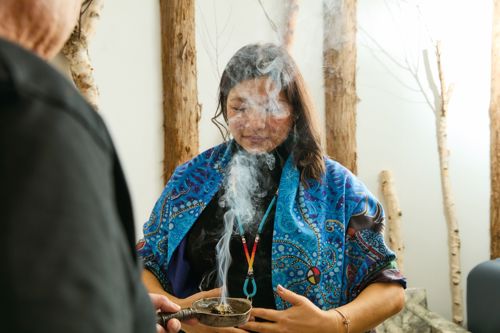 Today, nearly 90 per cent of Indigenous people in Toronto live below the low-income line, which can contribute to chronic illness, mental health struggles, and premature death. So, in addition to delivering primary care, AHT offers more than 60 culturally-informed programs and services, including family and youth programs, mental health and addiction counselling, supportive housing services, diabetes education, and palliative care.
“One of our challenges is making sure that our clients can access the care they need,” says Pruchnicki. Mobile health units go out into the community to reach Indigenous people who may not have access to transportation, she notes. Others may have a deep mistrust of institutions, including hospitals, due to trauma from the impact of colonial policies such as residential schools and the Sixties Scoop.
Looking ahead, AHT has received an allocation of 128-bed long-term care beds once suitable land is identified. The foundation will launch a new capital campaign to build AHT’s Indigenous Long-Term Care Home, and Pruchnicki is excited to take on the fundraising challenge.
Canadians are showing a growing awareness of Indigenous issues, particularly concerning the legacy of residential schools, she notes. “People are listening. There is an opportunity to continue to tell our stories and empower Indigenous people to get the care needed in order to heal.”
Want to collaborate with alumni driving social impact and leading in the not-for-profit sector? Join the Ivey Not-for-Profit Alumni Community here.