
Innovation in financial services and technology is shaped by how products are designed, built, and delivered in practice. This was a central takeaway from the Ivey Fintech Club and Ivey Tech Club’s annual firms trip to Toronto, where students engaged directly with practitioners across banking, fintech, and platform technology.
Through visits to Scotiabank’s Digital Factory, CIBC’s Alternate Solutions Group (ASG), and Uber’s Canadian headquarters, students gained a cross-sectional view of product development, data use, and execution in complex, real-world environments.
Designing the Future of Advice
At Scotiabank’s Digital Factory, the space itself reflects the organization’s approach to collaboration and product development.
A fireside chat with Audrey Grant, Vice President of Advice & Deepening, focused on navigating careers across financial services and technology. Grant spoke candidly about career transitions, emphasizing that professional growth often requires stepping into new roles before feeling fully prepared. She encouraged students to recognize the transferability of their skills and to approach opportunities with confidence—curiosity and a strong foundation matter more than meeting every listed requirement.
A panel on building financial products, data-driven experiences, and startups in 2026 featured Design Director Savanna Campoli, Director of Advice & Investing Calvin Chu, Director of Personalization Enablement & Governance Urvashi Joshi, Senior Manager of Innovation and Partnerships Yinka Adesesan, and Director of FinTech Partnerships and Innovation Fabiana Montoya.
Panelists discussed how data informs product development across the lifecycle, from initial design through iteration. User behaviour and measurable outcomes guide how products are refined and scaled. Canada’s regulatory environment shapes how these capabilities are implemented, particularly in areas such as data governance and user protection.
For students interested in entrepreneurship, panelists identified one of the most persistent failure modes in early-stage ventures: developing solutions to problems that do not yet exist, or that are not significant enough to drive adoption.
Fintech Inside a Bank
At CIBC’s Alternate Solutions Group (ASG), students engaged with a team operating within the infrastructure of a large financial institution while maintaining a focused product mandate.
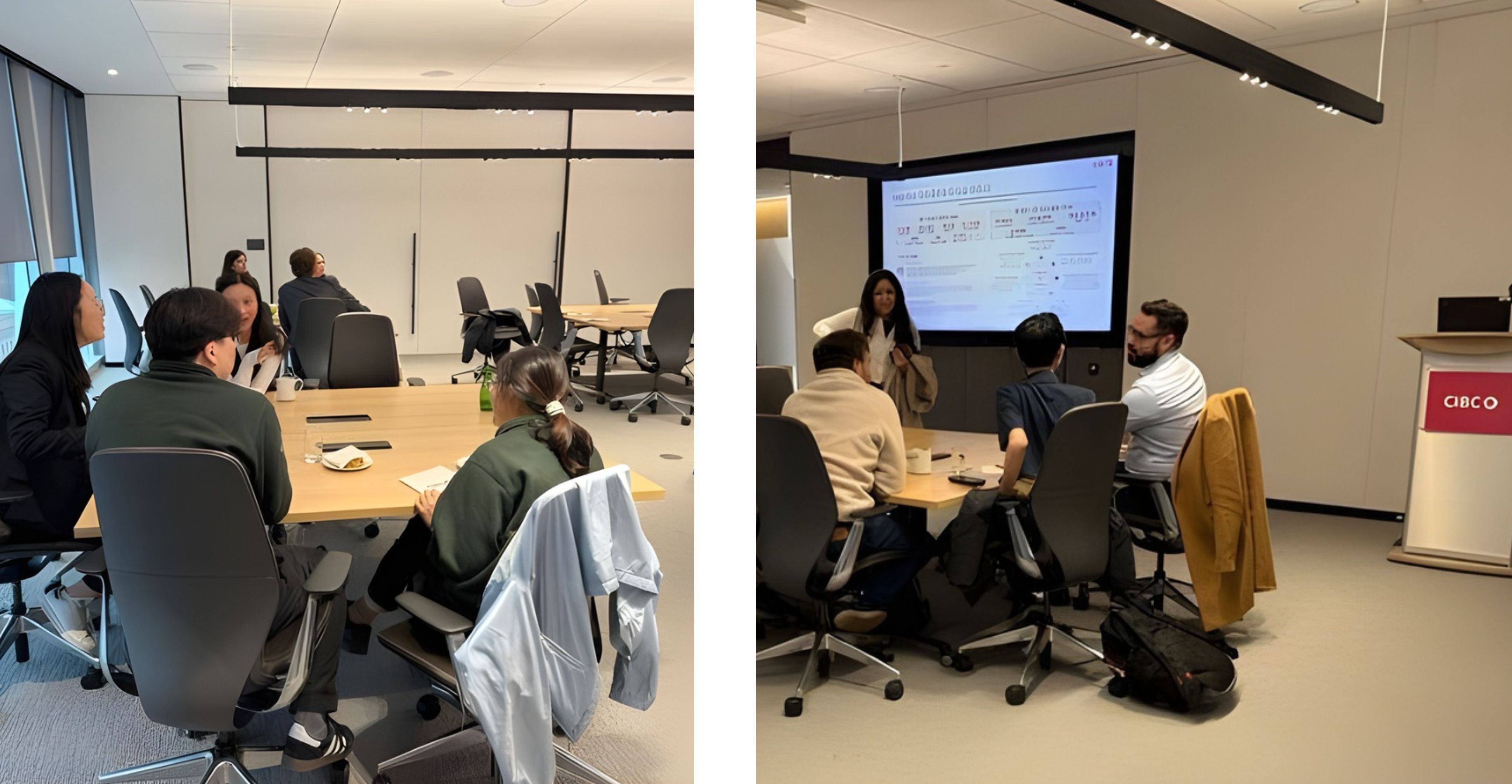
ASG’s core work centres on foreign exchange products. The session was structured around small-group conversations, where participants rotated through discussions with team members, including Héloïse Linet, Navneet Grewal, Franco Montoya, Alexis Reid, Lily Chen, Santi Musella, Jacob Ovens, Noah Woodworth, Sofia Silvestre, and Cedrik Roth.
The format enabled focused dialogue. A recurring theme was the relationship between macroeconomic policy and product development. Team members described how Canada’s evolving international agreements, including immigration partnerships with India and other countries, are reshaping foreign exchange demand patterns and creating new opportunities in student and newcomer financial services.
Ownership, Execution, and Building at Scale
The final stop of the day was Uber's Toronto office, where students had the opportunity to hear from five Western and Ivey alumni: Noa Zaifman, Sam Shiff, Hayley Zhong, Kevin Liu, and Brandon Yan in a panel discussion followed by a student-led Q&A.
A defining characteristic of the Uber environment, as described by multiple speakers, is the degree of ownership extended to individual contributors; teams and individuals are expected to take initiative, make decisions, and be accountable for outcomes.
One of the most illustrative moments of the visit came when Brandon Yan, a software engineer on the team, was actively on call during the session. Students observed incident response firsthand, real-time monitoring, early alerts, and structured decision-making across systems millions rely on.
He also offered a compelling case study in the business impact of product decisions: a seemingly minor change to the default delivery location in the UberEats application illustrated how a single design choice, largely invisible to individual users, can produce meaningful shifts in behaviour and outcomes when applied across a platform of significant scale.
Speakers also identified autonomous vehicles as an area of strategic focus, and emphasized the importance of communication, written clarity, and cross-functional collaboration in navigating complex product environments.
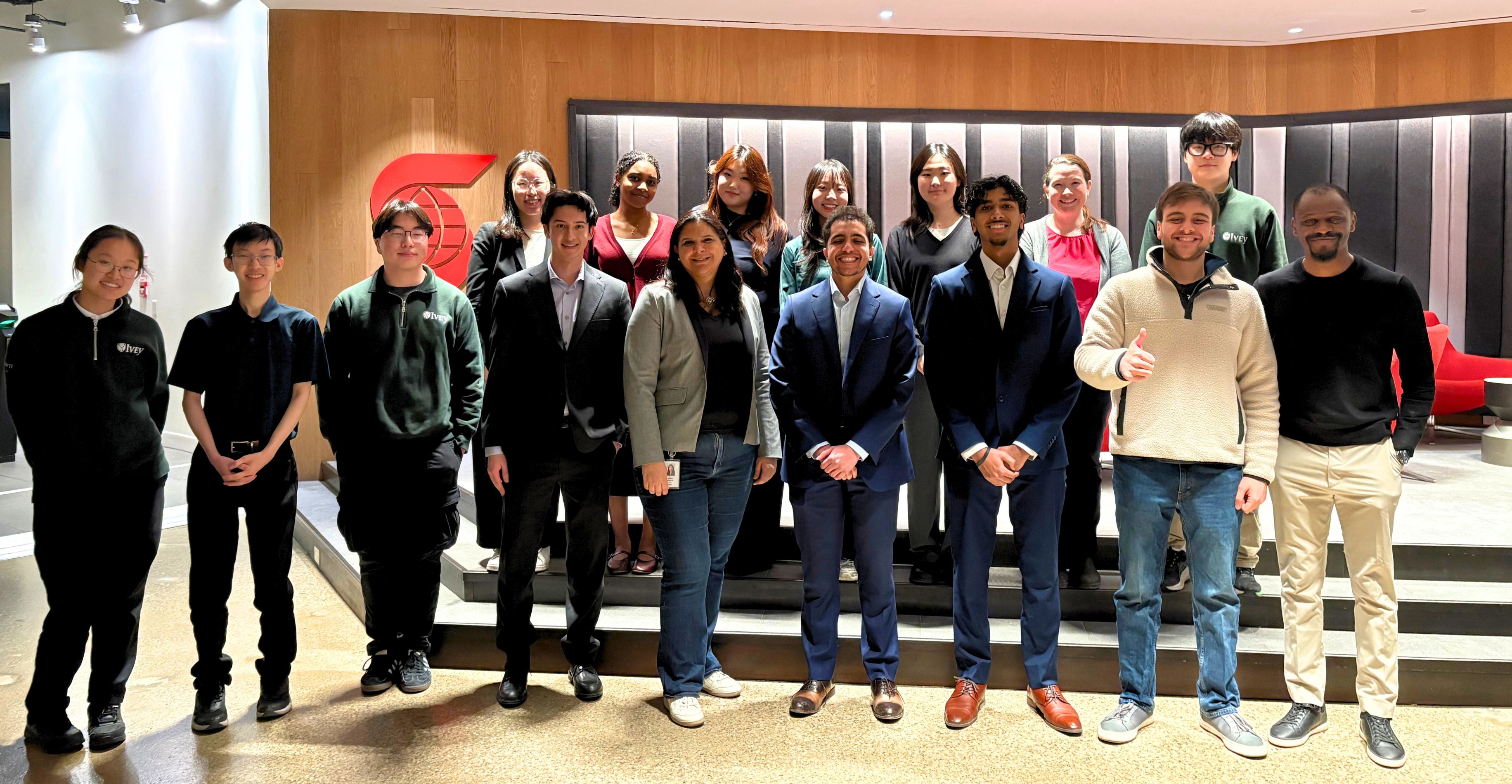
The Toronto Firms Trip provided students with a clear view of how technology and financial services intersect in practice. Across a bank innovation studio, a fintech-focused team, and a global technology platform, consistent themes emerged: the importance of clearly defining problems, the role of ownership and accountability in execution, and the value of communication and adaptability alongside technical skills.
For students early in their careers, engaging directly with practitioners across product, engineering, design, and partnerships offered insight into how these dynamics play out beyond the classroom.
The Ivey Fintech Club and Ivey Tech Club gratefully acknowledge the support of Ivey’s Scotiabank Digital Banking Lab, along with the teams at Scotiabank Digital Factory, CIBC Alternate Solutions Group, and Uber, whose time and expertise made this experience possible.