
The Ivey MSc in Management, Business Analytics stream is a 16-month program designed to equip students with the skills and capabilities needed to analyze real-world data and translate insights into informed business decisions. Structured across four semesters, the program progresses from building core business and analytical foundations to applying those skills in real-world settings through case competitions, internships, and client-based projects. Below is a breakdown of each semester, highlighting the key academic components and experiential opportunities that shape the Business Analytics experience at Ivey.
First Semester | Laying the Foundation
Ivey Essentials, Learning Teams, and Programming Milestones
Upon entering the program, Business Analytics students begin with Ivey Essential Courses. Given the diverse academic and professional backgrounds represented in the MSc cohort, these courses ensure students develop a strong foundation in core business disciplines that will support them throughout the remainder of the program. During the first half of the semester, students take Marketing, Accounting, and Strategy, followed by Operations, Finance, and Leadership in the second half.
Alongside Ivey Essentials, Business Analytics students also take Business Statistics and Art of Modelling, two courses that span the entire semester. In Business Statistics, students learn hypothesis testing and regression techniques such as linear and logistic regression, while also building proficiency in R. In Art of Modelling, the focus shifts to Excel, where students learn to build models, run simulations, and use optimization tools to support decision-making.
Across these courses, students are quickly immersed in Ivey’s case-based teaching methodology, which emphasizes a learning-by-doing approach. Before class, students prepare by reading cases and completing pre-class questions, while in-class time is largely spent on analyzing cases, debating decisions, and applying business concepts to real-world problems. Collaboration is also a central component of the program. Early on, students are placed into learning teams of five to seven classmates from the same stream, where they collaborate on class deliverables.
Building on the technical skills developed in the classroom, students also work through programming skill milestones. Each milestone consists of a set of Coursera courses selected by Ivey, with the first two focusing on building technical proficiency and the final one emphasizing ethics. Students are required to complete one course from each milestone as a graduation requirement. To further support skill development, students also receive access to DataCamp.
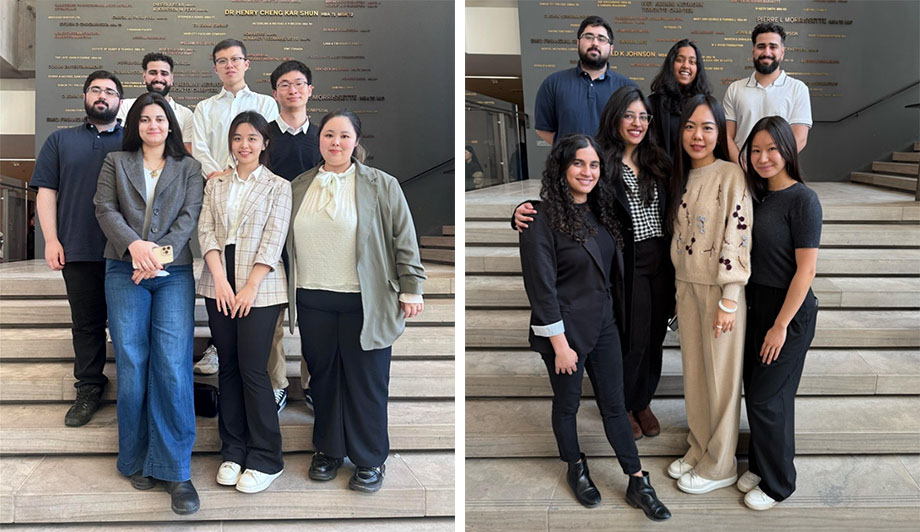
Second Semester | Building on the Foundation
Core Courses, Electives, and Securing Internships
In the second semester, Business Analytics students take Big Data Analytics, Data Management, and Business Communication, along with one elective course. Big Data Analytics introduces students to the characteristics of big data, machine learning concepts, data visualization and dashboard creation, and ethical considerations. The course also marks a shift toward using Python.
In Data Management, students learn about relational databases and how to use SQL to extract meaningful information for decision-making, while also working with tools to manage large, unstructured datasets. Business Communication complements the technical coursework by helping students become more confident communicators, with a focus on presenting data and complex information clearly and delivering persuasive insights to diverse audiences.
Alongside coursework, many students dedicate significant time to securing internships if they have not already done so during the first semester. Throughout the recruiting process, Business Analytics students are not alone. Most opportunities are posted through Ivey’s job portal, 12Twenty, though students are encouraged to apply across additional job platforms as well. Students also participate in mandatory Career Management classes beginning in the first semester, which cover topics such as networking, drafting a compelling personal narrative, improving resumes and LinkedIn profiles, and evaluating and negotiating offers.
Beyond the classroom, students have access to the Career Management team through one-on-one coaching sessions, where they can seek personalized career advice, participate in mock interviews, and receive feedback on resumes and cover letters. Ivey also offers a wide range of networking opportunities throughout the year, including career nights, employer information sessions, and networking panels. Students also have subscriptions to a range of platforms to practice behavioural, technical, and case interviews.
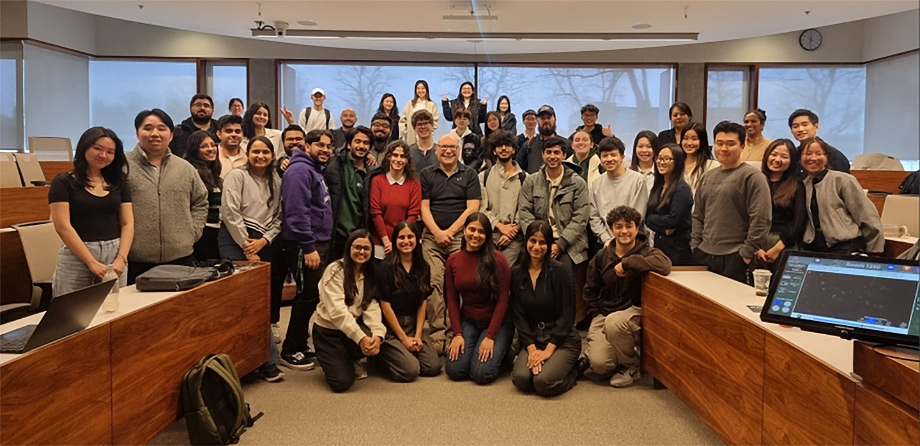
Between Second Semester & Third Semester | Experiential Learning I
Hack the Case
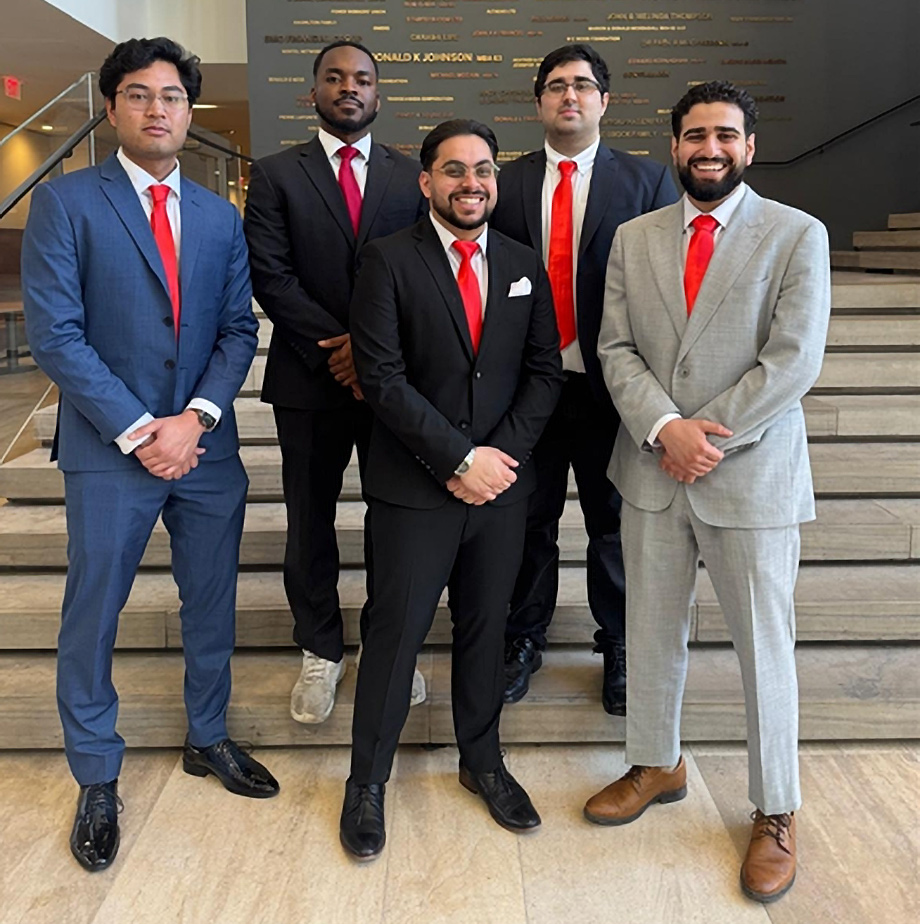
Hack the Case is a two-week case competition that allows students to apply classroom concepts to a real-world business problem. Open to all Ivey MSc streams, teams were challenged by Scotiabank to identify which of its youngest clients – those just beginning their financial journeys – were most likely to grow into high-value customers over the next 15 years, followed by designing a product mix that nurtured long-term banking relationships.
The competition began with a two-day bootcamp led by SAS representatives, where students learned how to use SAS’s no-code analytics platform to explore and visualize data. Following the bootcamp, the case was released, requiring teams to blend analytics with design thinking by analyzing data, extracting meaningful insights, and translating those insights into a customer-centric solution. The competition culminated in team presentations to a panel of judges within assigned rooms, with the top two teams from each room advancing to the finals. Finalists then presented on the main stage in front of all competitors and judges.
Having advanced to the finals, one of my biggest takeaways from the competition was the importance of storytelling from the customer’s perspective, demonstrating how customers would use the proposed solution and clearly communicating the value it delivers.
Third Semester | Experiential Learning II
Ivey Analytics Lab
Following Hack the Case, Business Analytics students begin the Ivey Analytics Lab, a 10- to 16-week experiential learning phase of the program. During this period, students either work on an analytics-driven research project under the guidance of a faculty advisor or complete an analytics-focused industry internship.
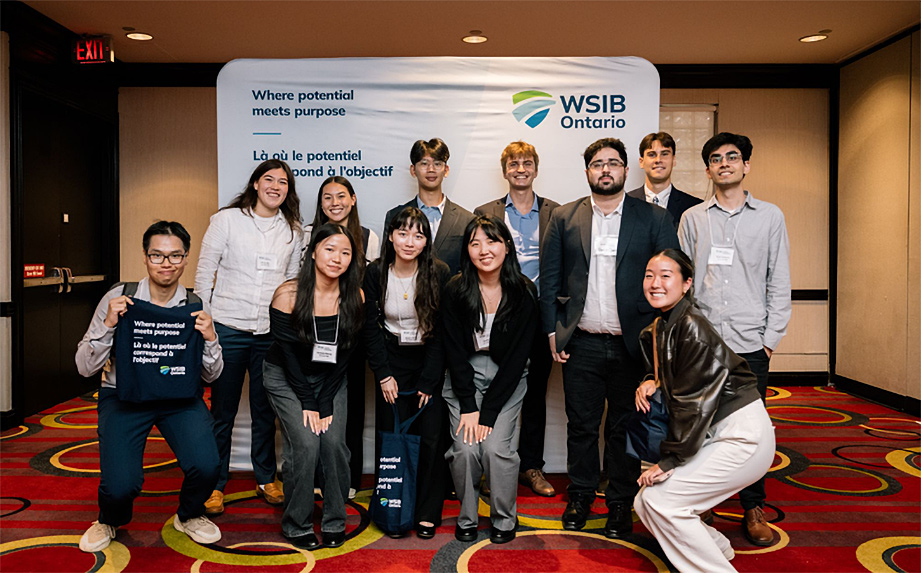
I completed my internship at the Workplace Safety and Insurance Board (WSIB) as an Account Representative. Initially, my role focused on supporting customers across the full account lifecycle, including registrations, maintenance, and closures. As the internship progressed, I worked closely with the analytics team to develop a dynamic Excel model that identified key drivers of repeat calls within a defined time frame. These insights were used to inform process changes aimed at reducing call volumes, shortening wait times, and enabling staff to dedicate more time to complex cases requiring direct assistance. My internship ran from May 5th to August 29th, 2025, and I continued working part-time with WSIB during my fourth semester.
Fourth Semester | The Final Stretch
Electives and Capstone Experiences
Unlike the first and second semesters, the fourth semester offers Business Analytics students significantly more flexibility in both scheduling and course selection. Students typically take four electives; however, those who have not yet completed their mandatory elective requirement must take either Simulation & Risk or Prescriptive Analytics, alongside three electives.
Among the courses offered in the fourth semester is the Advanced Field Project (AFP), an elective open to all MSc streams. The AFP allows students to work as external consultants for a partner organization, addressing a real-world business problem. In my case, my team partnered with CIBC to map the end-to-end journey of neurodiverse clients, identify key pain points, and develop solutions aimed at making banking more inclusive and accessible. Each team member contributes a minimum of 80 hours to the project, with progress tracked through biweekly status reports. The project culminates in a 10-page written report and a final presentation delivered directly to the client.
Another elective option is the Sustainability & Technology Studio, an immersive course focused on leveraging AI and app-based technologies to address global sustainability challenges. As part of the course, students travel to São Paulo, Brazil, where they collaborate with IT entrepreneurs, startups, and technology leaders to design innovative solutions to real-world sustainability problems.
Closing Remarks
Ultimately, the program pushes students beyond their comfort zones, challenging them to think critically, collaborate effectively, and apply analytics in real-world contexts. Through coursework, experiential learning, and professional development, the Ivey MSc in Management, Business Analytics stream equips students with the skills and confidence to succeed after graduation.