
Halfway through my MSc at Ivey, and I still catch myself thinking: how did I get here?
There's something uniquely strange about this program: the same people pulling all-nighters for a case submission are the same ones I'd call just to talk. The line between "colleague" and "friend" doesn't just blur here; it disappears entirely.
I didn't expect that going in.
Before Ivey, I assumed graduate school would feel like most professional environments: people are friendly, work together when needed, but mostly focus on their own thing. What I found instead was harder to name, and took me most of the first semester to even notice. Halfway through, here's what's actually stood out.
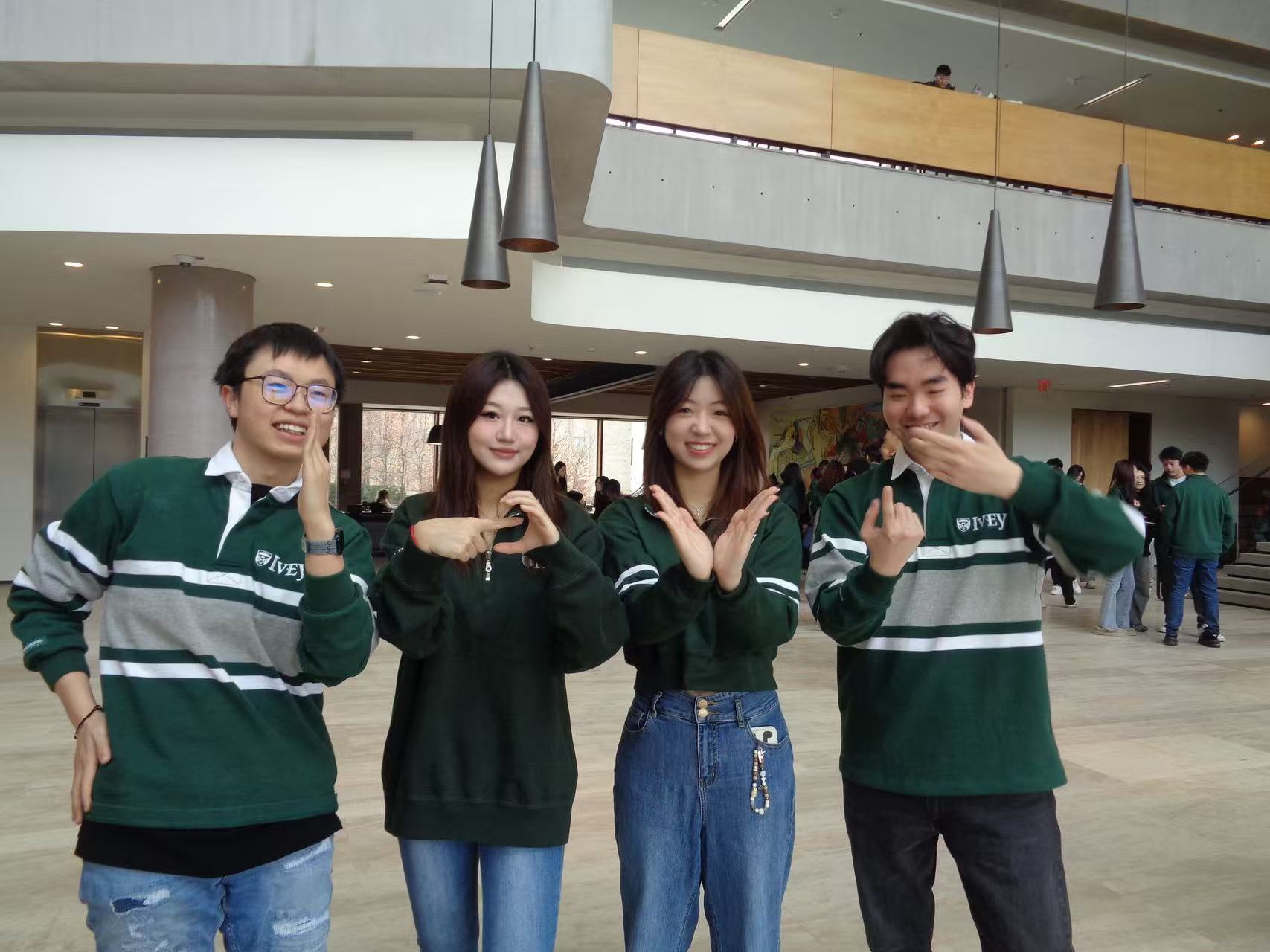
The Case
I've always been the type to put my hand up early. First semester, that didn't change. I'd read the case, find what felt like the key point, and raise my hand as soon as the professor opened the floor.
Then the professor asked: "But why does that actually matter here?"
I went quiet. The professor waited a moment, then called on someone else. Their answer approached the problem from a completely different angle, not better or worse, just a perspective I hadn't considered. That was a humbling moment.
Walking home afterward, I realized the professor wasn't telling me I was wrong. The question was pushing me to think differently, not to second-guess myself.
That same pattern repeated itself across many classes. Over time, I stopped treating a professor's follow-up question as a signal that I had failed, and started seeing it as an invitation to dig deeper. That shift is one of the most valuable things I've taken from this program so far.
The People
Everyone here is sharp. I expected that going in.
What I didn't expect was how willing people are to share what they know.
When coursework required us to build Agentic AI tools, nobody on our team had a technical background. Someone figured out an approach that worked and just shared it with the group, which platforms to use, how to think about it, and what actually helped. That kind of thing happens naturally here. Nobody hoards information.
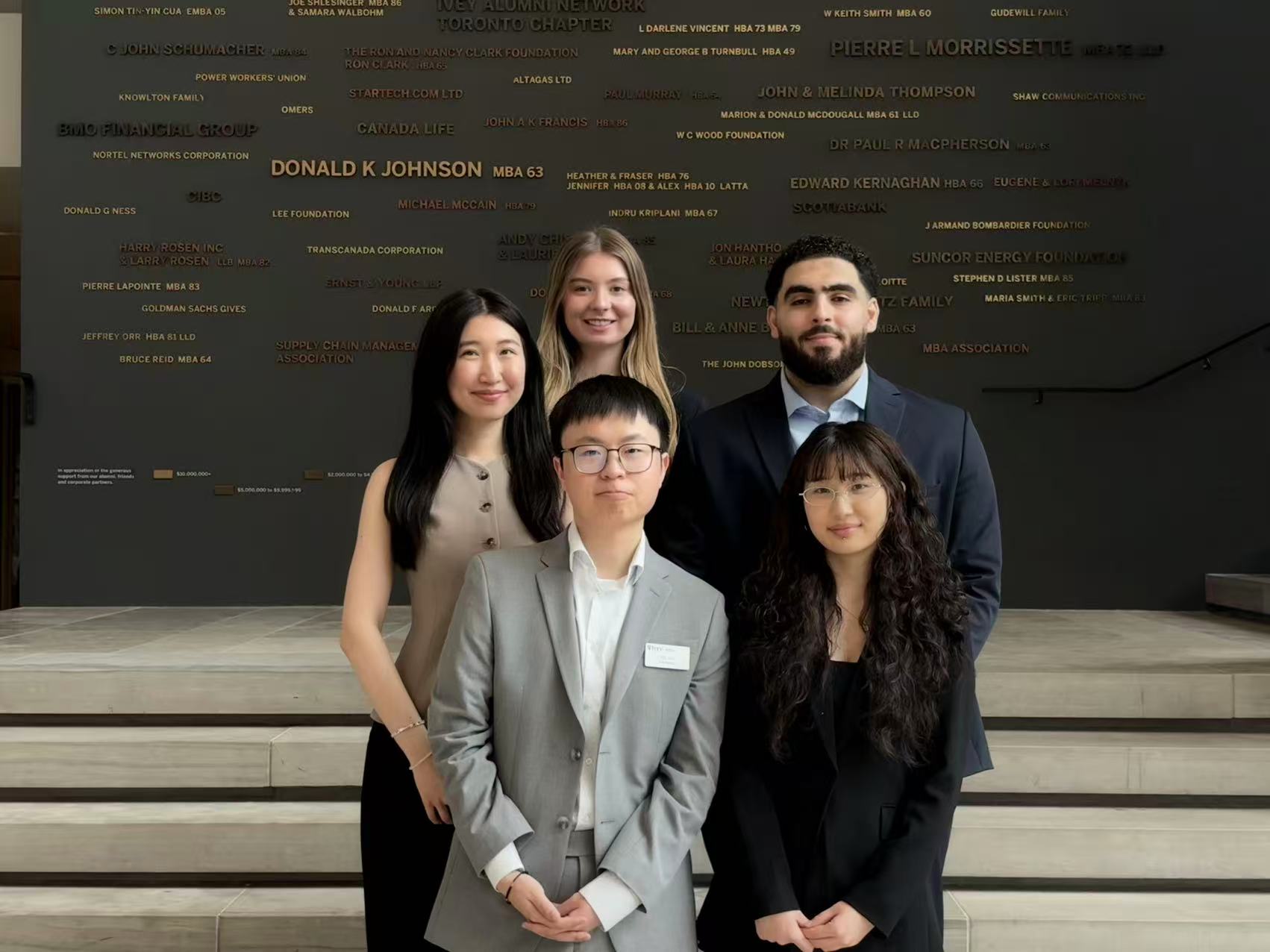
The IDIC (Ivey Digital Innovation Conference) case competition was a good example of that same spirit. Every study room was booked that day, so our team ended up in a corner on the third floor, sitting on the floor for almost ten hours, laptops open, takeout on the side. Nobody suggested calling it a night. The conversation kept going back to the same questions: Can this actually work? How do we make it more realistic? If we're proposing this within Adobe's existing platform, what does implementation actually look like? It wasn't about finishing the deck. It was about making the idea genuinely better.
The friendships didn't come from one moment like that. It was more gradual, with late sessions, shared meals, and small check-ins between classes. At some point, without really noticing, the people around me stopped feeling like classmates and started feeling like people I actually know.

The Shift
Before Ivey, when I saw a new problem, my instinct was to just start, open a tab, do some research, try something, and hope that moving fast would lead somewhere useful.
Now, the first thing I do is slow down.
It didn't come from one class. Systems Thinking taught me to look for connections before jumping to conclusions. Design Thinking pushed me to treat problems as starting points, not obstacles. Digital Media Analysis taught me the difference between correlation and causation. Digital Transformation reminded me that technology reshapes business models, not just processes. Customer Journey mapping made me ask who actually experiences this, and how. Digital Absorptive Capacity made me think about whether an organization is even ready for what's being proposed.
None of it clicked at once. It was more like each framework quietly built on the last, until one day I noticed I was thinking differently. The moment I realized it was walking home after class. I caught myself thinking about a decision I had faced at a previous job: how do you convince senior leadership to adopt a new technology? At the time, I didn't have a clear answer. I just knew it was hard. Walking home that day, I could suddenly see exactly how I would have approached it differently, not with more data, but with a clearer story built on a clearer framework.
That's the shift. It's hard to point to exactly when it happened. But it's there.
If You're Considering Ivey
The first semester is busy, genuinely busy. But it settles, and looking back, the intensity was never really the point.
What stayed with me is something quieter. Ivey changed the way I think. It's a different way of thinking, one that didn't come from any single lecture or assignment, but from months of being pushed to go deeper, to slow down, to ask better questions. It's the kind of thing that's hard to point to directly, but shows up in how I approach a problem now, how I work with people, how I think about what I actually want to do next.
And then there are the people. The ones who challenged my thinking at 11 pm and checked in on me the next morning. The ones who shared what they knew, stayed late when they didn't have to, and somehow made one of the busiest periods of my life also feel like one of the most genuine.
That's the part nobody really warns you about, that somewhere between the cases and the competitions and the late nights, this program quietly becomes something more than a program.
Halfway through, and I'm still figuring out how to describe it.
Maybe that's the point.